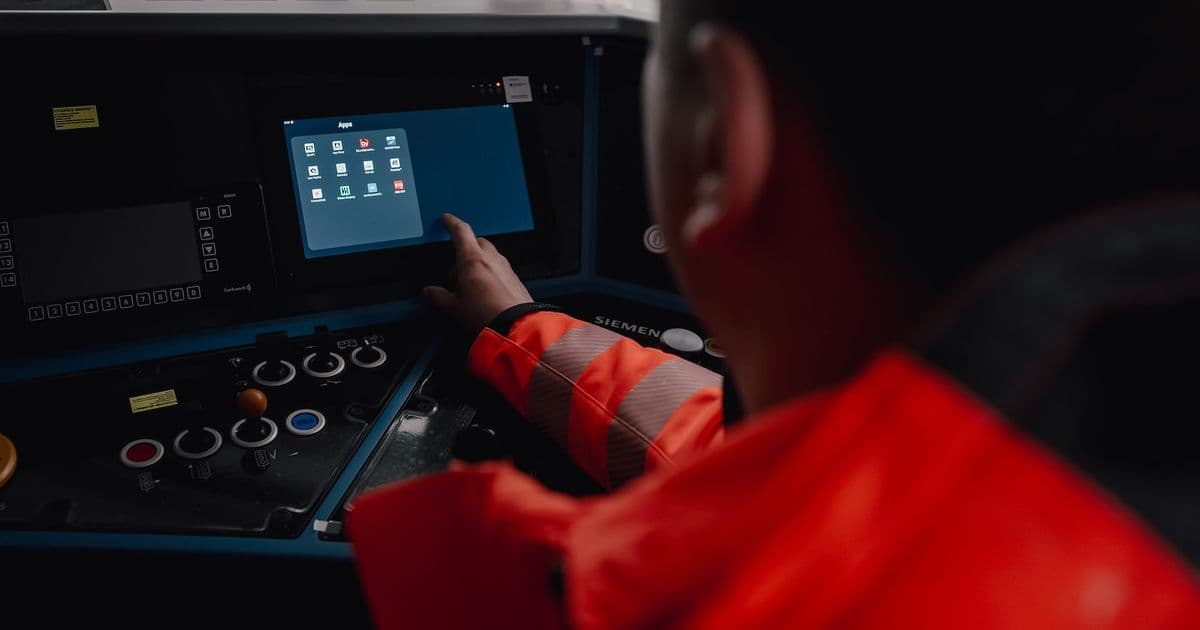
Siemens Mobility put a CarPlay-style interface, an open app platform, and remote startup into its best-selling Vectron locomotive. The hardware story is small, an 11.6-inch panel, but the software ambitions are large.
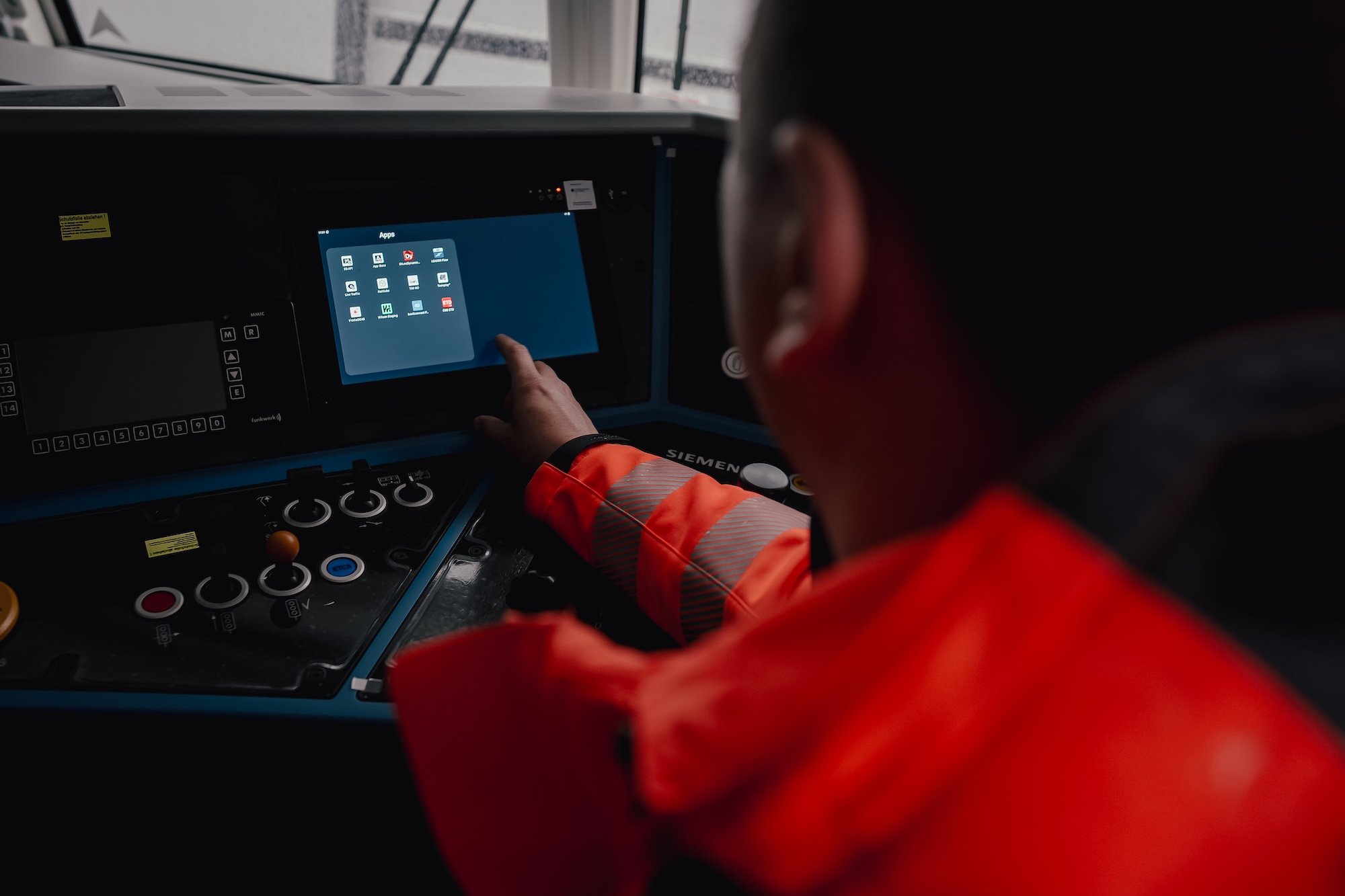
Siemens Mobility has announced the Vectron X, a digitalized version of its Vectron locomotive that brings a consumer-grade software experience into a machine that usually gets evaluated on traction and tonnage. The headline addition is an 11.6-inch touchscreen Siemens calls the Smartscreen, paired with what the company describes as a "CarPlay-like solution" and an actual App Store inside the cab. For a product category where the spec sheet normally stops at axle arrangement and power output, this is a different kind of upgrade.
What's new
The core idea is to move the apps that train drivers already use on phones and tablets directly into the locomotive. Siemens cites scheduling tools and company-specific rail applications as examples, and route information can be shown on the same panel. Instead of a driver juggling a personal device on a mount, the workflow lives on a fixed 11.6-inch display that is part of the locomotive itself.
The more interesting decision is that Siemens plans to open the interface to third-party providers. That is what turns a manufacturer demo screen into a genuine App Store, and it is the part most comparable to how Apple and Google built their mobile ecosystems. The hardware is a fixed-size panel; the value depends entirely on whether operators and software vendors actually build for it.
Two other features round out the platform. Remote Start lets an operator boot a locomotive remotely so it can prepare itself for service ahead of time, which matters when a cold machine needs lead time before a shift. And the Vectron X transmits operational data in near real-time, feeding predictive maintenance. That telemetry pipeline is arguably the most consequential change here, because it shifts maintenance from fixed intervals toward condition-based servicing.
{{IMAGE:2}}
How it compares
The Vectron is already a high-volume platform. Siemens says 3,000 units have been sold, hauling everything from freight to high-speed services like the ICE L. It ships in several configurations: multi-system variants for cross-border operation, diesel-plus-catenary hybrids, and an upcoming battery-equipped version. The Vectron X builds on that same base, so it is expected to be available across the same configuration range rather than as a single fixed model.
Measured against the standard Vectron, the X is not a new powertrain or a faster locomotive. It is the same proven hardware with a digital layer bolted on top, similar to how a car platform gets a mid-cycle infotainment refresh without changing the engine. The competitive comparison that Siemens clearly wants is to automotive software, not to rival locomotives. Naming the interface after CarPlay tells you exactly which reference point the company is chasing, and it sets expectations: drivers expect responsiveness, familiar app behavior, and a screen that does not feel like an afterthought.
The predictive maintenance angle puts the Vectron X up against the broader push toward connected rolling stock across the industry. Real-time data and condition monitoring are becoming table stakes for large fleet operators, so this is Siemens keeping its flagship platform current rather than leaping ahead of everyone else. Whether the open app ecosystem becomes a real advantage depends on adoption, and that is the variable no spec sheet can answer yet.
Who it's for
This is a fleet-operator product, and rolling stock is built to order much like commercial aircraft, so there is no off-the-shelf unit to evaluate today. Siemens' Mireo Smart trainsets are the rare pre-produced exception; the Vectron X is not one of them. For now the Vectron X is an announcement, which means the App Store, the Smartscreen workflow, and the third-party developer story all remain promises rather than tested features.
Operators running large Vectron fleets are the obvious audience. They get a familiar, proven locomotive plus a path toward streamlined driver workflows, remote provisioning, and data-driven maintenance scheduling. Smaller operators with a handful of locomotives will care less about a developer platform and more about whether the telemetry actually reduces downtime. Anyone weighing the X against a standard Vectron should treat the screen as the easy part and ask the harder questions about the software ecosystem: who maintains the apps, how the interface is secured, and what the upgrade path looks like over a locomotive's multi-decade service life. You can find Siemens' announcement and platform details through Siemens Mobility.
The Vectron X reframes a locomotive purchase partly as a software decision, and that is the genuinely new thing here. The 11.6-inch panel is unremarkable on its own. The bet that a rail platform can sustain an open app store the way a phone does is what will determine whether this version is remembered as a meaningful step or a nicely packaged dashboard.
Comments
Please log in or register to join the discussion