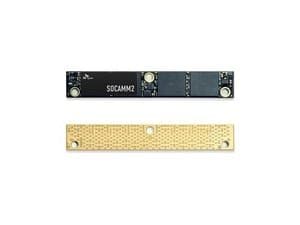
SK hynix has started mass production of the 192GB SOCAMM2, a next-generation LPDDR5X low-power DRAM module specifically designed for Nvidia's upcoming Vera Rubin AI accelerator platform.
SK hynix Inc. announced on Monday that it has begun mass production of the 192GB SOCAMM2, a next-generation memory module designed for artificial intelligence servers. The SOCAMM2 is a low-power DRAM module based on LPDDR5X technology, specifically engineered to meet the demanding memory requirements of Nvidia's upcoming Vera Rubin AI accelerator platform.
The SOCAMM2 represents a significant advancement in memory technology for AI workloads. With 192GB of capacity per module, it provides the high bandwidth and low latency required for training and inference tasks in large-scale AI systems. The LPDDR5X standard offers improved power efficiency compared to traditional DDR5 memory, making it particularly suitable for data centers where power consumption is a critical concern.
SK hynix's move to mass production signals confidence in the demand for high-performance memory solutions as AI infrastructure continues to expand. The company's focus on developing memory specifically for Nvidia's Vera Rubin platform suggests a close collaboration between the two companies, with SK hynix positioning itself as a key supplier for next-generation AI hardware.
The timing of this announcement is notable as the AI industry continues to grapple with memory shortages and supply chain constraints. By securing production capacity for specialized memory modules, SK hynix is addressing a critical bottleneck in AI system deployment. The 192GB capacity per module is particularly important for AI workloads that require large memory footprints to handle massive datasets and complex model architectures.
Industry analysts view this development as part of the broader trend toward specialized hardware for AI workloads. As AI models continue to grow in size and complexity, the demand for high-bandwidth, low-latency memory solutions is expected to increase significantly. SK hynix's investment in SOCAMM2 production positions the company to capitalize on this growing market segment.
The announcement comes amid a period of rapid advancement in AI hardware, with multiple companies developing specialized accelerators and memory solutions. Nvidia's Vera Rubin platform, for which this memory is designed, represents the company's next-generation AI accelerator architecture, promising significant performance improvements over current-generation hardware.
SK hynix's mass production of SOCAMM2 modules is expected to support the rollout of Vera Rubin-based systems in the coming months, as AI infrastructure providers seek to upgrade their capabilities to handle increasingly demanding workloads. The company's ability to deliver these specialized memory solutions at scale will be crucial for meeting the growing demand for AI computing power across various industries.
This development also highlights the importance of memory technology in the overall performance of AI systems. While much attention is often focused on GPU performance and processing power, memory bandwidth and capacity play equally critical roles in determining the overall efficiency and capability of AI infrastructure.
SK hynix's announcement underscores the company's commitment to innovation in memory technology and its strategic focus on the AI market. As the competition for AI hardware supremacy intensifies, companies that can provide specialized, high-performance components like the SOCAMM2 will be well-positioned to benefit from the continued growth of the AI industry.
The mass production of SOCAMM2 modules represents a significant milestone in the development of AI infrastructure, providing the memory foundation necessary for the next generation of AI accelerators and the increasingly complex workloads they will support.
Comments
Please log in or register to join the discussion