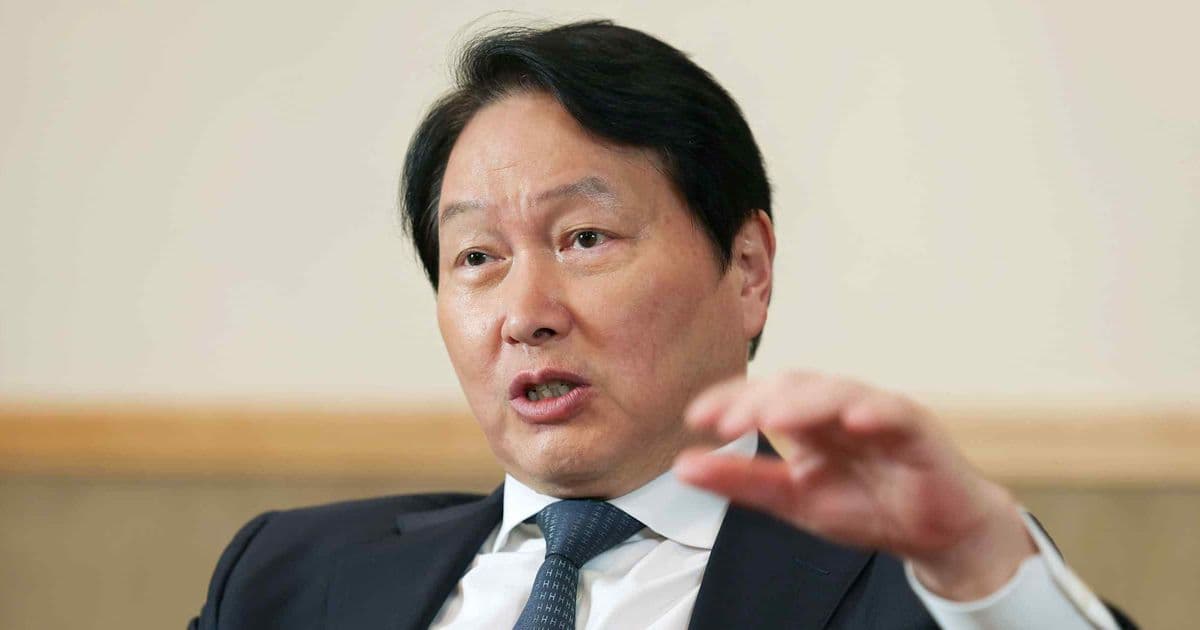
SK Group Chairman Chey Tae-won told Nikkei Asia the South Korean chipmaker will triple its wafer output over the next eight years, with Japan floated as a prime site for overseas fabs. The commitment signals how durable the company expects AI-driven demand for high-bandwidth memory to be.
SK Hynix intends to triple its wafer manufacturing capacity by 2034, SK Group Chairman Chey Tae-won said in an interview with Nikkei Asia published June 11, a target that would reshape the supply side of the memory market that powers artificial intelligence computing. The chairman also named Japan as an "excellent candidate" to host the South Korean company's overseas production, a notable shift for a manufacturer whose fabs have historically clustered at home and in China.
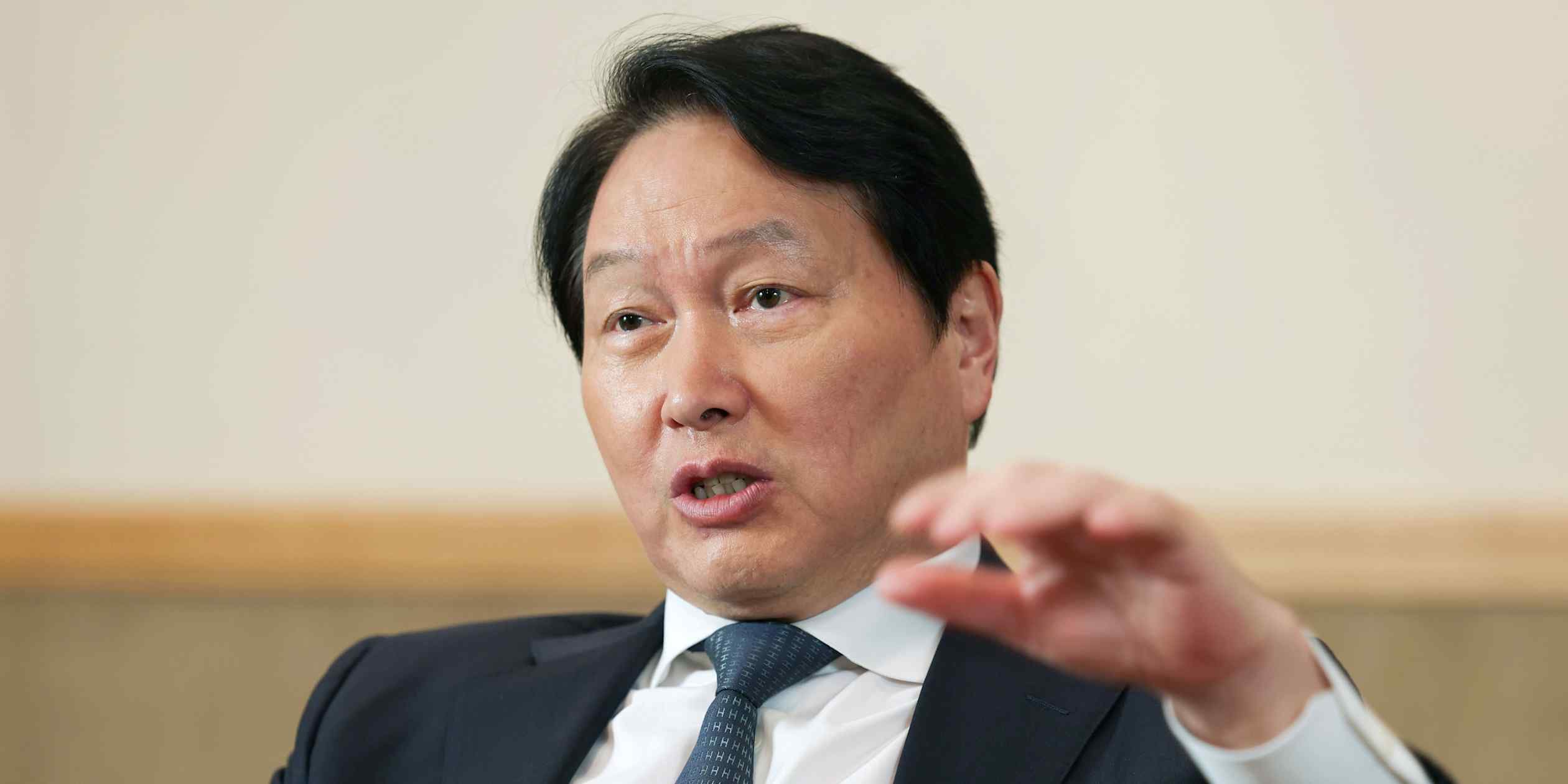
The scale of the plan stands out against the company's own prior guidance. SK Hynix had earlier signaled it would double wafer capacity over roughly five years. Tripling by 2034 raises the ceiling considerably and, more importantly, extends the planning horizon to nearly a decade. That length matters. Fab construction and tool installation run on multi-year timelines, and a commitment stretching to 2034 tells suppliers, customers, and competitors that SK Hynix reads current demand not as a cyclical spike but as a structural change in how much memory the computing industry consumes.
What is driving the capacity push
The specific bottleneck is high-bandwidth memory, or HBM. These are stacks of DRAM dies wired together and placed next to AI accelerators to feed them data fast enough to keep their processing units busy. Nvidia's GPUs, which dominate AI training and inference, depend on HBM, and SK Hynix has become the leading supplier, ahead of Samsung and Micron in both volume and qualification timing for newer generations.
HBM is expensive to make and consumes far more wafer area per usable bit than commodity DRAM, because of the die stacking, the advanced packaging, and lower manufacturing yields. So when demand for HBM surges, it pulls disproportionately on wafer capacity. Each AI server rack can carry many accelerators, and each accelerator carries multiple HBM stacks. Multiply that across the data center buildouts announced by hyperscalers and AI labs over the past two years, and the arithmetic points toward sustained shortage unless fab capacity expands.
That is the calculation behind the tripling target. SK Hynix is effectively betting that the wafers it commits to today will find buyers through the early 2030s.
Why Japan enters the picture
Chey's identification of Japan as a strong candidate for overseas plants reflects supply chain logic as much as geography. Japan supplies a large share of the materials and equipment that memory production depends on, including photoresists, specialty chemicals, silicon wafers, and lithography-adjacent tools. Locating fabs closer to that supplier base shortens logistics and deepens ties with vendors like Tokyo Electron, whose leadership has publicly framed continued semiconductor advances as a requirement for data center growth.
There is also a financial and political dimension. Japan has been subsidizing semiconductor investment aggressively, courting TSMC in Kumamoto and backing the domestic Rapidus venture. A foreign memory maker building capacity in Japan would fit that national strategy and could qualify for support that improves the economics of an otherwise capital-heavy project. A leading-edge fab can cost well over $10 billion, so site selection turns heavily on incentives, power availability, and access to skilled labor.
Market context
SK Hynix has ridden the AI memory wave into a position it did not hold a few years ago. Once viewed as the perennial second in DRAM behind Samsung, the company has been described as the new memory leader on the strength of its HBM business. That reversal shows how a single product category, when tied to the fastest-growing segment of computing, can rewrite competitive rankings.
The demand backdrop is reinforced by deals at the top of the AI stack. Nvidia's Jensen Huang has been courting South Korean partners, including an AI infrastructure agreement with SK, which ties accelerator roadmaps to memory supply commitments. For SK Hynix, visibility into Nvidia's volume needs is exactly the kind of signal that justifies a decade-long capacity plan.
Markets have not treated the AI trade as risk-free. South Korean equities, heavily weighted toward chipmakers, fell sharply during a recent selloff driven by US interest rate fears, a reminder that valuations built on AI growth remain sensitive to macro conditions. A tripling of capacity is a long bet placed against that volatility.
What it means
For the memory industry, a credible plan to triple SK Hynix output reframes the supply outlook. If the leading HBM maker brings on that much capacity, pricing power that has favored sellers during the shortage could ease later in the decade, assuming demand growth moderates. If demand keeps pace, the capacity simply gets absorbed and the AI hardware buildout continues with fewer memory constraints. Either way, customers gain more certainty that HBM supply will scale with their accelerator orders.
For competitors, the announcement raises the stakes. Samsung and Micron have their own HBM ambitions, and a rival publicly committing to triple capacity pressures them to match or risk ceding the segment. Expect responses framed around their own expansion and next-generation HBM qualification.
For Japan, hosting an SK Hynix fab would extend a strategy of rebuilding semiconductor relevance through foreign investment, adding memory to the logic capacity that TSMC is bringing to Kyushu. The chairman's comments are not yet a commitment to a specific site, but naming Japan publicly is how these negotiations usually begin. More detail on locations, timelines, and the split between domestic and overseas capacity will determine whether the 2034 target reads as a firm roadmap or an aspiration anchored to demand that has to keep showing up.
Comments
Please log in or register to join the discussion