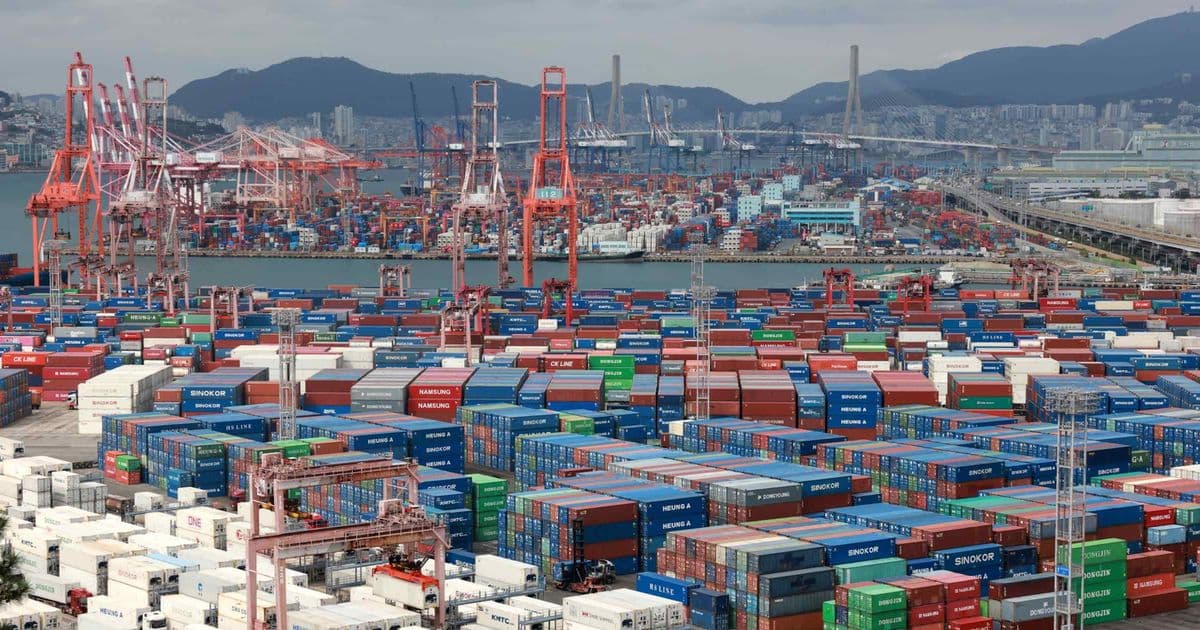
South Korean semiconductor exports reached $32.83 billion in March 2026, up 151.4% year-over-year, driving total exports to a record $86.13 billion, up 48.3% year-over-year, as companies rushed orders amid global AI demand.
South Korea's semiconductor industry delivered another blockbuster performance in March 2026, with chip shipments hitting a record-high value of $32.83 billion, up 151.4% year-over-year. This explosive growth in semiconductors pushed total exports to a record $86.13 billion, up 48.3% year-over-year, according to government data released Wednesday.
The Numbers Behind the Boom
The March figures represent the highest monthly export value in South Korean history, with semiconductors accounting for nearly 40% of total outbound shipments. The 151.4% year-over-year increase in chip exports far outpaces the overall export growth rate of 48.3%, highlighting the sector's outsized contribution to the economy.
This surge comes as global demand for AI chips and advanced semiconductors continues to accelerate. South Korean companies, particularly Samsung Electronics and SK Hynix, have been rushing to fulfill orders amid supply constraints and geopolitical tensions affecting other chip manufacturing regions.
What's Driving the Growth
The record-breaking performance reflects several converging factors:
AI Infrastructure Buildout: Major cloud providers and tech companies are investing heavily in AI infrastructure, driving demand for high-bandwidth memory (HBM) chips where South Korean firms hold dominant positions.
Supply Chain Diversification: Companies are diversifying away from Taiwan-centric supply chains, benefiting South Korean manufacturers who offer advanced process nodes and packaging capabilities.
Price Appreciation: The average selling price of DRAM and NAND flash memory has increased significantly as supply remains tight relative to demand.
Geopolitical Tailwinds: Trade tensions and export controls have created opportunities for South Korean firms to capture market share from competitors facing restrictions.
Industry Context
South Korea's semiconductor sector has been on a tear throughout 2025 and early 2026. The country's chipmakers have reported consecutive quarters of record profits, with Samsung Electronics posting its highest quarterly revenue in over three years in Q4 2025.
The government has supported this growth through tax incentives for semiconductor R&D and manufacturing expansion. In 2025, South Korea announced plans to invest $470 billion in semiconductor facilities by 2042, aiming to maintain its technological edge in memory chips and expand into logic chip manufacturing.
Looking Ahead
While the March figures are impressive, analysts note potential headwinds on the horizon. The cyclical nature of the semiconductor industry means that the current boom could moderate as supply catches up with demand. Additionally, new US export controls on advanced AI chips to certain countries could impact future growth trajectories.
However, the long-term outlook remains positive. South Korean firms are investing heavily in next-generation technologies including 3D-stacked memory, advanced packaging, and AI-specific chip architectures. The country's leadership in memory chips provides a foundation for expansion into adjacent markets.
Global Implications
The strength of South Korean exports has broader implications for the global technology supply chain. As the world's second-largest semiconductor producer after Taiwan, South Korea's performance affects everything from smartphone manufacturing to data center construction.
For investors, the data reinforces the strategic importance of South Korean semiconductor companies. For policymakers, it underscores the need to maintain technological competitiveness in an increasingly contested global market.
The March export figures represent more than just a monthly record—they signal the continuing central role of semiconductors in driving economic growth and technological advancement in the AI era.
Comments
Please log in or register to join the discussion