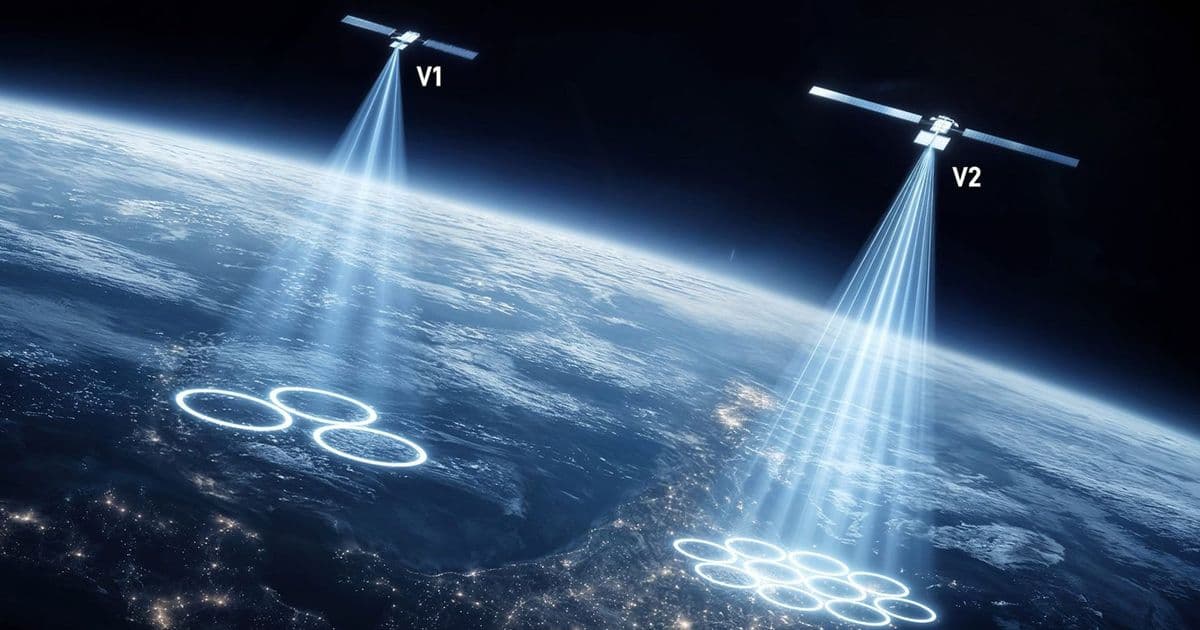
Starlink Mobile's next-generation V2 satellites will deliver 5G speeds from space with 100x the data density of current V1 satellites, enabling streaming, browsing, and voice calls across 32 countries.
Starlink Mobile is preparing to revolutionize satellite-to-phone communications with its next-generation V2 satellites, promising "100x the data density" compared to current V1 generation satellites. The upgrade, which will deliver true "5G speeds from space," represents a quantum leap in satellite connectivity capabilities that could fundamentally change how we think about mobile communications.
(Image credit: Starlink)
The announcement came via Starlink's official social media channels, which touted the performance improvements that will affect the Starlink Mobile service (formerly known as "Direct to Cell"). This service currently provides satellite-to-phone communications including data, voice, and messaging across 32 countries spanning six continents.
The Technical Leap: 100x Data Density
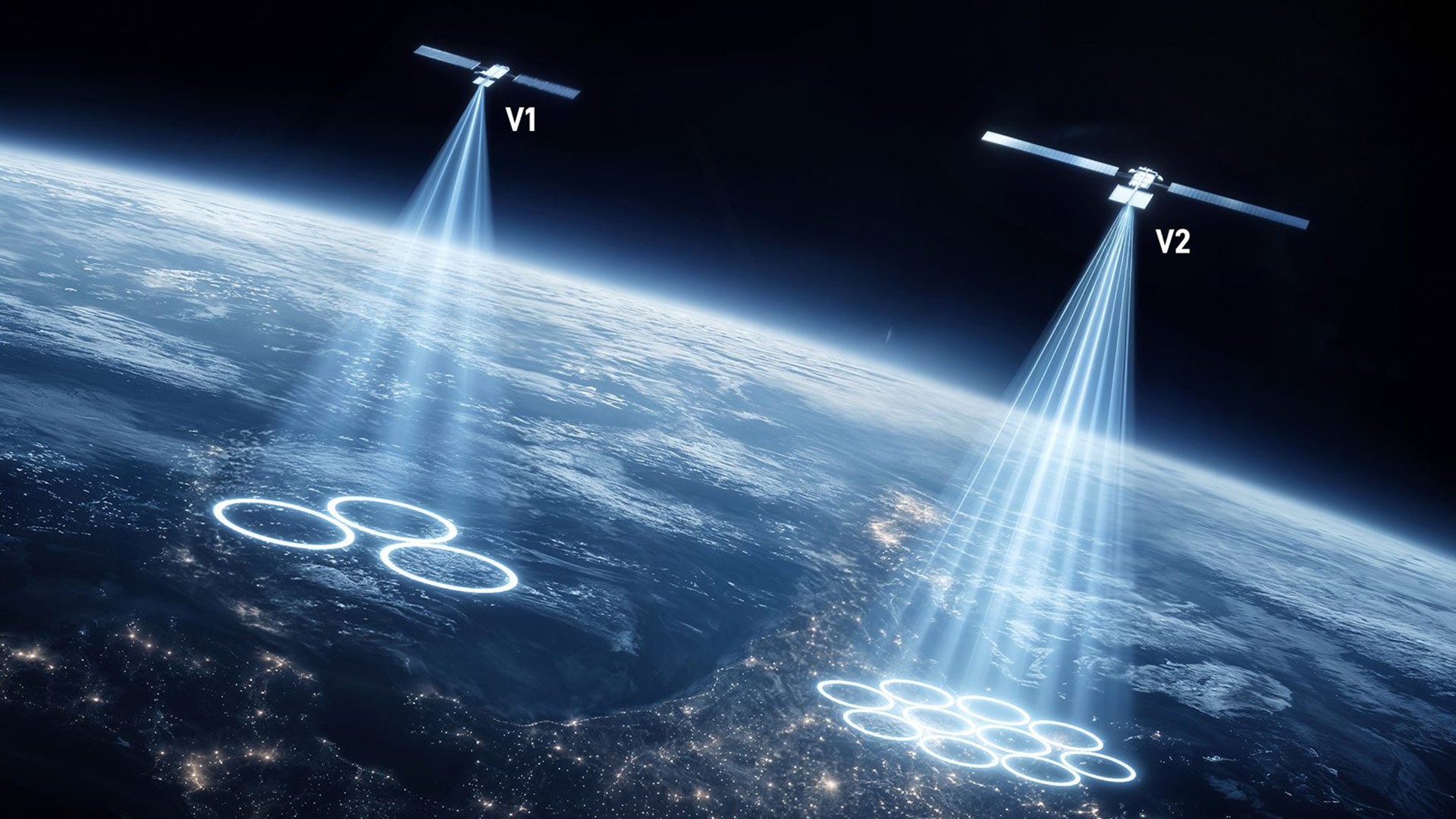
The numbers behind Starlink's claims are impressive. While the current V1 satellites are limited to "light data" and text messaging, the V2 upgrade promises to deliver "5G from space" that's compatible with hundreds of existing LTE phones. The upgrade provides "100x the data density" compared to V1 satellites, with "around 20x the throughput capability" per satellite.
This distinction between data density and throughput capability is important. Data density refers to how much data can be transmitted over a given area, while throughput measures the total data capacity of each satellite. The 100x improvement in data density means users will experience significantly better performance even in crowded areas, while the 20x throughput increase means each satellite can handle more simultaneous connections.
Real-World Performance Expectations
Previous Starlink announcements have pointed to a goal of peak speeds of 150 Mbps per user becoming realistic with the rollout of V2 satellites. This would put satellite connectivity on par with terrestrial 5G networks in terms of raw speed, though latency will likely remain higher due to the physics of signal travel to and from low Earth orbit.
(Image credit: Starlink)
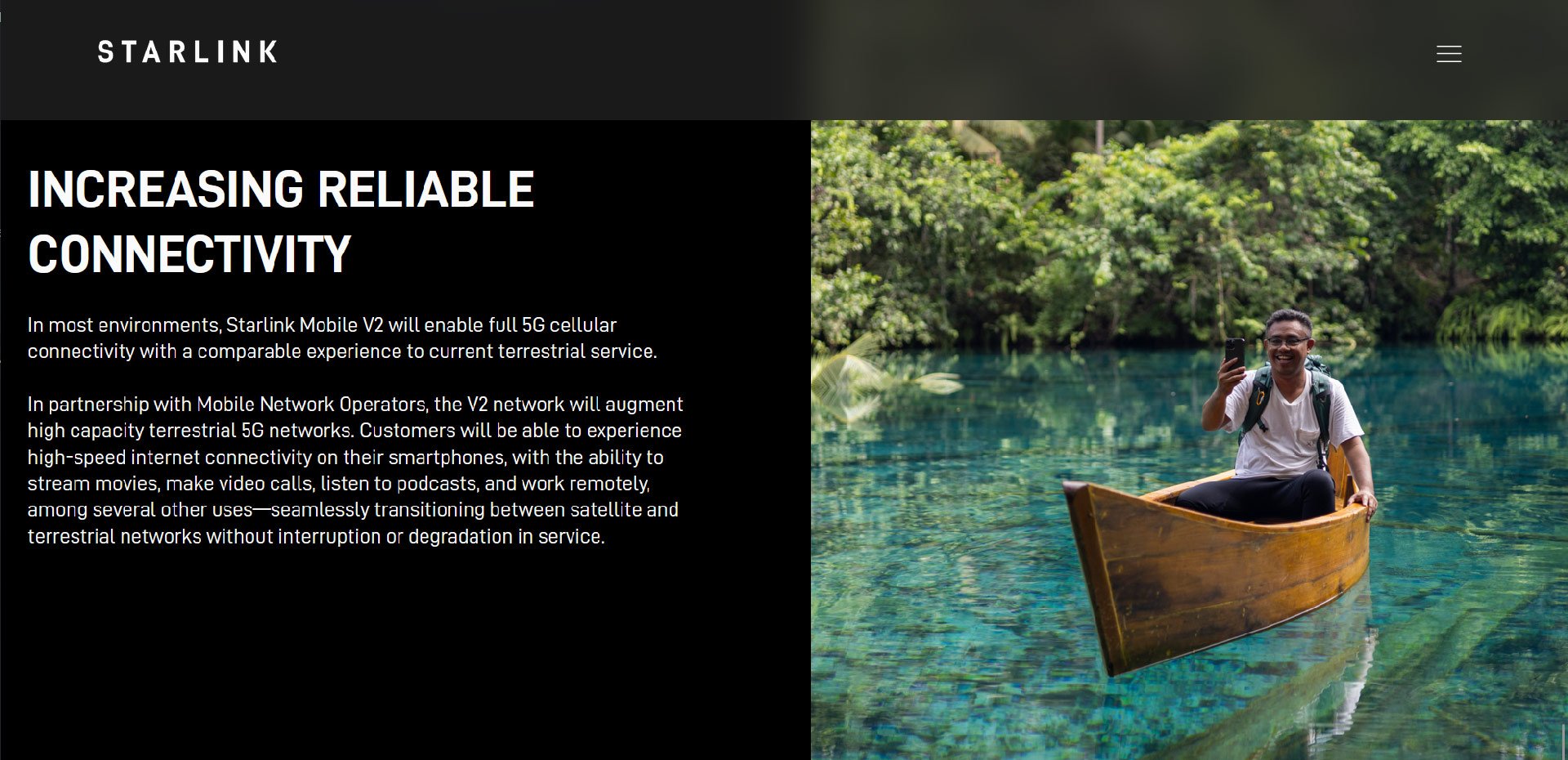
The service is designed to work seamlessly with terrestrial networks. Starlink expects operator partners like T-Mobile in the U.S. to provide services that "seamlessly transition between satellite and terrestrial networks without interruption or degradation in service." This means users could potentially move between cell towers and satellite coverage without noticing any change in their connection.
The Satellite Fleet Expansion
SpaceX is planning an ambitious deployment of up to 15,000 new satellites to power its "5G from space" goal. This massive constellation will require numerous launches, with Starship's progress being a critical factor in the timeline. The larger, more capable V2 satellites require Starship's payload capacity to be deployed efficiently.
To bridge the gap while waiting for full V2 deployment, SpaceX has already begun launching V2 Mini satellites. These smaller versions of the V2 satellites offer some of the performance improvements while being compatible with existing launch vehicles like Falcon 9.
Timeline and Market Impact
While exact dates remain fluid, early 2027 looks most likely for when the initial V2 service will be tested in the early rollout stage. This timeline depends heavily on Starship's launch cadence and the successful deployment of the satellite constellation.
(Image credit: Starlink)
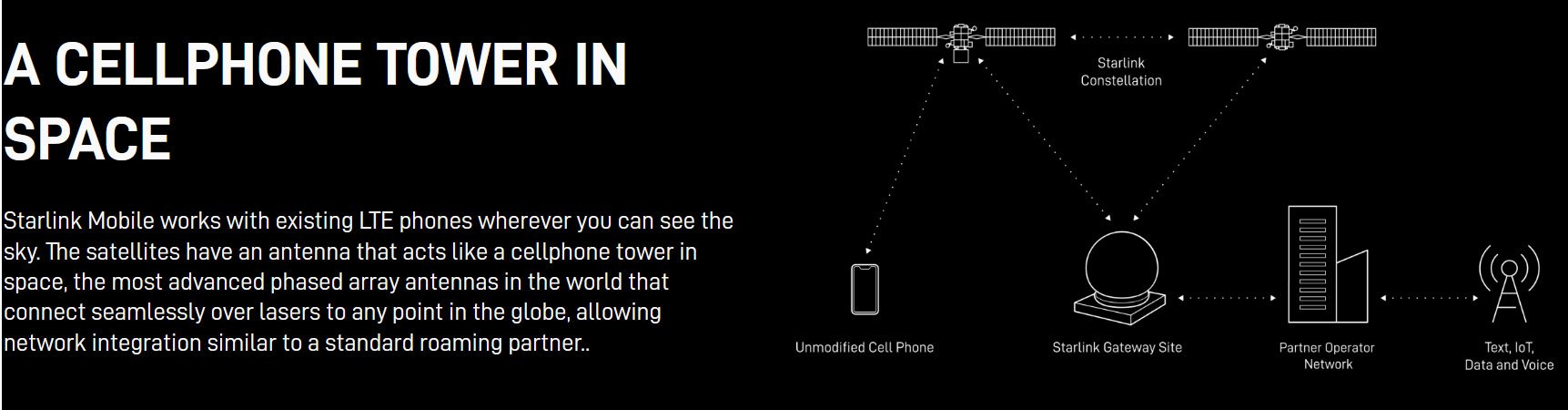
The upgrade represents a significant competitive advantage for Starlink Mobile. Currently, the service's main draw is providing connectivity "where you need it" and emergency coverage in areas where terrestrial networks don't reach. With V2 satellites, it could become a viable alternative to traditional mobile service providers even in urban areas.
The implications extend beyond just better speeds. True 5G capabilities from space could enable new use cases like high-quality video streaming in remote locations, reliable voice calls from anywhere on Earth, and support for data-intensive applications that are currently impossible with satellite connections.
Technical Challenges and Considerations
Achieving 100x data density isn't just about launching more powerful satellites. It requires advances in several areas:
- Beam-forming technology: More precise targeting of signals to specific user devices
- Frequency management: Efficient use of spectrum to maximize capacity
- Power systems: More efficient solar panels and batteries to support higher data rates
- Ground infrastructure: Enhanced gateway stations to handle the increased data flow
The Future of Mobile Connectivity
The V2 satellite upgrade represents more than just an incremental improvement—it's a fundamental shift in what's possible with satellite communications. By bringing 5G-like capabilities to space-based networks, Starlink is blurring the line between terrestrial and satellite mobile services.
For consumers, this could mean truly global connectivity without compromises. For industries operating in remote areas, it could enable applications that were previously impossible. And for the mobile communications industry as a whole, it represents a new competitive dynamic that could reshape how we think about coverage and connectivity.
As SpaceX continues its rapid deployment of satellites and Starship prepares for more frequent launches, the vision of 5G speeds from space moves closer to reality. The 100x data density improvement isn't just a marketing claim—it's a technical milestone that could redefine mobile connectivity for the next decade.
Comments
Please log in or register to join the discussion