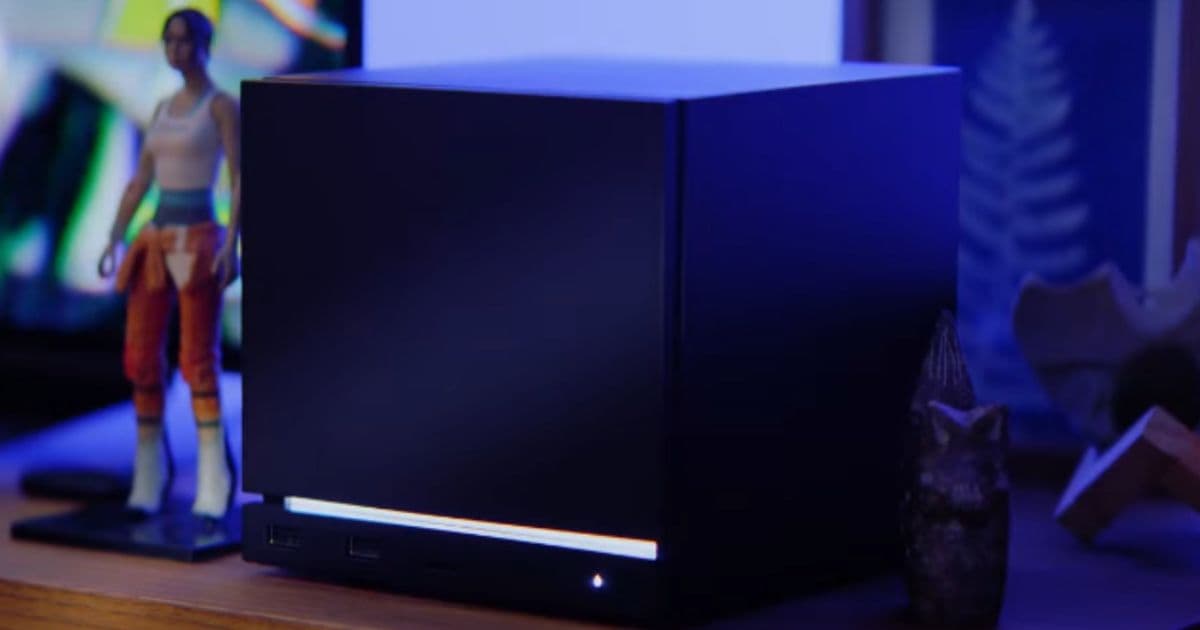
If the leak is accurate, Valve’s living-room SteamOS PC is moving from shipping-manifest speculation to reviewer testing, but the whole product still lives or dies on price.
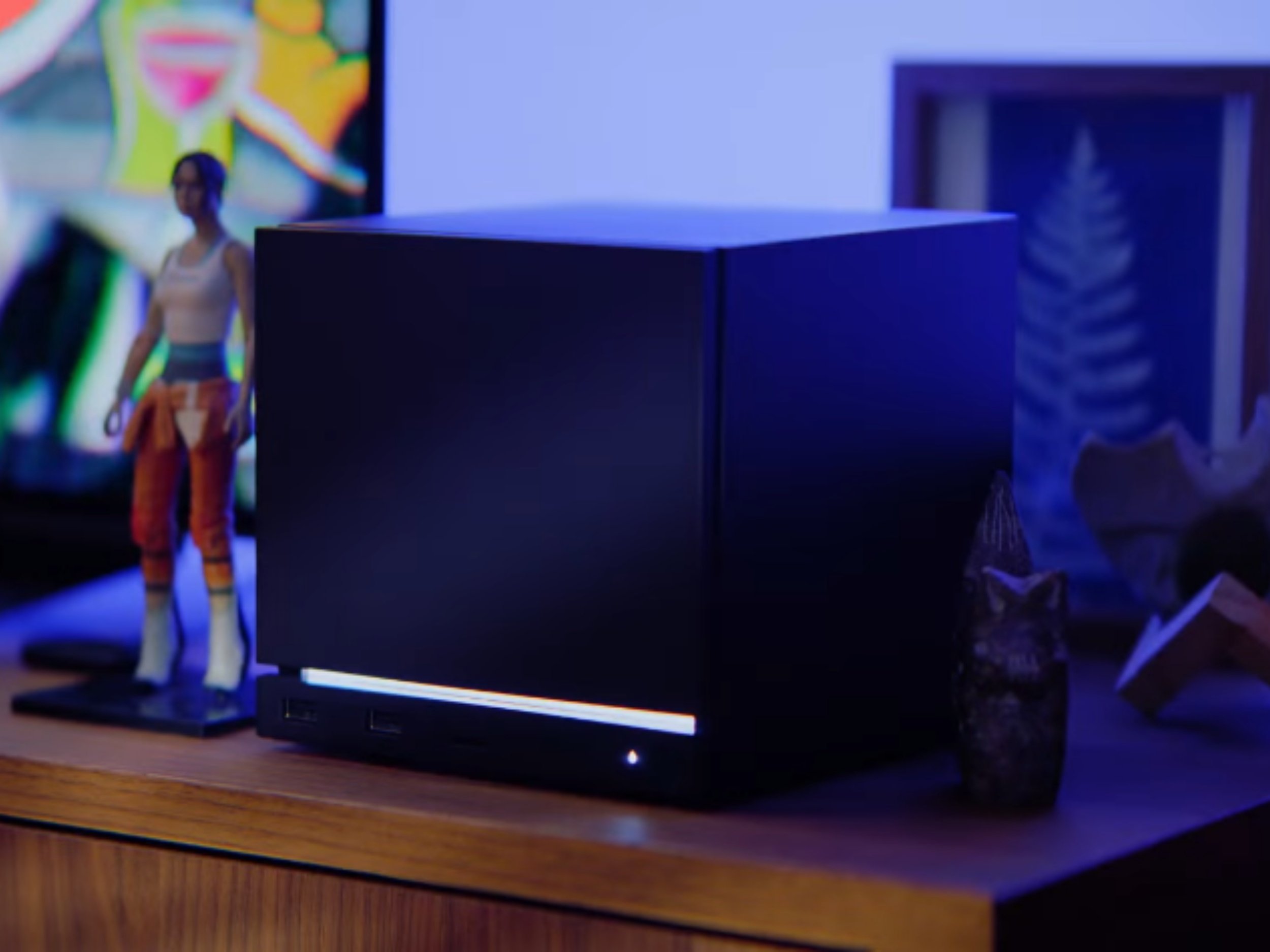
What's new
A new Valve hardware leak claims the upcoming Steam Machine has reached reviewers and content creators, with an embargo reportedly lifting after June 23. The same report says Valve may announce pre-orders and pricing sometime between June 22 and June 30, which would put a July or August launch in play if the schedule holds. Valve has not confirmed those dates, and the original claim has not named its source, so this should still be treated as a rumor rather than a launch announcement.
The alleged review kit is more interesting than the date. Reviewers are said to be receiving the Steam Machine, a Steam Controller, mounting brackets, and interchangeable faceplates. That package makes sense for a device Valve has presented as both a console alternative and a small-form-factor PC for the TV. The faceplates point to living-room customization, while the brackets suggest Valve expects some buyers to hide or mount the box instead of placing it beside a TV stand like a traditional console.
Valve’s official Steam Machine page is still the best landing point for confirmed product positioning, but the public spec picture has been stable for months. The new Steam Machine is expected to use a custom six-core AMD Zen 4 CPU, a semi-custom RDNA 3 GPU with 28 compute units and 8 GB of GDDR6 VRAM, plus 16 GB of DDR5 system memory. Storage is expected in 512 GB and 2 TB configurations, with expansion options. Valve has pitched the box as roughly six times faster than the Steam Deck, with 4K 60 fps gaming as the target when upscaling is part of the equation.
That last part matters. This is not a simple PlayStation 5 clone with a Steam logo on the front. It is a SteamOS PC built around Proton compatibility, a console-style interface, and PC game settings that will still need tuning title by title. On paper, the GPU is much stronger than the Steam Deck’s 8-CU RDNA 2 integrated graphics, but the 8 GB VRAM figure is the spec I would watch hardest in reviews. Modern games can eat 8 GB quickly at high texture settings, especially at 1440p or 4K. Upscaling helps frame rates, but it does not magically shrink every texture pack or eliminate shader compilation behavior.
The leak also lines up with other recent signals. The Verge reported recent Valve import activity involving both VR devices and game consoles, suggesting hardware stockpiling ahead of a summer launch. Valve has also been pushing Steam compatibility work beyond the Deck, with SteamOS and Verified-style labeling becoming more important across the Steam Machine and Steam Frame ecosystem. That software layer is arguably the reason this attempt has a better shot than the 2015 Steam Machines, which arrived before Proton was mature and before the Steam Deck taught buyers what a good Linux gaming device could feel like.
How it compares
Compared with the Steam Deck OLED, the Steam Machine should be a different class of device. Valve’s current Deck OLED specs list a 6 nm AMD APU with a Zen 2 4-core, 8-thread CPU, 8 RDNA 2 compute units, 16 GB LPDDR5 memory, and a 4 to 15 W APU power range. The Steam Machine is a wall-powered box with a newer CPU architecture, far more GPU hardware, and a power budget that should allow sustained clocks well beyond handheld limits. That means higher resolution targets, higher detail presets, and better docked-TV performance than a Deck connected to a monitor.
The comparison is not only about raw performance. The Deck has a built-in screen, controls, battery, sleep behavior, and a known starting price structure. The Steam Machine has to justify itself against consoles, mini PCs, and existing gaming desktops. If Valve prices it near the lower end of gaming PC expectations, it becomes a very compelling Steam library appliance. If it crosses the $1,000 line, it starts competing with discounted gaming laptops, compact Ryzen mini PCs with external GPU options, and DIY small-form-factor builds that can use standard desktop parts.
Against PlayStation 5 and Xbox Series X, the Steam Machine’s advantage is library flexibility. Steam sales, mod support, cloud saves, PC graphics settings, desktop mode, and multiple storefront workarounds give it a broader software story than a locked console. Its weakness is predictability. A PS5 game has one fixed hardware target. A Steam game may offer ten graphics menus, several launchers, anti-cheat limitations, shader stutter, or controller quirks. Proton has improved massively, but reviewers will need to test more than average frame rates. Boot flow, suspend behavior, first-run setup, shader pre-caching, offline play, anti-cheat support, HDR output, Bluetooth reliability, and controller wake all matter in the living room.
The likely 8 GB VRAM configuration is the pressure point against current consoles. Xbox Series X and PS5 use unified memory pools, so the comparison is not one-to-one, but the practical result is easy to understand. In PC games, ultra textures at 4K can exceed 8 GB even when the GPU has enough shader performance for the frame rate target. If the Steam Machine behaves like an RX 7600-class system, it may be excellent at 1080p and 1440p, strong at 4K with FSR, and inconsistent at native 4K high settings in the heaviest games. A good reviewer should show optimized settings, not just ultra preset charts.
Compared with Windows handhelds and mini PCs, Valve’s advantage is integration. A Windows box can run more launchers and more anti-cheat systems, but the TV experience often feels like a PC pretending to be a console. SteamOS is the reverse. It hides the PC until you need it. That is exactly why the Steam Deck worked. The question is whether that formula translates when the device is no longer portable and has to compete with hardware that can be upgraded, repaired, or repurposed more easily.
The leaked accessories also change the comparison. If the retail Steam Machine includes the new Steam Controller, its value equation improves immediately. If the controller is separate, buyers need to add another line item. The second-generation Steam Controller has been positioned as the natural partner for couch PC gaming, with trackpads and gyro controls that can handle games designed around mouse input better than a standard Xbox-style pad. For strategy games, CRPGs, launchers, and older PC titles, that can be the difference between a device that technically runs your library and one you actually want to use from the couch.
Pricing is the unknown that can flip the verdict. Earlier expectations clustered around the idea of a premium console or entry gaming PC. More recent reports have focused on memory and storage cost pressure, which could push the final price higher. The community concern about a four-figure Steam Machine is rational. At $699 to $799, Valve can argue that buyers are getting a compact SteamOS console with PC flexibility. At $999 or more, the buyer starts asking why the GPU only has 8 GB VRAM and why a conventional gaming PC would not age better.
Who it's for
The Steam Machine is for the Steam Deck owner who already trusts SteamOS but wants a stronger TV box. If your Deck spends half its life docked, the Steam Machine is the more logical version of that setup. It should run cooler, sustain higher clocks, and avoid the compromises that come with pushing handheld silicon onto a 4K television. It also gives Valve a cleaner target for Verified testing because it is plugged in, controller-first, and designed around the living room from the start.
It is also for PC players who want console behavior without leaving the Steam ecosystem. If your library is already on Steam and you mostly play controller-friendly games, the Steam Machine could remove a lot of living-room friction. You get Steam cloud saves, Steam Input, Proton, remote play, family sharing features, and a UI that does not require a keyboard every time Windows decides something needs attention. That is the product promise, and it is strong if Valve executes the basics.
I would be more cautious if you mainly play competitive multiplayer games with strict anti-cheat systems, heavily modded titles that expect Windows tools, Game Pass PC releases, or games from launchers that still behave poorly under Linux. SteamOS has improved, but it is not Windows with a different skin. Buyers should wait for review testing across their actual games, especially titles like Call of Duty, Fortnite, Destiny-style online games, racing sims with wheel software, and anything that depends on vendor-specific utilities.
The Steam Machine is not automatically the best choice for a budget buyer either. If Valve lands near $1,000, a buyer who is comfortable with Windows may get more upgrade flexibility from a conventional desktop. A compact gaming PC with a stronger GPU and more VRAM could age better, even if the setup is messier. A console buyer who only wants FIFA, Fortnite, GTA, and first-party exclusives may still be happier with a PS5 or Xbox because the experience is simpler and the pricing is known.
The most interesting buyer is the one who wants a PC library on the TV but does not enjoy maintaining a PC. That is where Valve has a real opening. The first Steam Machines failed because the software stack was not ready, Linux game support was thin, and OEM pricing was scattered. The new version arrives after years of Steam Deck development, Proton compatibility gains, and a user base that already understands SteamOS. This time, the hardware story is less strange. The real test is whether Valve can price it like a console-adjacent product while delivering enough PC performance to make the trade-off feel fair.
For reviewers, the checklist should be specific. Test Cyberpunk 2077, Baldur’s Gate 3, Helldivers-style co-op, a shader-heavy Unreal Engine 5 game, a few older mouse-driven PC titles, and at least one game with questionable launcher behavior. Measure 1080p, 1440p, and 4K with optimized settings, not just maximum presets. Track VRAM use, frame-time spikes, fan noise, suspend and resume reliability, controller wake behavior, HDR, Bluetooth latency, and how often the user has to drop into desktop mode. This is not a laptop where a few synthetic scores tell the story. It is a living-room PC, and living-room PCs fail on small annoyances as often as they fail on frame rates.
If the leaked June embargo date is real, we should soon know whether Valve has built a serious console competitor or an expensive enthusiast box. The specs suggest plenty of potential, the software foundation is stronger than it was in 2015, and the accessory package sounds thoughtfully aimed at real living rooms. The final recommendation still comes down to price, VRAM behavior, and how much tuning SteamOS needs once reviewers start treating it like the main gaming machine in the house.
Comments
Please log in or register to join the discussion