
Most system design failures stem from the same root cause: jumping to solutions before understanding the problem. A structured framework forces the questions that prevent costly architectural mistakes.
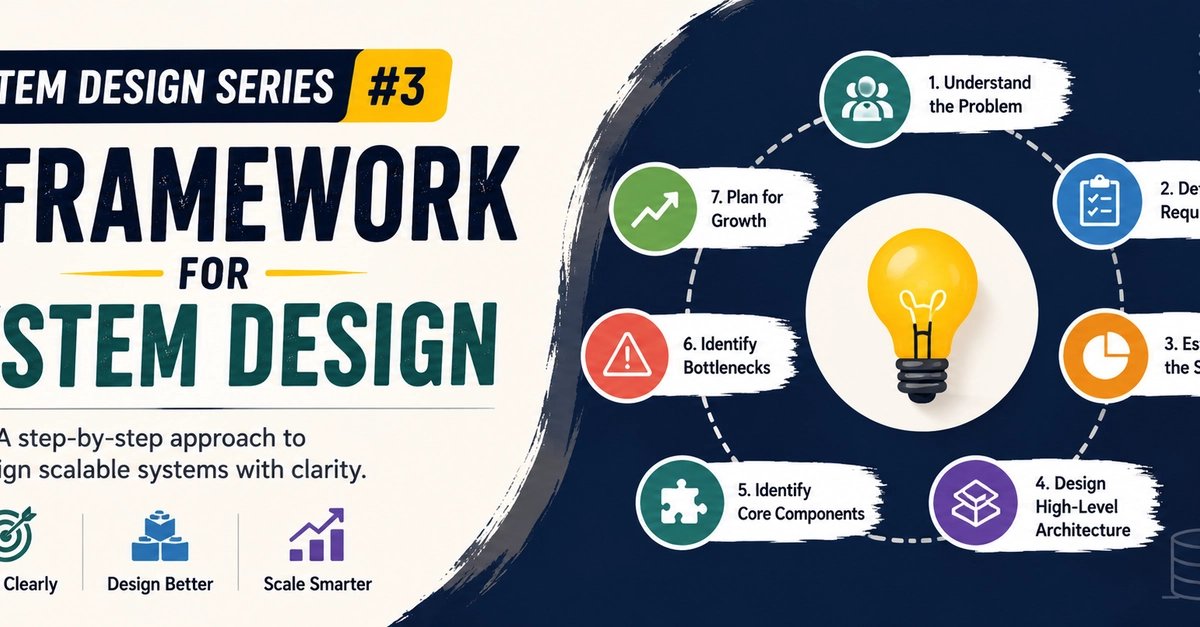
When developers approach system design, they often reach for familiar tools: database schemas, API endpoints, infrastructure diagrams. This instinct is understandable but dangerous. The most expensive architectural decisions I've witnessed happened because teams skipped the foundational work of understanding what they were actually building and why.
A framework for system design isn't about memorizing components or following templates. It's about building the discipline to ask the right questions in the right order.
Why Frameworks Matter More Than Technology Knowledge
Consider the range of systems you might be asked to design: a content management platform, a real-time messaging service, a file synchronization system, or an image sharing application. On the surface, these seem fundamentally different. But the design process that leads to a successful implementation follows remarkably similar patterns.
Without a structured approach, teams typically make one of two mistakes: they either over-engineer simple systems with unnecessary complexity, or they under-engineer systems that will buckle under real-world load. Both outcomes stem from the same problem, making critical decisions before understanding the constraints.
A framework creates a systematic path from ambiguity to architecture. It breaks an overwhelming problem into manageable pieces and ensures you address each piece before moving to the next.
The Seven-Step Framework
Step 1: Understand the Problem Before Proposing Solutions
This sounds obvious, yet it's the step most frequently skipped. Before discussing databases or message queues, clarify three things:
- Who are the users? Not demographics, but usage patterns. Are they interacting through web browsers, mobile apps, or API integrations?
- What are they trying to accomplish? The core user journeys, not feature lists.
- What does success look like? Define measurable outcomes.
For a content platform, the core interactions might be: authors creating and editing posts, readers consuming content, users searching for specific topics, and community members commenting on articles. Each interaction has different consistency requirements and performance expectations.
Step 2: Separate Functional from Non-Functional Requirements
Requirements fall into two categories, and conflating them creates problems.
Functional requirements describe what the system does:
- User authentication and authorization
- Content creation and modification
- Search and discovery
- Notification delivery
Non-functional requirements describe how the system performs:
- Response time under load
- Data durability guarantees
- Availability targets
- Security constraints
- Cost parameters
Both categories drive architectural decisions, but in different ways. Functional requirements shape the API design and data model. Non-functional requirements determine infrastructure choices, caching strategies, and replication patterns.
Step 3: Estimate the Scale You're Designing For
Scale estimation isn't about predicting the future. It's about understanding whether you need a simple architecture or a distributed one.
Key questions:
- How many concurrent users during peak periods?
- What's the read-to-write ratio?
- How much data accumulates over time?
- What are the growth projections?
A content platform serving ten thousand users has fundamentally different requirements than one serving ten million. The first might run on a single server with a PostgreSQL database. The second requires load balancing, read replicas, caching layers, and likely a CDN for static content.
Premature optimization for scale you don't have introduces complexity that slows development and creates operational burden. Designing without considering scale you will need creates systems that fail when they matter most.
Step 4: Design the High-Level Architecture
With requirements and scale estimates in hand, sketch the major components and their interactions. A typical starting architecture:
Comments
Please log in or register to join the discussion