
Tonsky’s latest essay argues that interface quality is judged not only at rest, but in every transitional frame users briefly see.

Nikita Prokopov’s Every Frame Perfect is not a startup funding story, but it lands squarely in the territory founders care about: trust, product quality, and the quiet signals that separate a polished tool from a fragile one.
The piece borrows a goal from Wayland, the Linux display server protocol that aims for every rendered frame to be correct. Prokopov applies that standard to user interfaces: if someone pauses your app at any instant, the screen should still make sense.
That sounds simple until you look at modern software in motion. Loading states flicker. Layouts jump as data arrives. Text and cursors animate on different paths. Panels snap while borders glide. The start and end states may be clean, but the frames between them reveal how much of the interface is stitched together from components that were never designed to move as one.
For startups, this is more than aesthetic fussiness. Early products usually compete against incumbents with more features, larger budgets, and stronger distribution. The interface becomes a proxy for engineering care. Users cannot inspect the rendering pipeline, state management, or animation timing. They can, however, feel when an app hesitates, flashes, shifts, or contradicts itself.
Prokopov’s examples make that argument concrete. A toolbar animation that looks acceptable at full speed falls apart when frozen mid-transition.
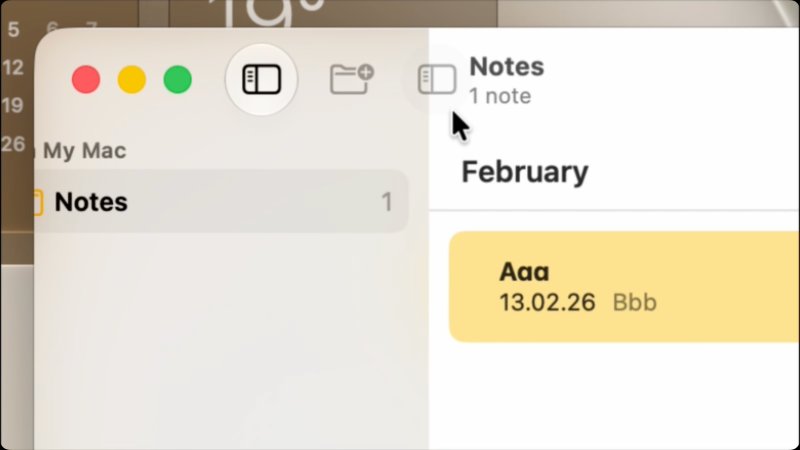
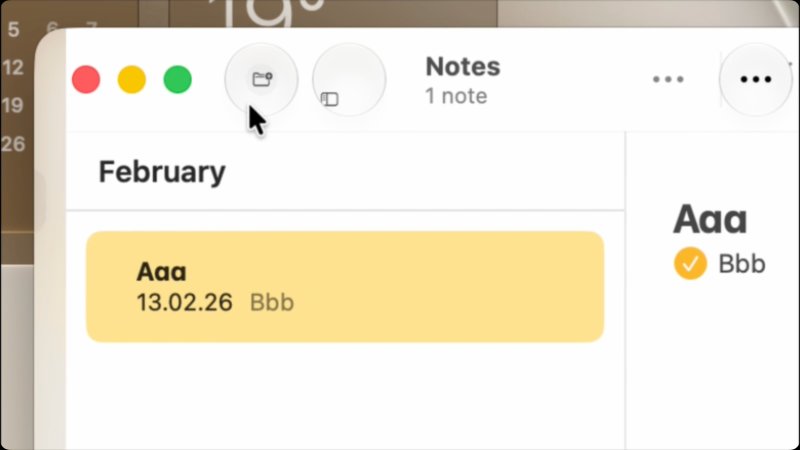
The issue is not that an imperfect frame causes a task to fail. It is that the product briefly stops explaining itself. A button appears between states. A placeholder moves independently from a cursor. A selected region suggests a change that did not happen. These moments are small, but they accumulate into a judgment: this software may not be fully under control.
That matters in markets where AI tools, design apps, developer platforms, and productivity software are all fighting for the same scarce thing, user confidence. A product can ship impressive features and still feel unready if transitions expose technical shortcuts. The risk is sharper for venture-backed teams, because rapid shipping often creates interface debt that is easy to dismiss until retention or activation starts to suffer.
There is no funding round attached to the essay, no investor syndicate, and no traction metric. The market positioning is cultural rather than financial: a reminder that product quality can be a moat when competitors are racing to add visible capability. In a startup ecosystem trained to reward demos, screenshots, and feature velocity, Prokopov is arguing for the value of the frames no one puts in a pitch deck.
The technical lesson is direct. Interfaces should be evaluated as time-based systems, not static screens. Designers and engineers need to inspect intermediate states, especially during navigation, loading, resizing, mode changes, and animation handoffs. Browser teams have started formalizing some of this through tools like the View Transition API, but the principle applies beyond the web.
YouTube’s example shows how even a simple rectangle movement can become confusing when implementation details bleed into the animation.

The likely culprit in many of these cases is architectural friction: DOM constraints, independent layout systems, separately owned components, or animation code added after the core interaction was already built. Prokopov calls this the point where technology outsmarts the programmer. In product terms, it is what happens when the implementation model becomes more visible than the user’s mental model.
The opportunity is practical. Teams can add frame-level review to product QA without turning polish into an endless design exercise. Record interactions at slow speed. Pause transitions halfway. Test loading screens with slow networks. Check whether two parts of the same view ever report conflicting state. Treat layout shifts as bugs, not quirks. Make animations accountable to meaning, not just motion.
That kind of care rarely gets announced like funding. It does not produce a clean metric on launch day. But it changes how a product feels after repeated use, which is where durable software companies are built. Every frame perfect is an ambitious standard, maybe an unreachable one. As a product discipline, it is still useful because it asks the right question: does the interface remain honest while it moves?
Comments
Please log in or register to join the discussion