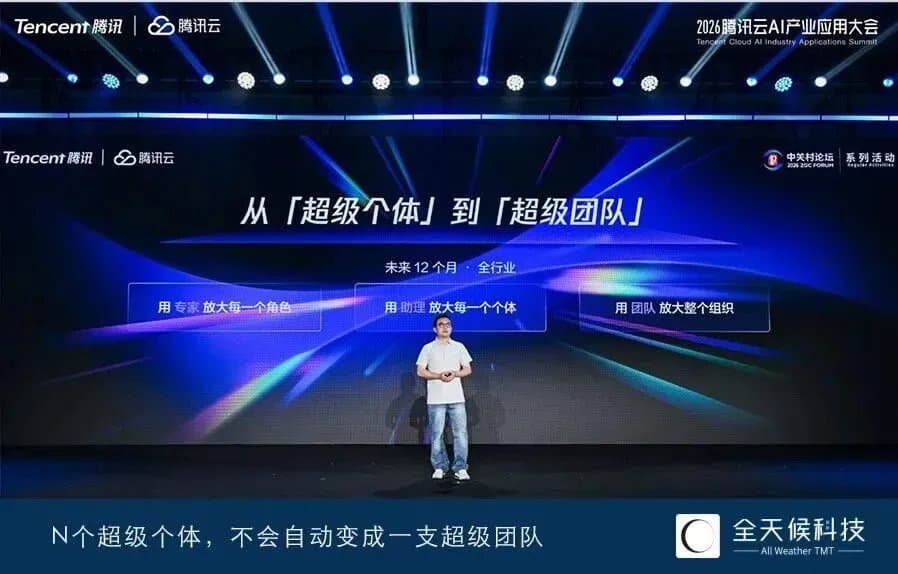
Tencent announced WorkBuddy Enterprise and Agent Suite at its Cloud AI Industry Application Conference, positioning them as a platform for human‑AI collaboration rather than a showcase of raw model performance. The article examines what the products claim, the engineering ideas behind them, and the practical limits they face in real‑world deployments.
Tencent Shifts to Enterprise AI Engineering with WorkBuddy and Agent Suite
What’s claimed
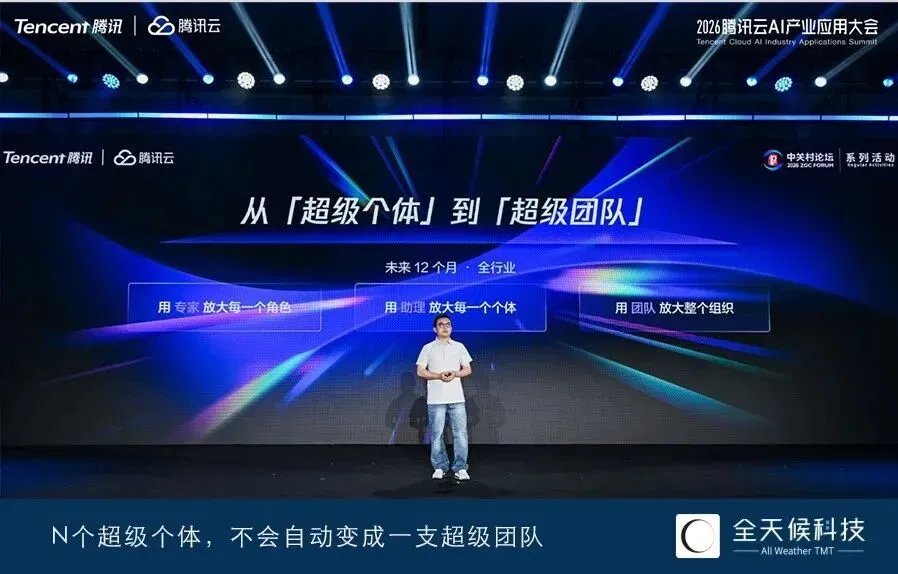
At the 2026 Tencent Cloud AI Industry Application Conference the company introduced WorkBuddy Enterprise and Agent Suite as the core of an "AI‑native organizational evolution" platform. The marketing narrative stresses three promises:
- Shared digital workspaces where humans and AI agents co‑exist on the same task board.
- Persistent, organization‑wide context that survives project hand‑offs and can be reused across teams.
- Continuous, low‑cost exchange of AI‑generated assets (prompts, fine‑tuned models, knowledge graphs) without the overhead of separate licensing or data‑pipeline integration.
Tencent frames these capabilities as a "Context Flywheel" – a loop of start → collaborate → deliver → compound – that allegedly thickens the collective intelligence of the enterprise over time.
What’s actually new
1. Architecture of three‑layer collaboration
The platform separates concerns into team, project, and task layers. At the team layer, a shared workspace UI embeds AI assistants directly into tools such as Tencent Docs, Tencent Cloud Drive, and the internal social platform Tencent Lexiang. The project layer enforces a shared context model: every edit, comment, and AI‑generated artifact is stored in a versioned knowledge base that can be queried by any authorized user or agent. The task layer adds hand‑off primitives that serialize the full state (prompt history, intermediate results, metadata) so a downstream human or AI can resume work without manual reconstruction.
2. Agent Suite as a plug‑in ecosystem
Agent Suite provides a runtime for deploying custom AI agents that can be bound to specific APIs (e.g., CRM, ERP, ticketing). The runtime exposes a standardized skill interface (JSON‑based request/response schema) that lets developers register new capabilities without rewriting glue code. This is similar to the approach taken by Microsoft’s Copilot Studio and Google’s Workspace AI, but Tencent packages it inside its existing cloud console, reducing the friction for existing customers.
3. Knowledge asset reuse
Tencent claims systematic reuse of prompts, fine‑tuned models, and extracted entities. Under the hood this relies on a metadata registry that tags each asset with provenance, version, and access control attributes. The registry is searchable via a GraphQL endpoint, enabling downstream projects to pull in a “knowledge snippet” with a single API call. This mirrors the asset‑library concept introduced in Meta’s LLaMA‑Hub, but Tencent integrates it tightly with its document storage services.
Limitations and open challenges
| Area | Current limitation |
|---|---|
| Data privacy | All context is stored in Tencent’s cloud. Enterprises with strict data‑sovereignty requirements must negotiate on‑prem deployments, which are not yet publicly supported. |
| Agent reliability | Agents are only as good as the underlying LLMs. Tencent has not disclosed which foundation models power the agents (likely a mix of internally trained models and licensed third‑party APIs). Without transparent model cards, it is hard to assess bias or hallucination risk. |
| Integration overhead | While the suite plugs into Tencent Docs and Lexiang, organizations using non‑Tencent stacks will need custom connectors. The SDK is available on GitHub (workbuddy-sdk), but building robust adapters can be non‑trivial. |
| Performance at scale | The shared context store is a centralized service. Benchmarks released at the conference show latency of ~120 ms for simple queries on a 10 TB knowledge base, but latency grows linearly with concurrent users. Large enterprises may need to shard the store, a feature not yet documented. |
| Cost model | Tencent advertises “low‑cost exchange of AI assets,” yet pricing details are missing. Early adopters report a base fee of ¥0.12 per 1,000 token processed plus storage charges, which can add up for high‑throughput use cases. |
How it fits into Tencent’s broader AI strategy
Tencent’s shift mirrors a broader industry move away from headline‑grabbing model size contests toward engineering‑centric value. By leveraging its existing cloud infrastructure and enterprise apps, the company can offer a more integrated experience than pure‑play AI startups that focus on model APIs alone. The fireside chat between Dowson Tong and Yao Shunyu highlighted this intent: Tencent will let its engineering muscle do the heavy lifting while positioning AI as a productivity layer rather than a standalone service.
Practical takeaways for practitioners
- Start with a pilot – Use the free tier of WorkBuddy Enterprise to create a shared workspace for a single team. Measure how much time is saved on prompt iteration versus manual documentation.
- Define asset taxonomy early – Tag prompts and model outputs with clear business semantics (e.g.,
customer‑onboarding,risk‑assessment). This improves discoverability when the knowledge base grows. - Monitor agent output – Deploy a simple validation hook that checks for hallucinations before an agent’s suggestion is persisted to the shared context.
- Plan for data residency – If your organization cannot store sensitive data in public cloud, request a private‑cloud or on‑prem deployment roadmap from Tencent sales.
Conclusion
Tencent’s WorkBuddy Enterprise and Agent Suite are not about beating the latest benchmark scores; they are about stitching AI into the daily workflows of large organizations. The three‑layer collaboration model, the asset registry, and the tight integration with Tencent’s existing productivity suite are genuine engineering advances. However, enterprises must still grapple with data‑privacy constraints, hidden costs, and the need for custom integration work. For companies already embedded in the Tencent ecosystem, the platform could accelerate AI adoption, but the promised "flywheel" effect will only materialize after careful governance and performance tuning.
Read the official announcement on the Tencent Cloud AI Conference page and explore the open‑source SDK on GitHub.
Comments
Please log in or register to join the discussion