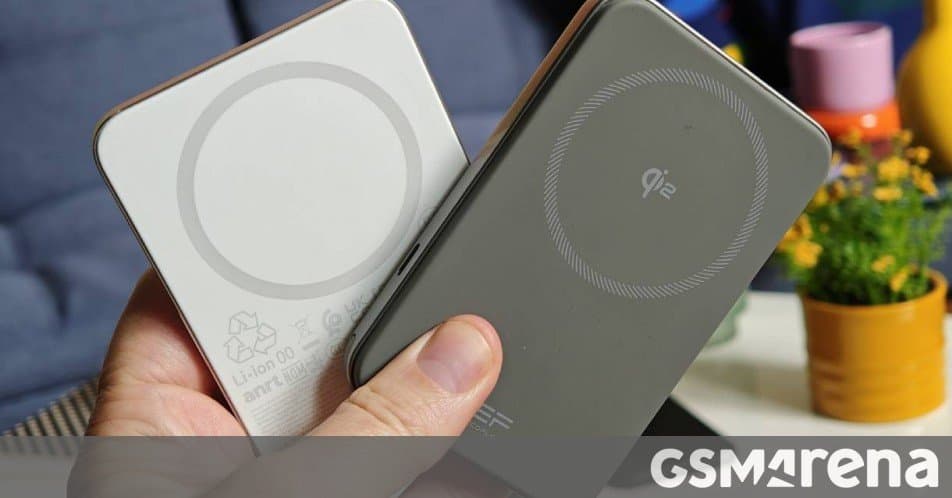
We put Xiaomi's ultra-thin 5,000mAh magnetic power bank against a standard model to see if size really matters when it comes to portable charging.
When it comes to portable power banks, the numbers on the box don't always tell the whole story. Xiaomi's new UltraThin Magnetic Power Bank 5000 15W promises to deliver 5,000mAh of juice in a remarkably slim package, but how does it actually perform compared to more conventional designs?
Size Isn't Everything
At first glance, the Xiaomi UltraThin Magnetic Power Bank 5000 15W is a marvel of engineering. Weighing just 98g and measuring a mere 98.5 x 71.5 x 6.0mm, it's significantly more compact than your average 5,000mAh power bank. To put this in perspective, we compared it against a 5,000mAh unit from EcoFlow, which tips the scales at 180g and measures 108.0 x 70.0 x 14.4mm - nearly twice as heavy and more than twice as thick.
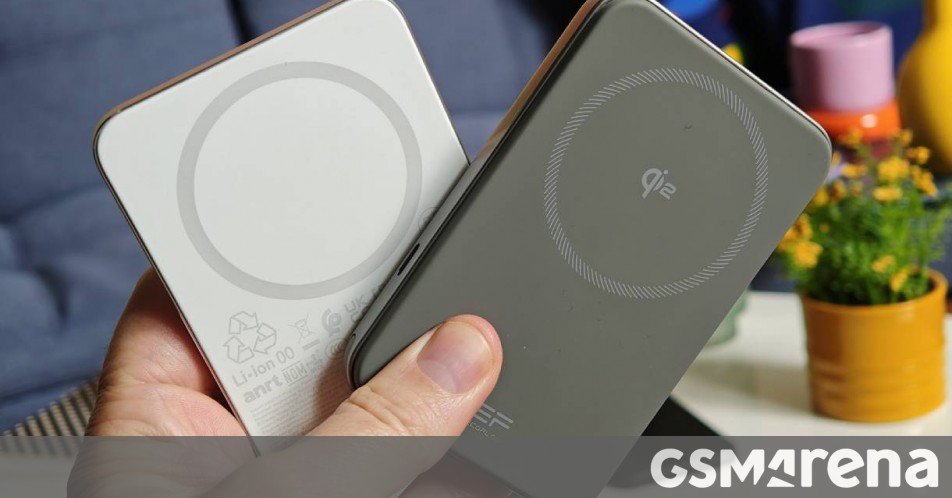
Some of the EcoFlow's extra bulk comes from its integrated charging cable and kickstand, but the real magic behind Xiaomi's slim profile is its Silicon-Carbon battery with 16% silicon content. This cutting-edge technology allows for a thinner, lighter design without sacrificing capacity.
The Capacity Question
But here's where things get interesting. Both power banks are rated at 5,000mAh, so you'd expect them to deliver roughly the same amount of charge to your device, right? Not quite.
We conducted a real-world test using an Oppo Find X8 Ultra (which has a 6,100mAh battery) starting from 20% charge. To ensure fair comparison, we used wired charging rather than wireless, as it's more efficient and gives both power banks their best shot at maximum performance.
Performance Showdown
The EcoFlow, capable of up to 30W charging over USB-C, got the Oppo from 20% to 41% in just 15 minutes. The Xiaomi, limited to 22.5W, took about 20 minutes to reach the same point. Throughout the entire charging session, the EcoFlow maintained a consistent 35% speed advantage that matched its advertised specifications almost perfectly.
The EcoFlow depleted its battery after one hour, bringing the Find X8 Ultra up to 84% charge. The Xiaomi took 19 minutes longer and only managed to charge the phone to 79%.
Doing the math, the EcoFlow effectively delivered around 3,900mAh to the phone, while the Xiaomi managed approximately 3,600mAh - about 8.5% less power despite both being labeled as 5,000mAh units.
Why the Difference?
This discrepancy highlights an important reality about power banks: the rated capacity doesn't equal the actual charge delivered. Various inefficiencies in the charging process - voltage conversion, heat generation, and the phone's own charging circuitry - all consume some of that theoretical capacity.
The EcoFlow's higher charging speed and potentially more efficient internal design allowed it to deliver more usable power, even though both units started with the same rated capacity.
The Verdict
So, are two 5,000mAh power banks the same size? As our testing shows, absolutely not. While Xiaomi's UltraThin design is impressive from a portability standpoint, it comes with a trade-off in actual charging performance.
For users who prioritize pocketability and weight above all else, the Xiaomi UltraThin Magnetic Power Bank 5000 15W is hard to beat. But if you need maximum charge from a compact power bank, you might want to look at slightly thicker options that can deliver more of their rated capacity.
The key takeaway? When shopping for a power bank, don't just look at the mAh rating - consider the charging speed, efficiency, and your specific needs. Sometimes, a bit of extra thickness can mean a lot more usable power when you need it most.
Comments
Please log in or register to join the discussion