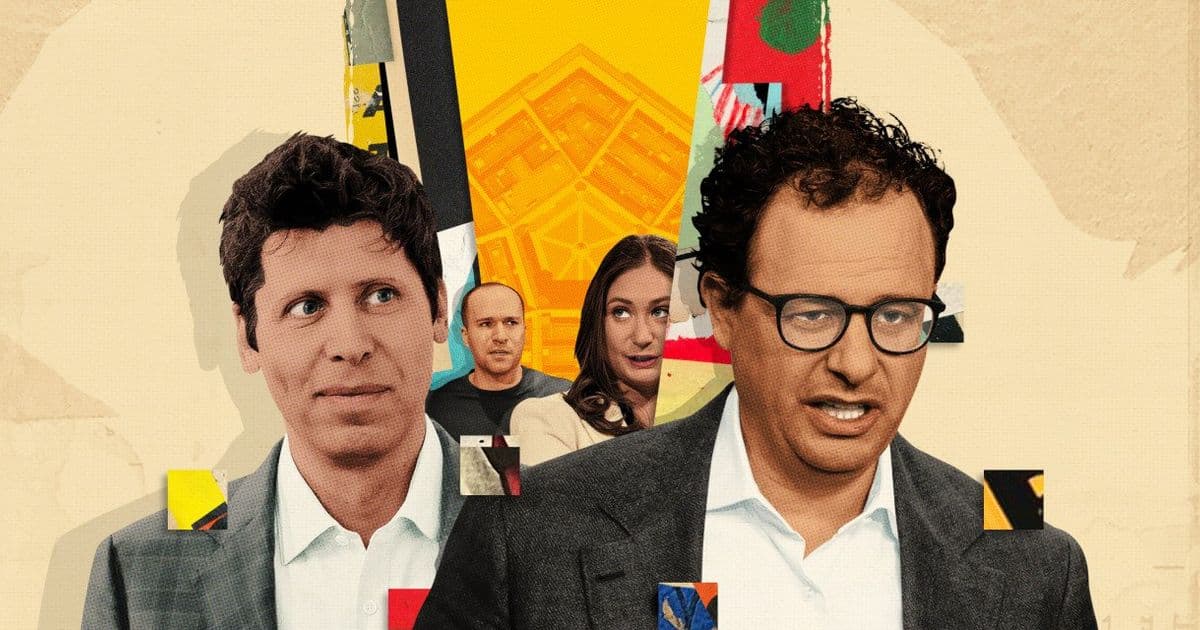
A decade-long personal feud between OpenAI's Sam Altman and Anthropic's Dario Amodei is influencing the direction of artificial intelligence development, with sources revealing Amodei compared Altman's legal battles to historical conflicts.
The artificial intelligence industry is being shaped not just by technological breakthroughs and market forces, but by a decade-long personal feud between two of its most influential leaders. According to a detailed profile by Keach Hagey in the Wall Street Journal, the rivalry between Sam Altman of OpenAI and Dario Amodei of Anthropic has become a defining force in how the world encounters AI technology.
The animosity between these two figures runs deep, with sources revealing that Amodei has likened Altman's legal fight with Elon Musk to Hitler's conflict with Stalin. This comparison underscores the intensity of the personal animosity that has developed over years of competition and philosophical disagreements about the future of AI.
Their feud began when Amodei was a key researcher at OpenAI, where he helped develop some of the company's most important early models. However, he left in 2021 to found Anthropic, taking several colleagues with him, citing concerns about OpenAI's direction and safety practices. Since then, the two companies have been locked in a bitter competition for talent, funding, and technological supremacy.
This personal conflict has manifested in various ways throughout the AI industry. When OpenAI launched ChatGPT in late 2022, Anthropic responded with its own chatbot, Claude, positioning it as a safer alternative. The companies have engaged in a talent war, with engineers and researchers frequently switching between them. Their rivalry has even extended to legal battles, with OpenAI suing Anthropic over alleged trade secret theft.
The feud has broader implications for the AI industry. As these two companies compete for dominance, they're making different bets about the future of the technology. OpenAI has pursued a more aggressive commercial strategy, while Anthropic has emphasized safety and alignment. This divergence reflects not just different business philosophies but also the personal convictions of their respective leaders.
Their rivalry has also influenced how AI is regulated and perceived. As lawmakers and regulators grapple with questions about AI safety and governance, they're often hearing competing narratives from these two camps. The personal animosity between Altman and Amodei has made it difficult for the industry to present a unified front on regulatory issues.
Beyond the immediate business implications, this feud represents a larger pattern in the tech industry where personal rivalries between founders and executives can shape entire sectors. Similar dynamics have played out in other tech domains, from the Jobs-Gates rivalry of the personal computer era to the more recent Musk-Zuckerberg tensions.
The Altman-Amodei feud also highlights the human element in technological development. Despite AI being portrayed as an impersonal force, its development is being driven by individuals with strong personalities, competing visions, and personal grudges. This human element may prove as important as any technical consideration in determining AI's trajectory.
As the AI industry continues to evolve, the personal dynamics between its key players will likely remain a significant factor. The Altman-Amodei rivalry serves as a reminder that technological progress is not just about algorithms and data, but also about the people who create and control these systems. Their decade-long feud may ultimately prove to be one of the most influential forces shaping the future of artificial intelligence.
For the broader tech community, this story offers a fascinating glimpse into the personal dynamics that drive innovation and competition. It also raises questions about whether such intense personal rivalries are ultimately beneficial or detrimental to technological progress. As AI becomes increasingly central to our lives, understanding the human forces behind its development becomes ever more important.
The rivalry between Altman and Amodei continues to play out across multiple fronts, from product launches to hiring battles to legal disputes. As both companies push toward increasingly advanced AI systems, their personal animosity ensures that competition will remain fierce. Whether this competition ultimately benefits or hinders the development of safe, beneficial AI remains an open question that only time will answer.
Comments
Please log in or register to join the discussion