A deep dive into reverse engineering a vintage Mac application's serial number validation, revealing the systematic methodology behind software analysis and the elegant simplicity of authentication algorithms.
The realm of software reverse engineering represents one of the most intellectually demanding pursuits in computer science, requiring a unique blend of patience, analytical thinking, and intimate knowledge of system architecture. In examining the process of reversing the serial validation mechanism in 'Grateful Dead: D2S2', we uncover not merely a technical walkthrough but a fundamental approach to understanding software at its most elemental level.
Architectural First Principles
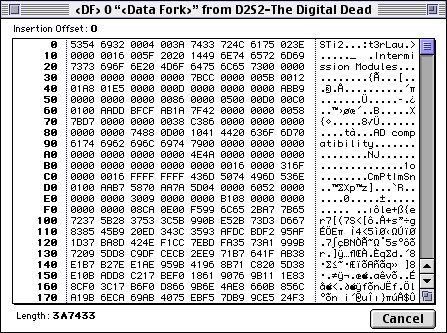
Before any meaningful analysis can commence, one must establish the foundational characteristics of the target application. The author's methodical approach begins with determining whether D2S2 is a 68k or PowerPC (PPC) application—a distinction that profoundly impacts debugging strategy. By examining the Data Fork resource in Resorcerer and noting the absence of the distinctive 'Joy!peffpwpc' string that identifies PPC applications, the investigator correctly categorizes it as a 68k binary. This preliminary step exemplifies the importance of architectural awareness in reverse engineering, as different processor architectures necessitate distinct debugging methodologies and tool configurations.
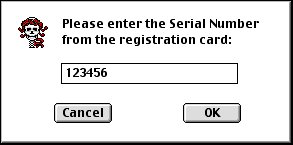
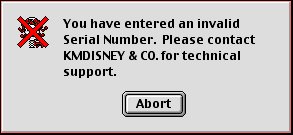
The investigation then progresses to examining the user interface elements, specifically the serial number entry dialog and subsequent error alert. By comparing these standard UI components with more sophisticated alternatives, the author establishes that the application relies on conventional Macintosh Toolbox calls rather than custom-drawn interfaces. This observation proves critical, as standard UI elements consistently utilize predictable system functions that can be intercepted with breakpoints.
Strategic Breakpoint Placement
The strategic selection of appropriate breakpoints represents perhaps the most crucial skill in reverse engineering validation mechanisms. The author's choice to target the GetDialogItemText Toolbox call demonstrates an understanding of the application's likely execution flow. This function, responsible for retrieving text from standard dialog controls, provides the perfect entry point for examining the serial validation process.
MacsBug's architecture-specific breakpoint commands—'atb' for 68k applications and 'tvb' for PPC—highlight the nuanced understanding required for effective debugging. The ability to distinguish between these architectures and apply the appropriate commands reflects the deep technical knowledge necessary for professional-grade reverse engineering.
Algorithmic Deconstruction
Once execution is halted at the chosen breakpoint, the meticulous process of algorithmic deconstruction begins. The author guides us through the MacsBug navigation commands—'s' for step, 'so'/'t' for step over, 'il' for instruction list, and 'dm' for memory display—demonstrating how each contributes to building a comprehensive understanding of the validation routine.
The validation algorithm reveals itself to be surprisingly elegant in its simplicity: a 13-character serial following the pattern [letter][letter][number][number][5][number][number][letter][number][number][number][number][L]. The algorithm first validates the length, ensuring exactly 13 characters, then systematically checks each position against specific criteria—letters in certain positions, numbers in others, with a special requirement for the final character to be an uppercase 'L'.
Two subsidiary functions handle the character validation: one checking for alphabetic characters (A-Z, a-z) and another verifying numeric characters (0-9). This modular approach to validation demonstrates thoughtful software design, separating concerns and maintaining code clarity even in security-sensitive components.
The Philosophical Dimensions of Reverse Engineering
Beyond the technical mechanics, this exercise illuminates several philosophical dimensions of software development and analysis. The validation algorithm, while simple, represents a fascinating intersection of security and usability. Its creators balanced the need for basic protection against the desire for user convenience, resulting in a system that could be circumvented with sufficient technical knowledge yet remained effective against casual attempts.
The process also reveals the fundamental tension between obfuscation and transparency in software design. While the D2S2 validation is straightforward by contemporary standards, it represents an early attempt at software protection—a precursor to the increasingly sophisticated anti-tampering measures we see today.
Educational Implications
This tutorial serves as an excellent introduction to reverse engineering methodology, demonstrating that even simple algorithms can yield valuable insights when approached systematically. The step-by-step disassembly of the validation routine shows how complex behavior emerges from seemingly straightforward instructions, a principle that applies across all software domains.
The article's value extends beyond mere technical instruction, offering a mindset for approaching unfamiliar code. By emphasizing methodical analysis, careful observation, and systematic hypothesis testing, it provides a framework applicable to reverse engineering challenges far beyond serial validation.
Contemporary Relevance
While the specific techniques described apply primarily to vintage 68k Mac applications, the underlying principles remain remarkably relevant. Modern reverse engineering still begins with architectural analysis, strategic breakpoint placement, and algorithmic deconstruction. What has changed is the sophistication of protection mechanisms and the complexity of modern software architectures.
Contemporary applications employ layered security approaches, combining code obfuscation, anti-debugging techniques, and network-based validation that would render the straightforward approach described here ineffective. However, the fundamental methodology—understand the architecture, identify the validation point, trace the execution flow, deconstruct the algorithm—remains the cornerstone of professional reverse engineering.
Ethical Considerations
The article implicitly raises important questions about the ethics of reverse engineering. While presented in an educational context, similar techniques could be used to bypass licensing systems or circumvent intended software limitations. This tension between knowledge acquisition and potential misuse represents a fundamental challenge in the field of reverse engineering.
Professional reverse engineers typically operate within defined ethical boundaries, focusing on security research, interoperability, or educational purposes. The line between legitimate research and malicious activity often depends more on intent than technique—a distinction that requires careful consideration by practitioners in the field.
Conclusion: The Enduring Craft of Software Analysis
The reverse engineering of Grateful Dead D2S2's serial validation, while technically straightforward by contemporary standards, exemplifies the systematic methodology that defines professional software analysis. It demonstrates that even the most seemingly complex systems yield to patient, methodical examination when approached with appropriate tools and techniques.
As software continues to evolve in complexity and sophistication, the principles illustrated in this tutorial remain foundational. The ability to understand code at the assembly level, trace execution flow, and deconstruct algorithms represents a craft that transcends specific technologies or platforms—a testament to the enduring nature of software as both a science and an art.
Comments
Please log in or register to join the discussion