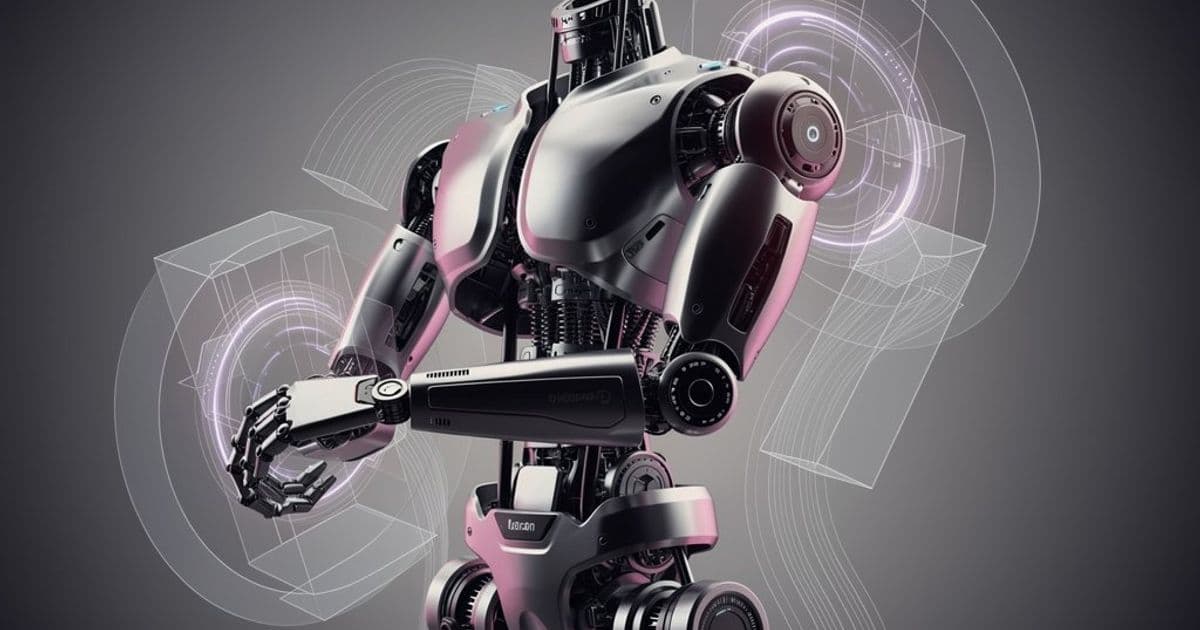
Exploring how artificial intelligence revolutionizes mechanical design to create sophisticated autonomous robots capable of complex decision-making and adaptation.

The Triad of Modern Robotics
At the intersection of mechanical engineering, artificial intelligence, and autonomous systems lies the future of robotics. This synergy enables machines to perceive environments, make decisions, and execute physical tasks with unprecedented sophistication. While autonomous systems promise efficiency, their development faces challenges mirroring human organizational dynamics – including the need for transparent "decision-making criteria" akin to the meritocracy principles discussed in workplace management.
Mechanical Foundations Meet AI Intelligence

Robotic embodiment begins with mechanical engineering – designing structures, actuators, and sensors that interact with the physical world. Modern robots incorporate:
- Adaptive materials that respond to environmental stimuli
- Energy-efficient locomotion systems
- Multi-modal sensor arrays (LIDAR, cameras, tactile sensors)
These hardware advancements become truly transformative when fused with AI. Machine learning algorithms process sensor data in real-time, enabling:
- Perception: Object recognition through computer vision
- Cognition: Decision-making via neural networks
- Adaptation: Continuous improvement through reinforcement learning
Autonomous Systems: Beyond Preprogrammed Actions
True autonomy emerges when robots navigate unstructured environments. Consider MIT's drone research:
 MIT's Infinite Corridor drone tests showcase autonomous navigation in complex human spaces
Key breakthroughs include:
- Simultaneous Localization and Mapping (SLAM): Real-time environment mapping
- Multi-agent coordination: Swarm robotics for collaborative tasks
- Failure resilience: Systems that self-diagnose and reconfigure
The Meritocracy Paradox in Machine Learning
Interestingly, AI systems face bias challenges similar to human organizations. When algorithms are trained on biased data, they perpetuate inequities – an echo of the "paradox of meritocracy" where systems designed for fairness sometimes amplify biases. Roboticists combat this through:
- Transparent model architectures
- Diverse training datasets
- Continuous bias auditing
Future Horizons
As embodied AI advances, we're moving toward robots that:
- Perform delicate surgeries autonomously
- Conduct search/rescue in disaster zones
- Adapt manufacturing processes in real-time
The journey requires mechanical innovation, ethical AI frameworks, and continuous refinement – much like building meritocratic systems where performance is measured by transparent, accountable standards.
Comments
Please log in or register to join the discussion