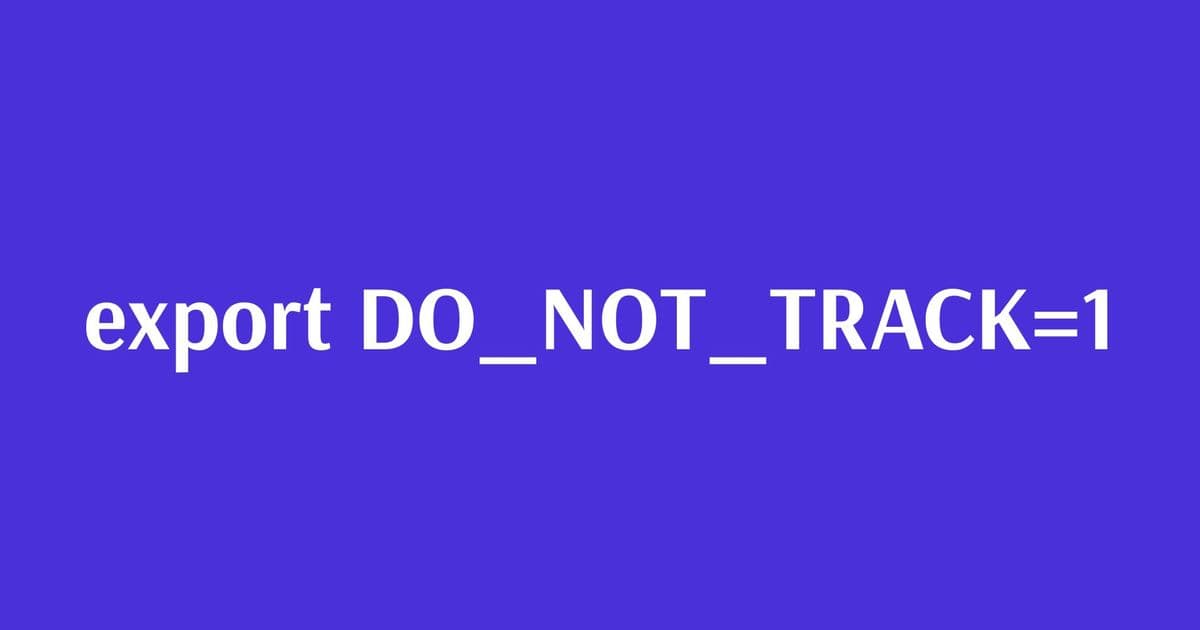
A proposed standard environment variable aims to simplify opting out of telemetry across developer tools, but faces challenges in adoption and effectiveness.
The developer ecosystem is experiencing a quiet but significant shift in how we approach privacy and telemetry. As more CLI tools, SDKs, and frameworks collect usage data by default, a grassroots movement is coalescing around a simple yet powerful solution: a standardized environment variable that would allow developers to opt out of all tracking with a single command.
The Telemetry Proliferation Problem
Today's developer environment resembles a patchwork of opt-out mechanisms. Each tool has its own approach to respecting user privacy, creating a frustrating maze of environment variables and configuration files. As documented on the DO_NOT_TRACK proposal page, the situation has become untenable:
- .NET requires
DOTNET_CLI_TELEMETRY_OPTOUT=1 - AWS SAM CLI uses
SAM_CLI_TELEMETRY=0 - Azure CLI needs
AZURE_CORE_COLLECT_TELEMETRY=0 - Gatsby expects
GATSBY_TELEMETRY_DISABLED=1 - Go requires
go telemetry off - Google Cloud SDK uses
gcloud config set disable_usage_reporting true - Homebrew sets
HOMEBREW_NO_ANALYTICS=1 - Netlify CLI requires
netlify --telemetry-disable - Syncthing uses
STNOUPGRADE=1
The list continues to grow as more tools join the telemetry bandwagon. "You get the idea," the proposal states. "There are too many, and they are all different."
This fragmentation creates several problems:
- Cognitive overhead for developers who must remember multiple opt-out commands
- Inconsistent implementation across tools
- Barrier to entry for privacy-conscious newcomers
- Potential for accidental data collection
The DO_NOT_TRACK Proposal
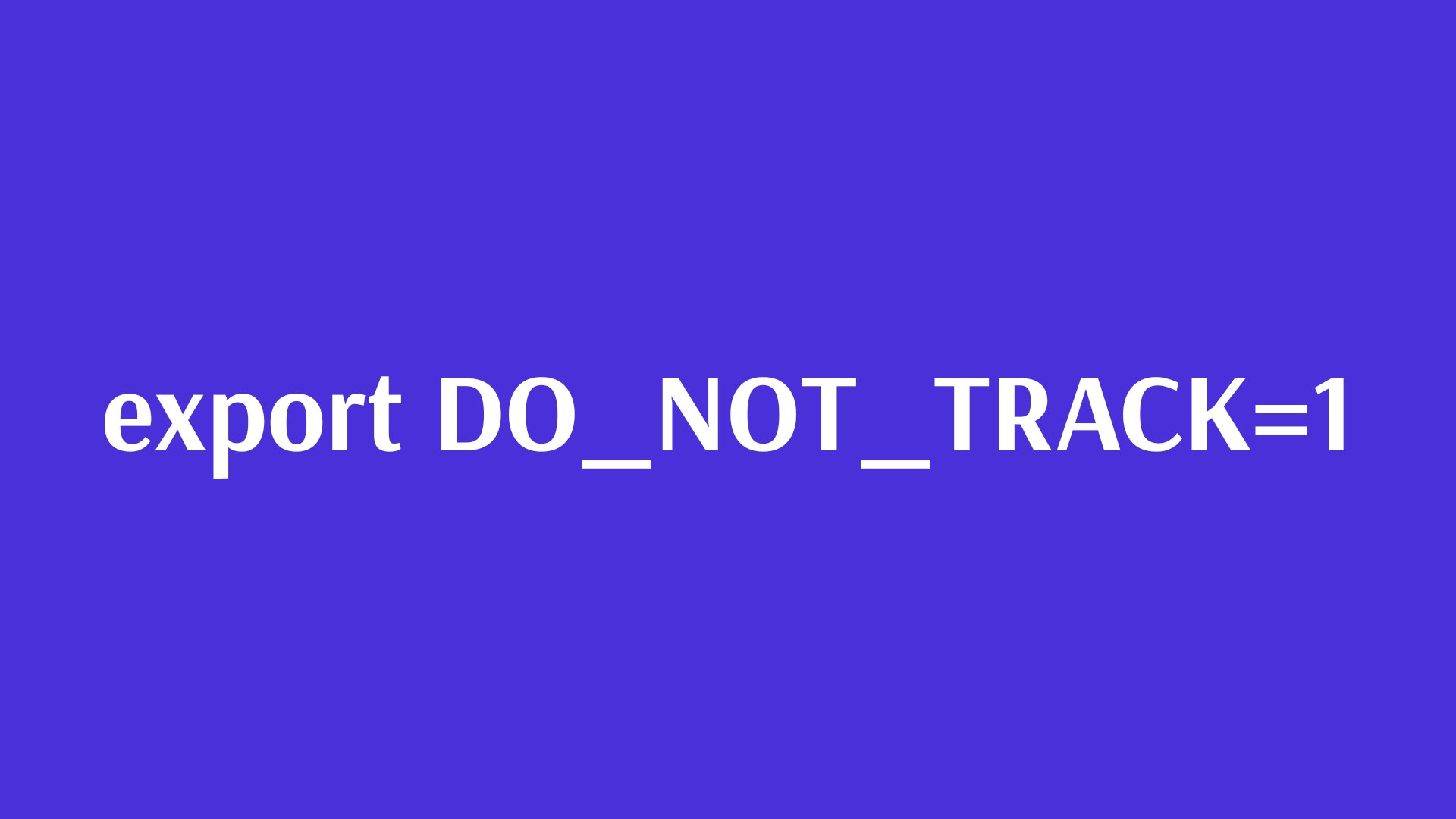
The proposed solution is elegantly simple: a single environment variable DO_NOT_TRACK=1 that would signal to all developer tools to disable tracking. The proposal outlines what this variable would cover:
- Ad tracking
- Usage reporting (anonymous or not)
- Telemetry
- Crash reporting
- Non-essential-to-functionality requests to the creator of the software or third-parties
"We just want local software," the proposal declares, capturing the sentiment of developers who prefer their tools to function without phoning home.
Implementation for users is straightforward across different shells:
- Bash: Add
export DO_NOT_TRACK=1to~/.bashrc - Zsh: Add
export DO_NOT_TRACK=1to~/.zshrc - Fish: Add
set -x DO_NOT_TRACK 1to~/.config/fish/config.fish - PowerShell: Add
$env:DO_NOT_TRACK = "1"to$PROFILE - Windows CMD: Use
setx DO_NOT_TRACK 1in system environment variables
Adoption Signals and Industry Response
The proposal, while still in its early stages, has already garnered attention in developer circles. Its approach mirrors successful precedents like the NO_COLOR standard, which provides a simple way to disable colored output across tools, and its counterpart FORCE_COLOR.
Several prominent developers have expressed support for the concept, noting that while telemetry can provide valuable insights to maintainers, the current opt-out landscape is unsustainable. The proposal calls on software authors to:
- Check for the
DO_NOT_TRACKvariable - Disable all tracking when it's set to 1
- Continue respecting existing opt-out mechanisms
- Consider making telemetry opt-in rather than opt-out
Counter-Perspectives and Challenges
Despite the clear benefits, the DO_NOT_TRACK proposal faces several challenges:
The Telemetry Defense
Some argue that telemetry provides critical feedback for tool maintainers. "Without usage data, how can we prioritize features or identify bugs?" is a common refrain. Proponents of telemetry often point to improved tool quality as a result of data collection.
Implementation Hurdles
For established tools with existing telemetry systems, adding support for a new environment variable requires engineering resources. Some may be reluctant to implement another opt-out mechanism when they already have their own in place.
The Compliance Question
The proposal doesn't address what happens when tools ignore the variable. Unlike browser-based DNT headers, there's no enforcement mechanism for environment variables. The standard relies entirely on community adoption and good-faith implementation.
The Privacy Paradox
There's a philosophical tension here: developers who build systems that respect privacy often rely on telemetry themselves to improve their tools. This creates a complex ecosystem where everyone wants to collect data but wants their users to opt in.
Broader Implications
The DO_NOT_TRACK movement reflects a growing awareness of digital privacy among developers. As more of our work happens through command-line interfaces and developer tools, the question of what data these tools collect becomes increasingly important.
If widely adopted, the standard could:
- Reduce the cognitive load on developers managing privacy settings
- Create a clear, predictable way to opt out of tracking
- Encourage more thoughtful approaches to telemetry collection
- Potentially influence broader privacy standards in software development
The proposal's strength lies in its simplicity and alignment with existing developer workflows. Environment variables are already a fundamental part of how developers configure their systems, making this a natural extension rather than a new paradigm.
The Path Forward
For DO_NOT_TRACK to gain traction, it will need:
- Adoption by major tooling providers
- Documentation and promotion within the developer community
- Clear guidelines for implementation
- Examples of successful adoption
The proposal's authors recognize this, noting that "for software authors" section is crucial to building momentum. By making implementation straightforward and providing clear benefits, they hope to convince maintainers to add support.
In an era where digital privacy concerns are at the forefront of technology discussions, the DO_NOT_TRACK proposal represents a practical, developer-centric approach to a complex problem. While it may not eliminate telemetry entirely, it could create a more respectful and transparent ecosystem where developers have clear control over their data.
As the proposal states, "We just want local software." In a world increasingly connected to the cloud, that simple desire may be the most powerful argument for a standardized approach to privacy in developer tools.
Comments
Please log in or register to join the discussion