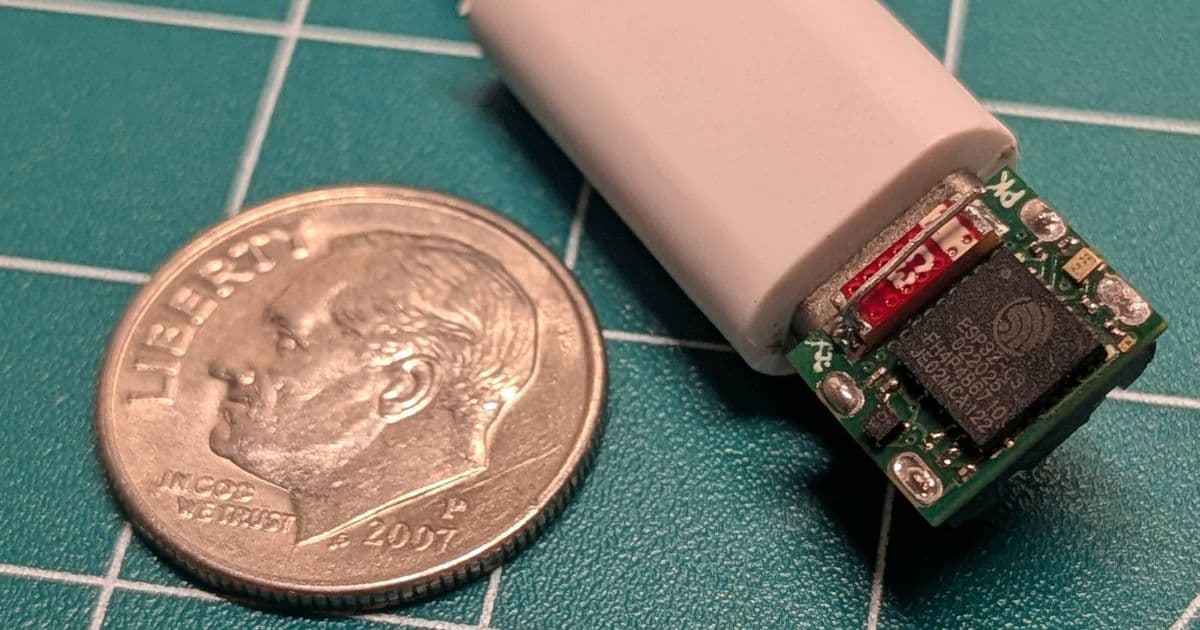
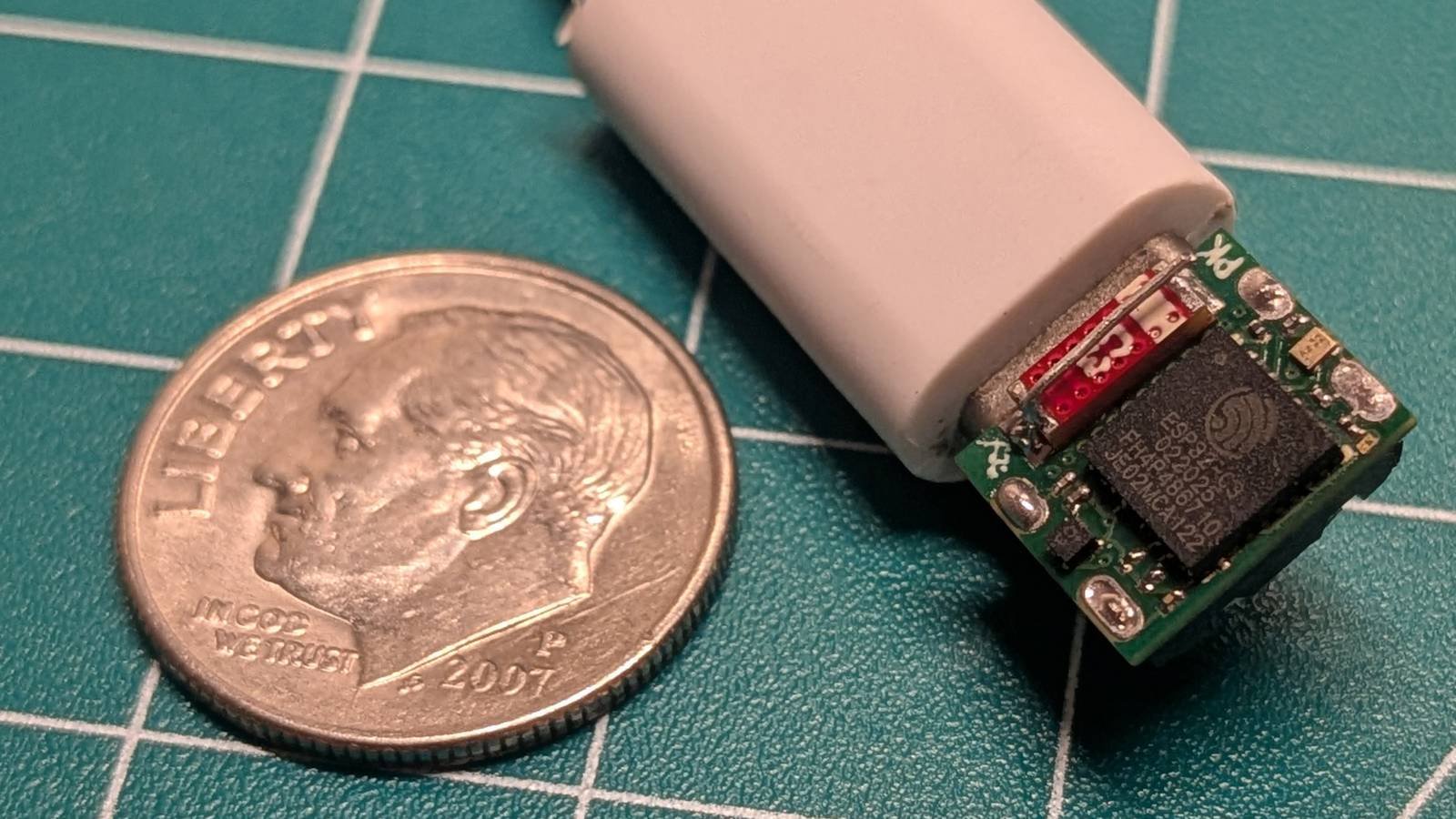
The F32 is a fingernail-sized ESP32 development board that uses microscopic 01005 components and intentionally ignores standard design guidelines, yet somehow functions as a fully operational Wi-Fi-enabled microcontroller.
The world of embedded electronics is no stranger to miniaturization, but the F32 takes things to an almost absurd extreme. This fingernail-sized ESP32 development board, created by Reddit user Pegor and shared on the ESP32 subreddit, is a marvel of engineering that pushes the boundaries of what's possible with consumer-grade electronics.
The Engineering Challenge
The F32 isn't just small—it's aggressively tiny. The board uses 01005 components, which are among the smallest surface-mount parts available in the consumer electronics market. To put this in perspective, an 01005 resistor measures approximately 0.4mm × 0.2mm—about the size of a grain of sand. Working with these components requires:
- Magnification equipment (jeweler's loupe or digital microscope)
- Ultra-fine soldering irons
- Steady hands and exceptional patience
- Specialized tweezers designed for microelectronics
Design Philosophy: Breaking the Rules
What makes the F32 particularly fascinating is that it "intentionally ignores many standard design guidelines." This isn't a case of cutting corners or making mistakes—it's a deliberate choice to push the limits of what's possible. Standard PCB design guidelines exist for good reasons: they ensure signal integrity, thermal management, and reliable manufacturing. By ignoring these rules, Pegor has created a board that technically shouldn't work as well as it does.
Technical Specifications
The F32 packs an impressive amount of functionality into its tiny form factor:
- ESP32 microcontroller with Wi-Fi capabilities
- USB-C connector for power and programming
- Web-based interface for control
- Support for LED control and Wi-Fi module management
- Open-source hardware design
The board is designed to mount directly onto a USB-C connector, eliminating the need for additional cables or adapters. This direct connection approach saves space but also introduces additional design challenges, particularly around power delivery and signal routing.
The DIY Challenge
For those brave enough to attempt building their own F32, the GitHub repository provides all the necessary resources:
- Complete bill of materials (BOM)
- Source code for the firmware
- PCB design files
- Assembly instructions
However, Pegor is upfront about the difficulties involved. The combination of microscopic components and non-standard design practices means that even experienced hobbyists will find this project challenging. The soldering alone is a significant hurdle that requires specialized equipment and considerable skill.
Why Build Something So Small?
The practical applications for a board this tiny aren't immediately obvious. Most ESP32 projects don't require components this small, and the difficulty of working with 01005 parts makes mass production impractical. However, the F32 represents something more than just a practical tool—it's a demonstration of what's possible when you push the boundaries of conventional design.
For educational purposes, the F32 offers valuable lessons in:
- Advanced PCB design techniques
- Working with ultra-small components
- Creative problem-solving in electronics
- The limits of miniaturization
The Broader Context
The F32 fits into a larger trend in the maker community toward increasingly sophisticated and compact designs. As ESP32 boards become more powerful and affordable, hobbyists are finding new ways to push their capabilities. Projects like the $15 ESP32 internet radio mentioned in the article show how these versatile microcontrollers can be adapted for creative applications.
Is It Worth the Effort?
For most hobbyists and even many professionals, the answer is probably no. The difficulty of assembly, combined with the availability of more practical alternatives, means that the F32 is more of a technical achievement than a practical tool. However, for those looking to expand their skills or simply prove that something can be done, the F32 offers an unparalleled challenge.
The fact that it works at all, despite ignoring standard design guidelines, is a testament to both the robustness of the ESP32 platform and the skill of its creator. It's a reminder that sometimes, the best way to learn is to break the rules and see what happens.
Getting Started
If you're interested in attempting to build your own F32, you can find all the resources on the F32 GitHub page. Just be prepared for a significant challenge and don't expect it to be an easy project. As Pegor notes, it may be a "hassle to get working," but for those who succeed, the sense of accomplishment will be considerable.
The F32 may not be practical, but it's certainly impressive—a tiny testament to what's possible when creativity meets technical skill in the world of DIY electronics.
Comments
Please log in or register to join the discussion