A reflection on how the wrong tool at the right time can shape a lifetime of creativity.
The MacBook Neo has arrived, and with it, the usual chorus of reviews telling us what it is and who it's for. At $599, with an A18 Pro chip and 8GB of RAM, it's being positioned as a sensible first laptop, a Chromebook killer, a machine for "sensible tasks." The consensus is clear: if you're thinking about Xcode or Final Cut Pro, this is not the computer for you.
But that's exactly the point.
Nobody starts in the right place. You don't begin with the correct tool and work sensibly within its constraints until you organically graduate to a more capable one. That is not how obsession works. Obsession works by taking whatever is available and pressing on it until it either breaks or reveals something.
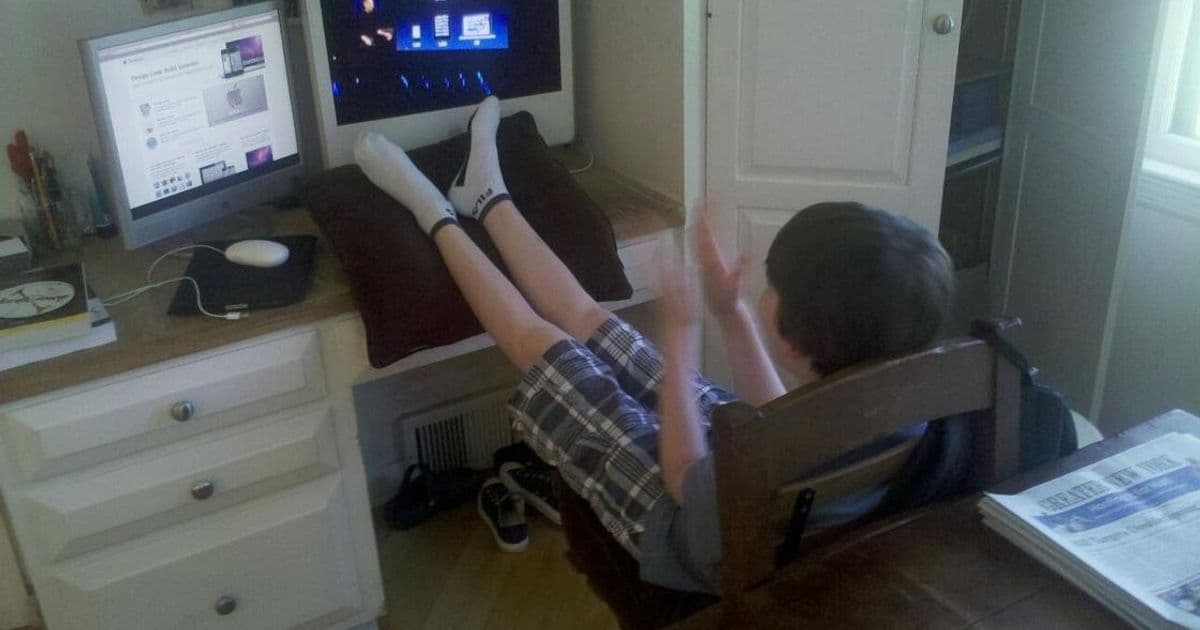
I know this because I was running Final Cut Pro X on a 2006 Core 2 Duo iMac with 3GB RAM and 120GB of spinning rust. I was nine. I had no business doing this. I did it every day after school until my parents made me go to bed. The machine came as a hand-me-down from my nana. She'd wiped it, set it up in her kitchen in Massachusetts. It was one software update away from getting the axe from Apple. I torrented Adobe CS5 the same week. Downloaded Xcode and dragged buttons and controls around in Interface Builder with no understanding of what I was looking at. I edited SystemVersion.plist to make the "About this Mac" window say it was running Mac OS 69, which is the s*x number, which is very funny. I faked being sick to watch WWDC 2011 — Steve Jobs' last keynote — and clapped alone in my room when the audience clapped, and rebuilt his slides in Keynote afterward because I wanted to understand how he'd made them feel that way.
I knew the machine was wrong for what I wanted to do with it. I didn't care. Every limitation was just the edge of something I hadn't figured out yet. It was green fields and blue skies.
What Apple put inside the Neo is the complete behavioral contract of the Mac. Not a Mac Lite. Not a browser in a laptop costume. The same macOS, the same APIs, the same Neural Engine, the same weird byzantine AppKit controls that haven't meaningfully changed since the NeXT era. The ability to disable SIP and install some fuck-ass system modification you saw in a YouTube tutorial. All of it, at $599. They cut the things that are, apparently, not the Mac. MagSafe. ProMotion. M-series silicon. Port bandwidth. Configurable memory. What remains is the Retina display, the aluminum, the keyboard, and the full software platform.
I held it and thought, "yep, still a Mac."
Yes, you will hit the limits of this machine. 8GB of RAM and a phone chip will see to that. But the limits you hit on the Neo are resource limits — memory is finite, silicon has a clock speed, processes cost something. You are learning physics. A Chromebook doesn't teach you that. A Chromebook's ceiling is made of web browser, and the things you run into are not the edges of computing but the edges of a product category designed to save you from yourself. The kid who tries to run Blender on a Chromebook doesn't learn that his machine can't handle it. He learns that Google decided he's not allowed to. Those are completely different lessons.
Somewhere a kid is saving up for this. He has read every review. Watched the introduction video four or five times. Looked up every spec, every benchmark, every footnote. He has probably walked into an Apple Store and interrogated an employee about it ad nauseam. He knows the consensus. He knows it's probably not the right tool for everything he wants to do. He has decided he'll be fine.
This computer is not for the people writing those reviews — people who already have the MacBook Pro, who have the professional context, who are optimizing at the margin. This computer is for the kid who doesn't have a margin to optimize. Who can't wait for the right tool to materialize. Who is going to take what's available and push it until it breaks and learn something permanent from the breaking.
He is going to go through System Settings, panel by panel, and adjust everything he can adjust just to see how he likes it. He is going to make a folder called "Projects" with nothing in it. He is going to download Blender because someone on Reddit said it was free, and then stare at the interface for forty-five minutes. He is going to open GarageBand and make something that is not a song. He is going to take screenshots of fonts he likes and put them in a folder called "cool fonts" and not know why. Then he is going to have Blender and GarageBand and Safari and Xcode all open at once, not because he's working in all of them but because he doesn't know you're not supposed to do that, and the machine is going to get hot and slow and he is going to learn what the spinning beachball cursor means.
None of this will look, from the outside, like the beginning of anything. But one of those things is going to stick longer than the others. He won't know which one until later. He'll just know he keeps opening it.
That is not a bug in how he's using the computer. That is the entire mechanism by which a kid becomes a developer. Or a designer. Or a filmmaker. Or whatever it is that comes after spending thousands of hours alone in a room with a machine that was never quite right for what you were asking of it.
I was that kid. He knows it's probably not the right tool. It doesn't matter. It never did.
The reviews can tell you what a computer is for. They have very little interest in what you might become because of one.
Comments
Please log in or register to join the discussion