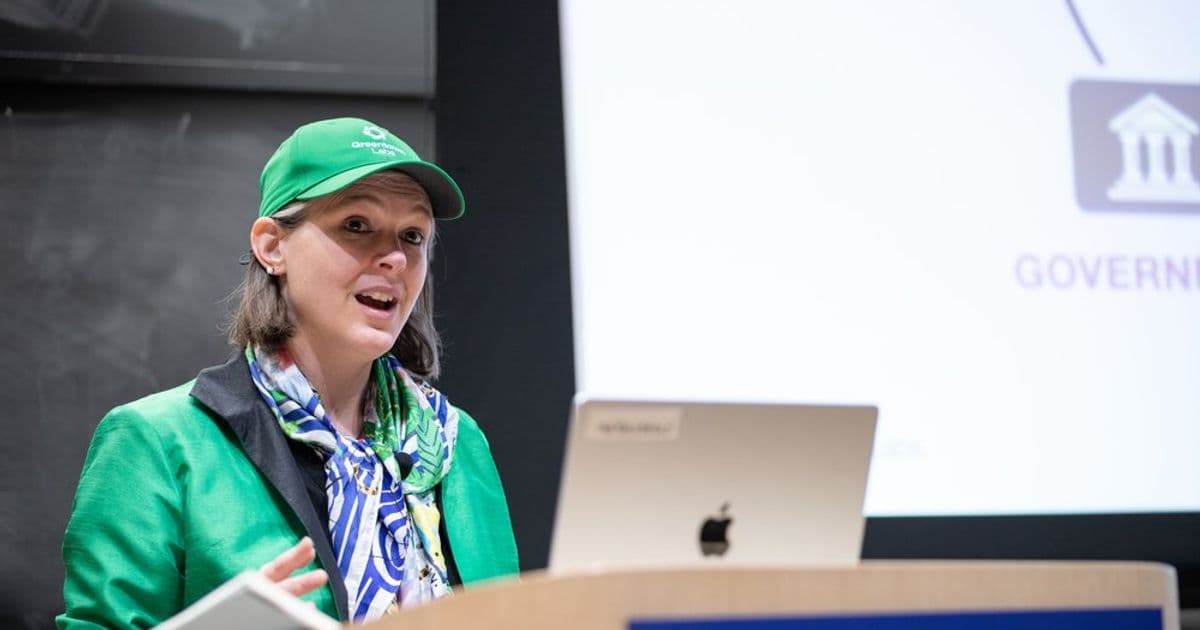
Greentown Labs CEO Georgina Campbell Flatter explores how collaborative ecosystems bridge critical gaps in energy innovation, with MIT playing a pivotal role in supporting entrepreneurs across the 'valleys of death'.
In the complex landscape of energy and climate innovation, the most transformative advances often come not from individual breakthroughs, but from the connections between them. This concept, termed "the power of 'and'" by Georgina Campbell Flatter, CEO of Greentown Labs, represents a fundamental shift in how we approach entrepreneurship in the climate space.
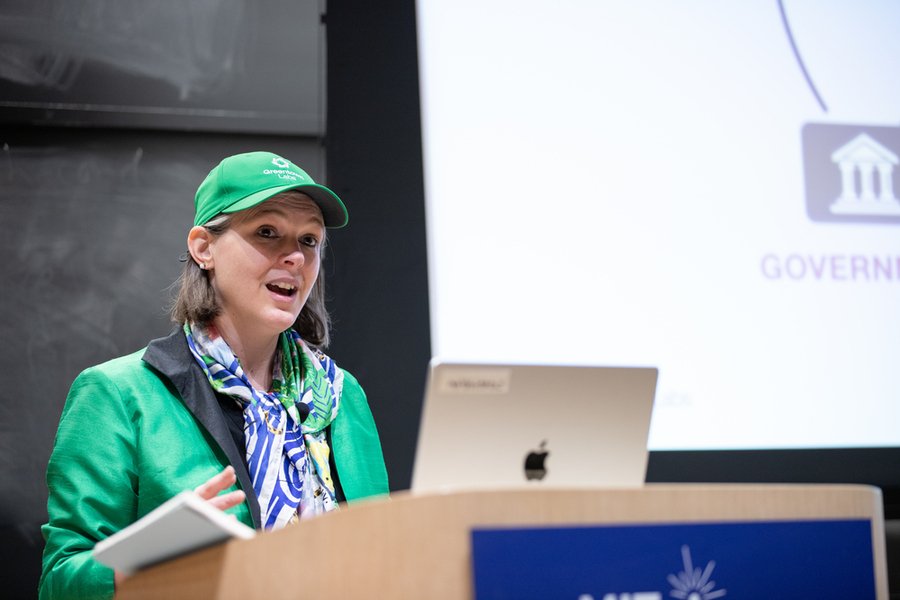
"If we really want to be driving the most transformational technologies to scale at a speed in which we need them to happen for our planet, we need to be thinking about the ecosystem that we build around it," Campbell Flatter explained during a recent MIT Energy Initiative seminar titled "Advancing the Energy Transition."
The Ecosystem Approach to Innovation
Greentown Labs, recognized as the world's largest energy and climate incubator, has built its entire model around this collaborative philosophy. "Innovation is a team sport. No one can go alone," Campbell Flatter emphasized. "We have to be very intentional about how we support and accelerate and help those entrepreneurs."
This approach addresses what Campbell Flatter identifies as "the power of 'and'" across multiple dimensions:
- Collaboration between multiple people, companies, and solutions
- Connection between energy and climate priorities
- Integration of innovation and deployment
- Balance between science and entrepreneurship
- Synthesis of competitiveness and collaboration
Navigating the Valleys of Death
A critical challenge in energy innovation is what researchers term the "valleys of death" - the gaps where promising technologies fail to reach commercialization. Campbell Flatter explains there are two primary valleys:
- The first valley of death: Between idea and prototype
- The second valley of death: Between prototype and first commercial pilot
"The majority of this friction exists in the gaps between innovation and deployment," Campbell Flatter notes. "Greentown often asks where our ecosystems can be most helpful, which has led us to focus on helping entrepreneurs bridge that second valley."
This strategic focus addresses a specific market need: "Entrepreneurs at the stage where they can't quite afford space on their own, and maybe it takes six to 12 months to figure out the permitting anyway, come to Greentown," she explains. "We're actively thinking about the customers, the capital, the infrastructure needs that you have in order for you to move your way through this second valley."
The MIT Advantage
Campbell Flatter acknowledges MIT's unique position in helping innovators cross the first valley of death. "MIT's ability to bring innovators across the first valley of death is truly world class," she states.
The evidence of this impact is compelling: "Thirty percent of our entrepreneurs at Greentown are coming from out of state and moving to Massachusetts," Campbell Flatter reveals. "One, because Greentown's a great home for them, but two, because of MIT and the talent that they can source from the ecosystem, which they are well aware of, and the knowledge, IP [intellectual property], and credibility."
This relationship creates a powerful symbiosis. Startups born from universities like MIT and Harvard "are far more likely to be successful and scale because of the ecosystem they're surrounded in," Campbell Flatter explains. "You're getting feedback constantly from your peers, you're getting support and mentorship — that all matters for the ecosystem."
From Policy to Practice
Campbell Flatter's own journey through MIT's Technology and Policy Program profoundly shaped her approach to energy entrepreneurship. After completing her master's degree in materials science at Oxford University, her time at MIT gave her "an appreciation for how hard it is to commercialize technology, and for the importance of ecosystems, and for giving her an early sense of how energy and climate would define this century."
While at MIT, she ran the third iteration of the MIT Clean Energy Prize, advocating for the inclusion of a non-renewables chapter. "I saw how important it was to continue to decarbonize and bring efficiencies to the traditional energy sectors while we work on all these amazing new energy initiatives," she recalls.
This comprehensive perspective continues to inform Greentown's approach through their wide network of industry partners. "I guess this early lesson I took from MIT was this idea that we must embrace the power of 'and','" Campbell Flatter reflects. "It slows innovation down when we don't embrace and work together."
Building for the Future
In an increasingly polarized world, Campbell Flatter argues that this expansive, collaborative lens is more important than ever. "The concept of 'and' also exists in energy and climate, innovation and deployment, science and entrepreneurship, and competitiveness and collaboration," she notes.
Greentown Labs implements this philosophy through physical spaces that cluster innovators together, removing friction so startups can move faster. This "innovation infrastructure" approach recognizes that breakthrough technologies need more than just brilliant ideas—they need supportive environments where they can connect with customers, capital, and industry expertise.
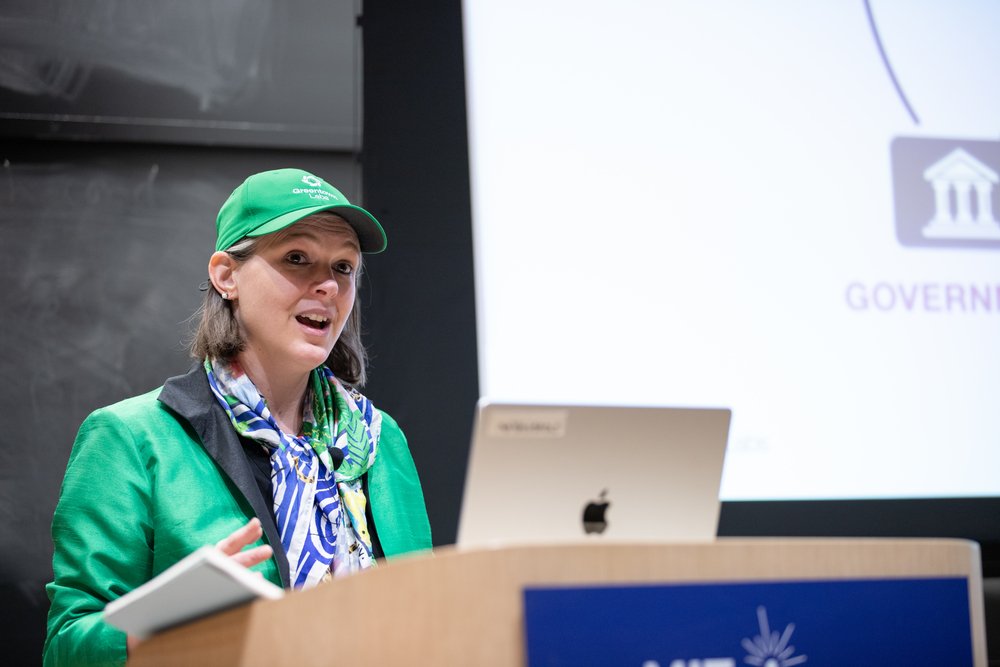
The implications of this collaborative approach extend beyond individual startups to entire innovation ecosystems. By focusing on the second valley of death, organizations like Greentown Labs create pathways for technologies to reach commercialization, potentially accelerating the deployment of climate solutions by years or even decades.
As energy and climate challenges intensify, Campbell Flatter's vision of "the power of 'and'" offers a pragmatic path forward—one that recognizes the complexity of our energy transition and the necessity of collective action. In this model, universities, incubators, industry partners, and policymakers don't compete; they complement, creating an environment where innovation can thrive at the speed and scale our planet desperately needs.
For more information on MIT Energy Initiative events and programs, visit their events page. To learn more about Greentown Labs and their approach to energy and climate innovation, explore their official website.
Comments
Please log in or register to join the discussion