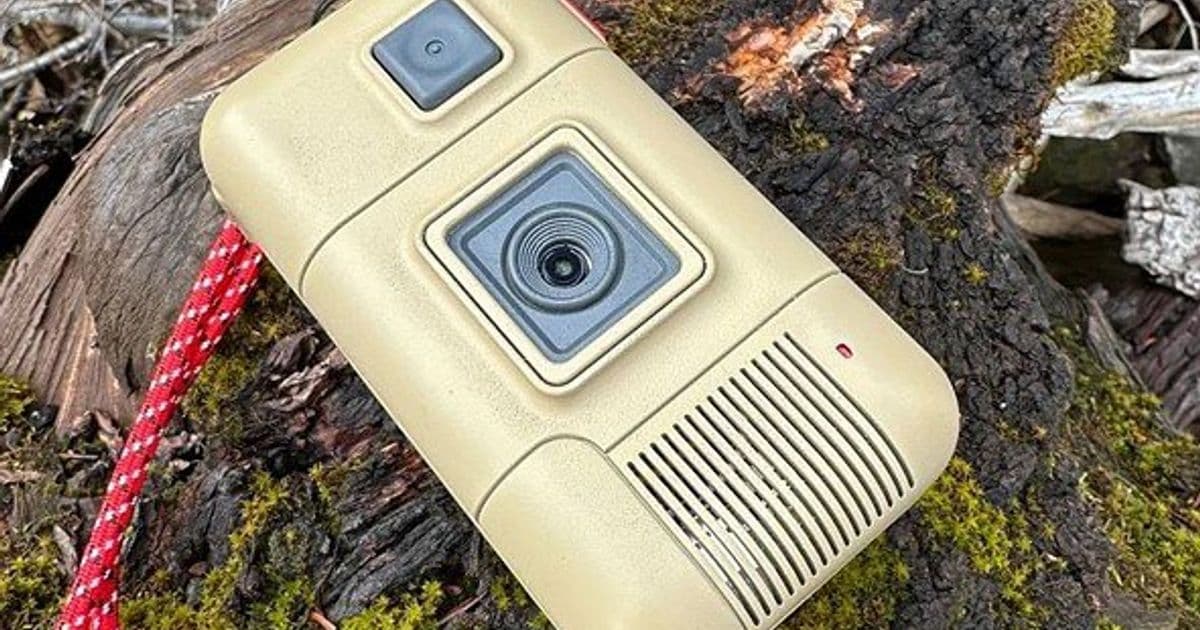
A stunning retro-futuristic DIY camera project combines mechanical keyboard switches, custom 3D-printed housing, and Raspberry Pi technology to create a truly unique photographic device.
When a friend forwarded me a Reddit post from a person named Yutani, I was immediately struck by what he describes as a "retro-futuristic digital camera" called the Saturnix. This isn't just another DIY camera project—it's a stunning piece of hardware that looks like it could have been pulled straight from the set of Severance.
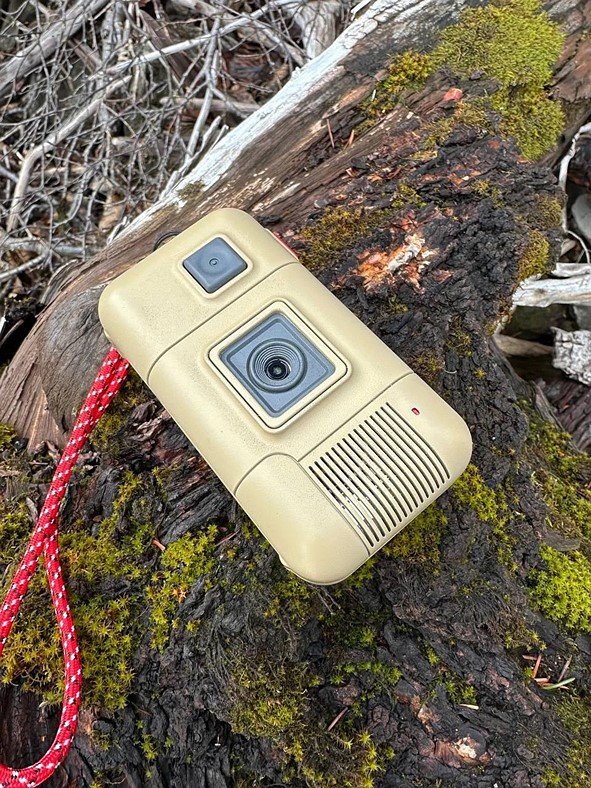
The Saturnix began as a passion project purely for personal use. That changed when some friends insisted Yutani share it with the world. Now, he's planning to release all the information you'd need to build it yourself, along with the operating system and custom-built UI to run it for anyone to use.
The Design: Where Form Meets Function
The most attention-grabbing part of the Saturnix is undoubtedly its case. Yutani says it's inspired by sci-fi movies and old computers in general, specifically the terminals in the video game Alien: Isolation. This retro-futuristic aesthetic is enhanced by the fact that the buttons on the camera are mechanical keyboard switches and keycaps, giving them a robust, chunky look and a satisfying mechanical click.
"It honestly doubles as a fidget toy when the camera is off," Yutani says. "Just clicking the buttons during a trip is kind of a stress reliever."
Creating this exterior wasn't simply a matter of grabbing a 3D printer and hitting go. The process involved a resin printer, ultrasonic cleaning baths, a wash station and curing oven, and a lot of time sanding and airbrushing. Most DIYers won't be willing to spend an entire month on the exterior of their camera, and Yutani says it was the hardest part of the process, but an essential one.
"For me, the design was the whole point. If it doesn't feel like a real camera in your hands, what's the point?"
The Tech: Familiar Components, Unique Assembly
The internals of the Saturnix will be familiar to anyone who's kept up with the DIY camera scene. It's powered by a Raspberry Pi Zero 2W, has a 2" LCD display, and uses an Arducam IMX519 camera, which has a 16MP Type 1/2.53 (23mm²) sensor and a roughly 27mm equiv. autofocusing lens.
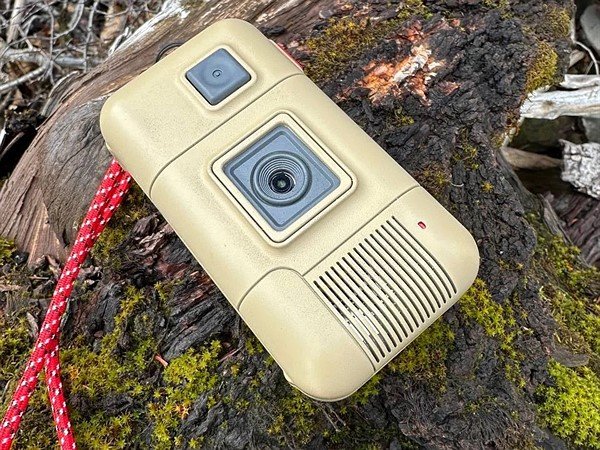
While the images it produces are about what you'd expect given those specs, anyone hoping to build a Saturnix isn't tied to that specific module. Yutani says he "plans to add support for all major official Raspberry sensors" to the operating system, which unlocks the possibility of using the much larger Arducam Type 1/1.32 (65mm²) 64MP camera.
The pictures that Yutani has shared from the Saturnix have that classic point-and-shoot charm that's all the rage these days. That's even more true of the ones processed with built-in "film simulation" filters, which aim to replicate classic stocks.
The Software: Custom UI on Minimal Hardware
The camera's UI is also custom-built; it's written in Python, running on top of a minimal Raspberry Pi OS install. Keeping it lean is important, since the Raspberry Pi Zero 2W that powers it is a mere four-core ARM chip running at 1GHz, with 512MB of RAM.
The interface follows the retro sci-fi aesthetic and allows for manual control of parameters like shutter speed, white balance and ISO. It can shoot DNG Raws and JPEGs, has a histogram and exposure meter, and can transfer photos over Wi-Fi.
"The UI has gone through a ton of iterations and I don't think it's anywhere near final," Yutani says. "Once the code is public, I'm hoping the community will customize and build on it too — that's the beauty of open-source."
The Journey: From Personal Project to Public Release
While DIY cameras based on the cheap and modular Raspberry Pi computers are nothing new, Yutani's is definitely noteworthy for having an incredible amount of style. It apparently took around a year to design and fully get working, a process spurred on by the desire for a small, completely personal camera without the size, weight and feature overload of modern devices.
Yutani says he started to get the idea that his creation might be worth sharing when people on the street came up to ask him what he was using while he was shooting with the camera.
His plan is to release everything you'd need to replicate the camera yourself in around two weeks, as there's still some work left to do before it's ready for the general public. "I want to polish a few things first, there are some issues to fix, and I need to write a detailed build guide covering everything from printer settings to assembly. I'm also waiting on a few components to arrive, like a vibration motor – I want to add haptic feedback for a more tactile shooting experience," Yutani says.
"I want to make sure that when someone decides to build it, everything just works."
The release will also include a detailed list of all the components you'll need to replicate the camera, which Yutani estimates will cost around $100. At that price, I'm almost tempted to build one myself – with the nicer, slightly more costly sensor, of course – despite my complete lack of fabrication tools or experience.
Even if I don't, I'll be excited to see if anyone else does, and what little modifications they do to make it their own. In a world where camera designs have become increasingly homogenized, the Saturnix stands out as a reminder that photography can be both functional and fantastically creative.
Comments
Please log in or register to join the discussion