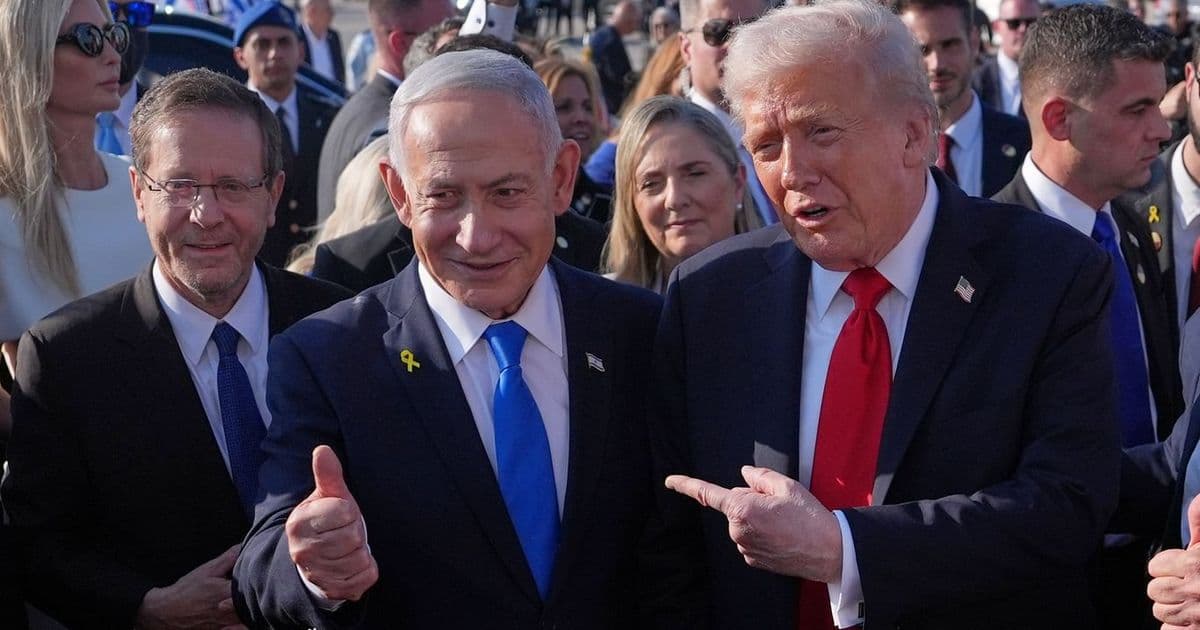
President Trump has called for an immediate pardon of Israeli Prime Minister Benjamin Netanyahu, arguing it would allow Israel to concentrate fully on countering Iran's nuclear ambitions.
President Donald Trump has made an extraordinary diplomatic intervention, calling for an immediate pardon of Israeli Prime Minister Benjamin Netanyahu to enable Israel to focus its full attention on countering Iran's nuclear program.
In a move that has sent shockwaves through diplomatic circles, Trump argued that Netanyahu's ongoing legal challenges are distracting from Israel's ability to confront what he described as "the most pressing security threat in the Middle East."
The Context
The demand comes at a critical juncture in Middle Eastern geopolitics. Iran has accelerated its uranium enrichment program, bringing it closer to weapons-grade material than at any point in recent years. Israeli intelligence sources have reported increased Iranian military activity near the Strait of Hormuz, raising tensions in the already volatile region.
Netanyahu currently faces corruption charges in Israel, including allegations of bribery, fraud, and breach of trust. The prime minister has consistently denied wrongdoing and claims the charges are politically motivated.
Trump's Position
According to sources familiar with the discussions, Trump made the demand during a private phone call with Israeli officials. He reportedly stated that "Israel cannot afford to have its leadership distracted by legal proceedings when Iran is this close to developing nuclear weapons."
The former president's intervention represents a significant escalation in his continued involvement in Israeli politics, despite no longer holding office. Trump has maintained close ties with Netanyahu since their time in office together, when the U.S. recognized Jerusalem as Israel's capital and brokered the Abraham Accords.
International Reactions
Diplomatic responses have been mixed. Several Arab states that recently normalized relations with Israel through the Abraham Accords have expressed concern about the precedent such a pardon would set. Meanwhile, traditional U.S. allies in Europe have remained largely silent on the matter.
Iran has seized on the development, with Foreign Ministry spokesman Nasser Kanaani stating that "the desperation of Israel's allies reveals their true intentions in the region."
Strategic Implications
The pardon demand highlights the complex interplay between domestic politics and international security. Netanyahu's legal troubles have created uncertainty within Israel's security establishment, with some military officials reportedly concerned about the prime minister's ability to make clear-headed decisions while facing potential imprisonment.
Israeli defense analysts suggest that a resolution to Netanyahu's legal situation could allow for more decisive action on Iran. However, critics argue that pardoning a sitting leader facing serious criminal charges would undermine Israel's democratic institutions.
What Happens Next
The Israeli legal system operates independently of executive influence, making any pardon a complex political and legal challenge. President Isaac Herzog, who has the constitutional authority to grant pardons, has not commented on Trump's demand.
Meanwhile, Iran continues its nuclear program expansion, with the International Atomic Energy Agency reporting that Iran now possesses enough enriched uranium for several nuclear weapons if further processed.
The Bigger Picture
This development underscores the fragile balance of power in the Middle East, where domestic political challenges in one country can have far-reaching implications for regional security. As Iran advances its nuclear capabilities, the international community watches closely to see whether internal Israeli politics will impede or enable decisive action.
The situation also highlights the continuing influence of former U.S. presidents in Middle Eastern affairs, with Trump's intervention demonstrating how American political figures can shape regional dynamics long after leaving office.
Looking Forward
With tensions rising and time potentially running short, the question remains whether Israel can resolve its internal political challenges quickly enough to address the growing threat from Iran. The outcome could determine the security landscape of the Middle East for years to come.
As diplomatic efforts continue and military options are weighed, the international community remains on edge, watching for any sign that could tip the balance in this high-stakes regional confrontation.
Comments
Please log in or register to join the discussion