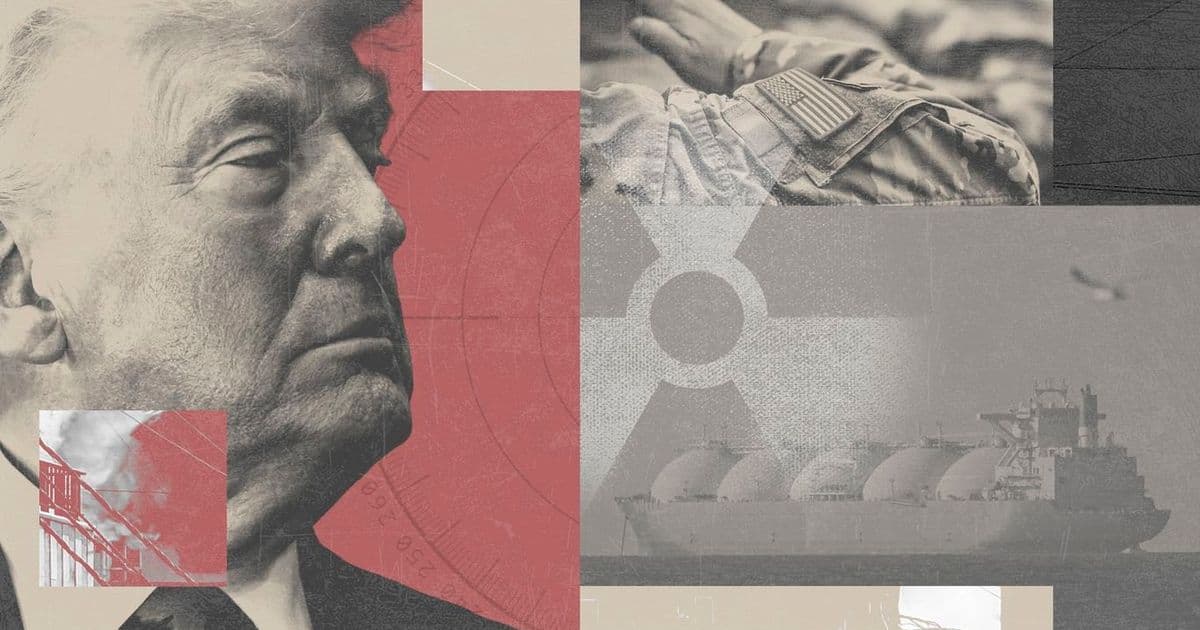
President Trump faces significant obstacles in negotiating with Iran, including deep-seated distrust, conflicting narratives about Iran's nuclear program, and the challenge of balancing diplomatic engagement with maximum pressure tactics.
President Donald Trump's efforts to negotiate a new nuclear deal with Iran are facing significant headwinds, as deep-seated distrust and conflicting narratives about Iran's nuclear program create a complex diplomatic landscape. The administration's "maximum pressure" campaign, which includes crippling economic sanctions and military posturing, has brought Iran to the negotiating table but also raised questions about the feasibility of reaching a comprehensive agreement.
The Trust Deficit
The fundamental challenge in any potential Iran deal is the profound lack of trust between the two nations. Iran's leaders remain deeply skeptical of American intentions, citing the U.S. withdrawal from the 2015 Joint Comprehensive Plan of Action (JCPOA) as evidence that Washington cannot be relied upon to honor agreements. This distrust is compounded by decades of hostility, including the 1953 CIA-backed coup that overthrew Iran's democratically elected prime minister, and the 1988 shooting down of an Iranian passenger jet by the USS Vincennes.
From the American perspective, Iran's history of deception regarding its nuclear program, support for regional proxy groups, and human rights abuses create significant barriers to trust. The Trump administration has repeatedly accused Iran of violating the spirit of the JCPOA, even if it technically complied with the letter of the agreement.
Competing Narratives
The two sides also operate from fundamentally different understandings of Iran's nuclear program and its intentions. While the U.S. and its allies view Iran's nuclear activities as a grave threat requiring strict limitations, Iran maintains that its program is purely peaceful and that it has the right to enrich uranium for civilian purposes under the Nuclear Non-Proliferation Treaty.
This divergence in narratives extends to the broader regional context. The U.S. sees Iran as a destabilizing force that supports terrorist groups and undermines American allies in the Middle East. Iran, conversely, views itself as a bulwark against Western imperialism and Israeli aggression, and sees its regional activities as defensive in nature.
The Maximum Pressure Paradox
Trump's "maximum pressure" strategy has succeeded in bringing Iran to the negotiating table, but it has also created a paradox. While the sanctions have severely damaged Iran's economy and limited its ability to fund regional activities, they have also strengthened the hand of hardliners in Tehran who oppose any accommodation with the West.
Iran's leaders have shown a willingness to endure economic hardship rather than capitulate to what they see as American bullying. This resilience is rooted in a combination of ideological conviction, nationalist sentiment, and the belief that the U.S. will eventually return to the negotiating table with more realistic demands.
The Path Forward
Despite these challenges, there are potential pathways to a new agreement. One approach would be to build on the JCPOA framework while addressing its perceived shortcomings, such as the sunset clauses on certain restrictions and the lack of coverage for Iran's ballistic missile program and regional activities.
Another possibility is a more comprehensive deal that trades a permanent end to Iran's nuclear program and limits on its regional activities for a normalization of relations with the U.S. and the lifting of all sanctions. However, this would require both sides to make significant concessions and overcome their mutual distrust.
The Role of Allies and Adversaries
The success of any Iran deal will also depend on the positions of other key players. European allies, who have been trying to salvage the JCPOA, could play a crucial role in bridging the gap between the U.S. and Iran. Russia and China, both of which have significant economic ties to Iran, could also influence the negotiations.
Israel and Saudi Arabia, Iran's regional rivals, are likely to oppose any deal that they see as insufficiently tough on Iran. Their views will need to be taken into account, even if they are not direct parties to the negotiations.
Conclusion
President Trump's quest for a new Iran deal is a high-stakes gamble that could reshape the Middle East or lead to a dangerous escalation of tensions. The path to a successful agreement is fraught with obstacles, from the deep-seated distrust between the two nations to the competing narratives about Iran's nuclear program and regional activities.
Ultimately, the success of any deal will depend on the willingness of both sides to compromise and the ability of the international community to support and enforce an agreement. As the negotiations continue, the world will be watching closely to see if Trump can achieve what many consider impossible: a comprehensive and lasting deal with Iran that addresses the concerns of all parties involved.
Comments
Please log in or register to join the discussion