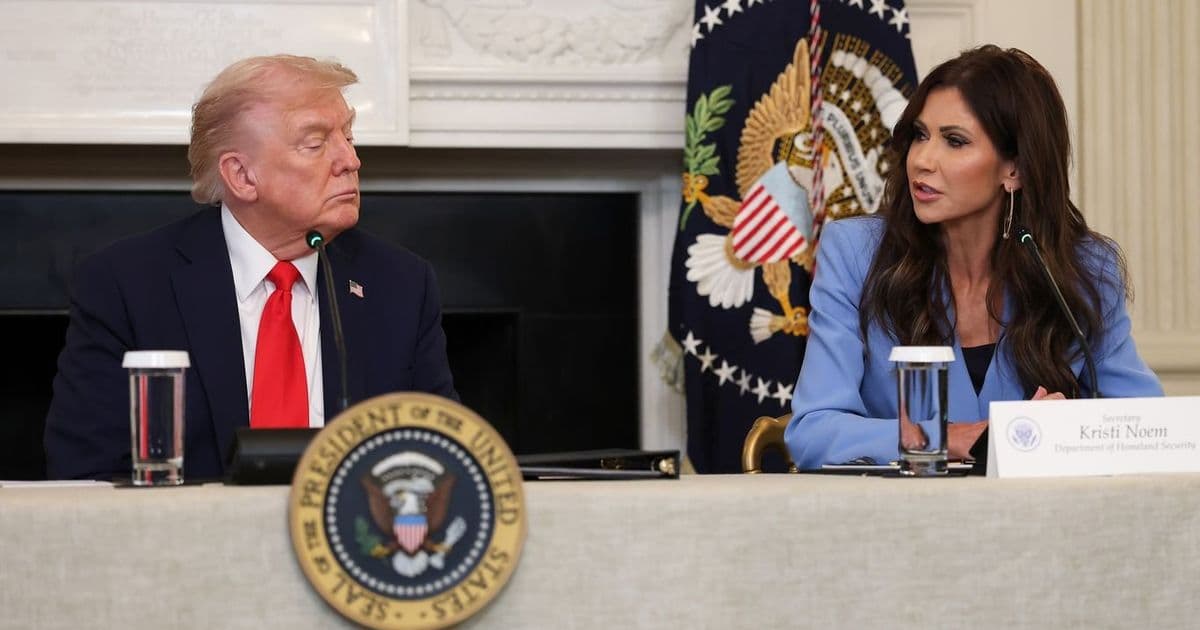
President Trump has shown surprising reluctance to fire senior officials from his own administration, bucking his reputation for quick dismissals and creating an unusual dynamic in the White House.
President Trump, known for his swift and often public dismissals of officials who fall out of favor, has taken an uncharacteristically cautious approach when it comes to removing members of his own administration. This shift in strategy marks a notable departure from the president's typical management style and raises questions about the internal dynamics of the White House.
The president's reluctance to fire senior officials from his own team stands in stark contrast to his well-documented history of abrupt terminations. From his reality TV catchphrase "You're fired!" to his real-world dismissals of high-profile figures like FBI Director James Comey and Secretary of State Rex Tillerson, Trump has cultivated a reputation for decisive action when dealing with perceived disloyalty or underperformance.
However, recent months have seen a different pattern emerge. Despite growing tensions and policy disagreements within the administration, several key figures who might have previously faced the chopping block have managed to retain their positions. This includes officials who have publicly contradicted the president on various issues or whose departments have faced significant criticism.
Political analysts suggest several factors may be driving this change in approach. First, the ongoing impeachment proceedings have created a heightened sensitivity to further staff upheaval. The administration may be seeking to project an image of stability and unity during a politically turbulent period. Additionally, the limited pool of qualified candidates willing to serve in the current administration may be making it more difficult to replace departing officials.
The president's restraint appears to be particularly evident in areas where he has traditionally been most quick to act. Cabinet members who have faced public scrutiny or whose departments have been at the center of controversy have largely been spared, despite the president's history of using such situations as grounds for dismissal.
This shift in management style has not gone unnoticed by political observers. Some see it as a sign of growing maturity in the president's leadership approach, while others view it as a strategic calculation designed to weather the current political storm. The contrast between this approach and the president's previous management style has become a topic of considerable discussion among political commentators and administration watchers.
The implications of this change extend beyond mere personnel management. The retention of certain officials despite policy disagreements or public controversies may signal a shift in how the administration handles internal dissent and manages its messaging. It also raises questions about the balance of power within the White House and the influence of various factions within the administration.
As the political landscape continues to evolve, the president's approach to managing his team will likely remain a subject of intense scrutiny. Whether this represents a permanent shift in his leadership style or merely a temporary adjustment to current circumstances remains to be seen. What is clear, however, is that the president's reluctance to fire his own appointees represents a significant departure from his established pattern of behavior and may have lasting implications for how his administration functions in the months ahead.
Comments
Please log in or register to join the discussion