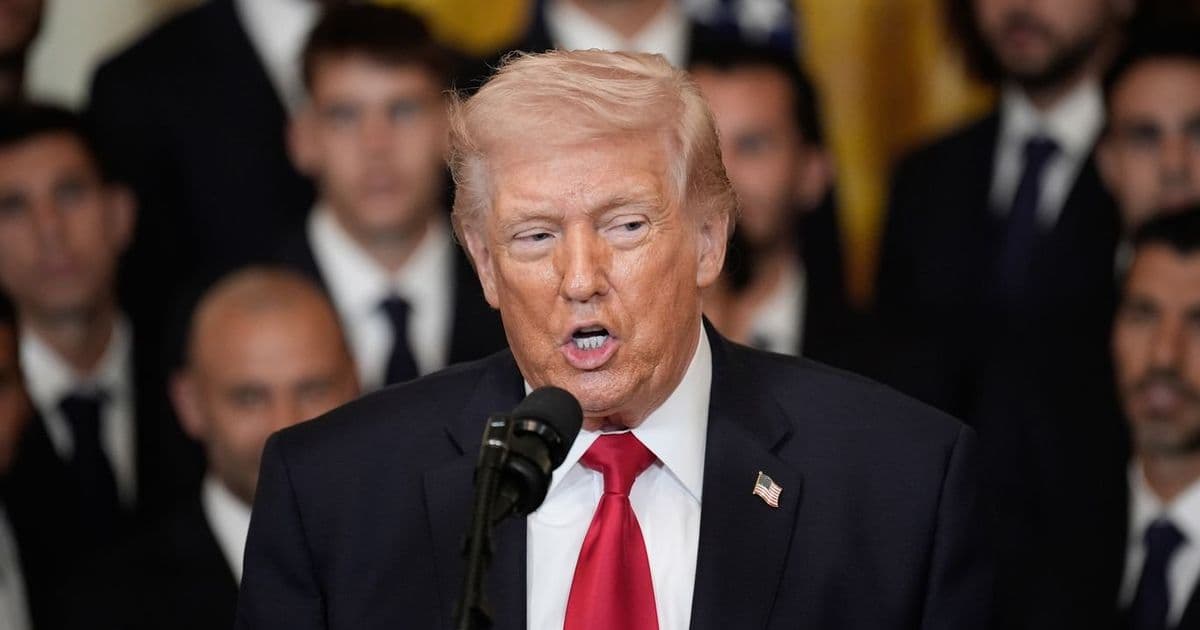
President Trump tells Axios that Iran must accept 'unconditional surrender' in any potential conflict, defining it as a state where Iran 'can't fight any longer.'
President Donald Trump has told Axios that his definition of "unconditional surrender" in any potential conflict with Iran would mean the country "can't fight any longer."
The comments came during an exclusive interview with Axios, where Trump outlined his hardline stance toward Tehran amid escalating tensions in the Middle East.
Defining unconditional surrender
When asked by Axios to clarify what he meant by "unconditional surrender" regarding Iran, Trump stated: "It's when they can't fight any longer. When they can't fight. When they're done."
This definition aligns with Trump's broader foreign policy approach, which has consistently emphasized maximum pressure tactics against adversaries. The president has previously suggested that Iran must capitulate entirely to U.S. demands or face severe consequences.
Context of escalating tensions
The remarks come amid heightened tensions between Washington and Tehran. The Trump administration has pursued a "maximum pressure" campaign against Iran, including the withdrawal from the 2015 nuclear deal and the reimposition of economic sanctions.
Recent developments include:
- Increased U.S. military presence in the Persian Gulf
- Iran's nuclear program advancing beyond previous limitations
- Attacks on commercial shipping in the Strait of Hormuz
- The U.S. killing of Iranian General Qasem Soleimani in January 2020
Strategic implications
Trump's definition suggests a military-focused interpretation of surrender, implying that the United States would continue hostilities until Iran's military capabilities are completely neutralized. This approach diverges from diplomatic definitions of surrender, which typically involve formal agreements and negotiated terms.
Military analysts note that such a stance could lead to prolonged conflict, as Iran has historically demonstrated resilience through asymmetric warfare tactics, proxy forces, and regional influence networks that would be difficult to completely dismantle through conventional military means.
Regional reactions
Middle Eastern allies have expressed concern about the potential for open conflict. Saudi Arabia and the United Arab Emirates, while sharing U.S. concerns about Iranian influence, have urged diplomatic solutions to avoid destabilizing the region further.
European allies have similarly called for de-escalation, with Germany, France, and the United Kingdom working to preserve elements of the nuclear deal and maintain channels of communication with Tehran.
Historical parallels
Trump's framing evokes World War II terminology, when "unconditional surrender" was the Allied demand of Axis powers. However, the geopolitical landscape today is far more complex, with Iran's influence extending through proxy networks across multiple countries and its nuclear program representing a different kind of threat than conventional military forces.
The president's comments suggest a willingness to pursue military solutions to the Iran challenge, though the administration has not publicly outlined specific military objectives or exit strategies should conflict escalate.
What comes next
The interview underscores the administration's uncompromising position on Iran as the November election approaches. With both countries maintaining hardline positions, the risk of miscalculation or escalation remains significant.
Diplomatic channels remain technically open, but Trump's definition of victory leaves little room for negotiated settlements that might allow Iran to maintain any elements of its current capabilities or influence.
The coming months will test whether maximum pressure can achieve Trump's stated objectives or whether alternative approaches might emerge to address the longstanding tensions between Washington and Tehran.
Comments
Please log in or register to join the discussion