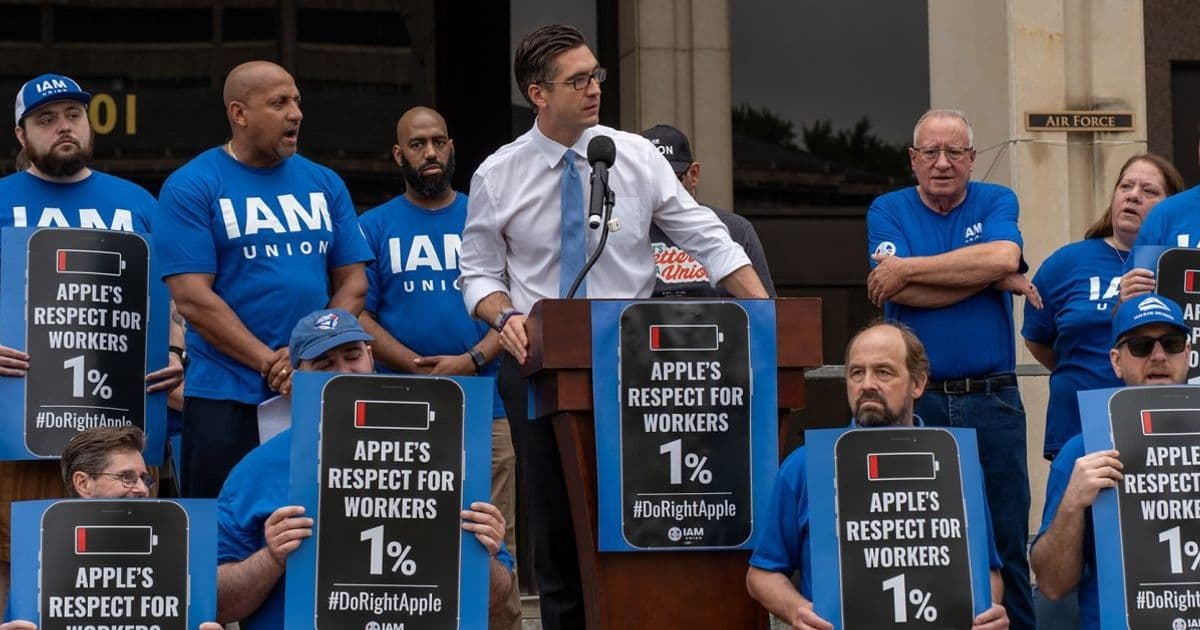
The IAM Union and supporters rallied outside Apple's Towson store, protesting what they claim is discriminatory treatment of unionized employees facing closure, while Apple maintains the decision is based on mall conditions and contractual obligations.
The International Association of Machinists and Aerospace Workers (IAM Union) held a prominent protest outside Apple's Towson store this week, challenging the company's decision to close the first unionized Apple retail location in the United States. The demonstration comes amid escalating tensions between Apple and its organized workforce over employment terms following the store's closure announcement in early April.
Apple announced in April that it would be closing three retail locations: Apple Towson Town Center in Maryland, Apple North County in California, and Apple Trumbull in Connecticut. The company attributed these closures to "the departure of several retailers and declining conditions" in the host malls, with all three locations set to permanently close next month.
The Towson store has become the focal point of this decision due to its unique status as Apple's first unionized retail location in the country. Following Apple's announcement, the IAM Union immediately contested the decision, asserting that the company is treating its unionized workers unfairly compared to employees at the non-union stores facing closure.
At the heart of the dispute is the question of transfer opportunities for affected employees. While Apple states that the union agreement with Towson workers only requires the company to offer transfers within 50 miles of the store, with severance packages provided for those unable to relocate, the IAM Union maintains that Apple is discriminating against its unionized workforce.
The union points out that employees at the non-union stores in Escondido and Trumbull have been offered broader relocation options, including the possibility of transferring to other Apple locations across the country. This discrepancy, according to the IAM, suggests Apple is retaliating against workers who organized, a claim the company denies.
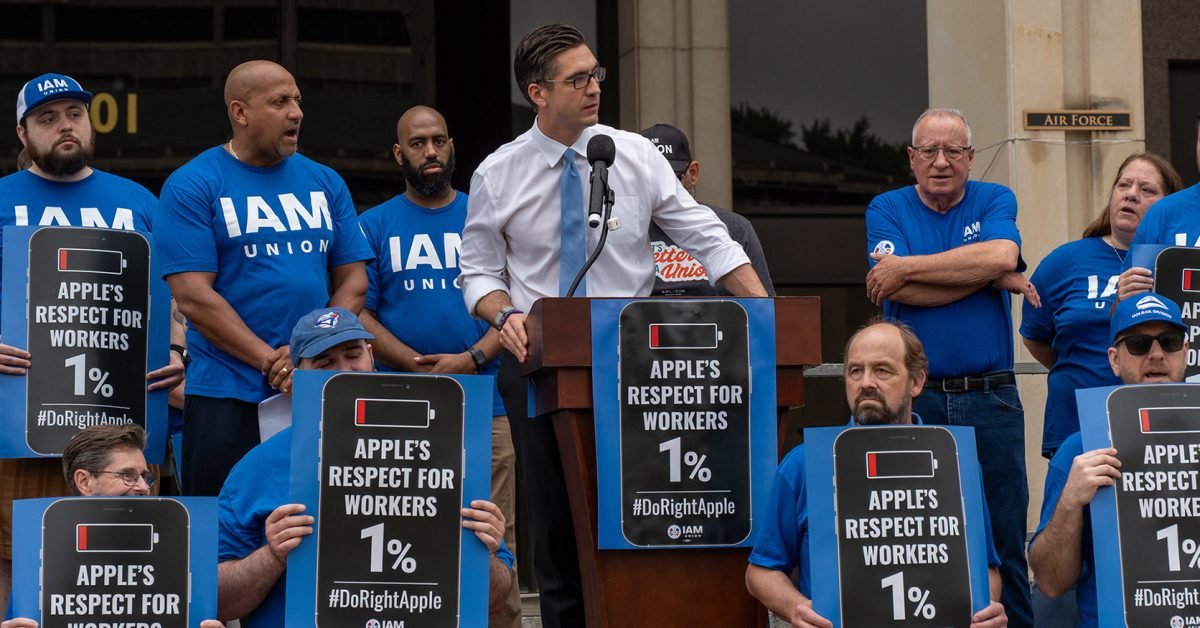
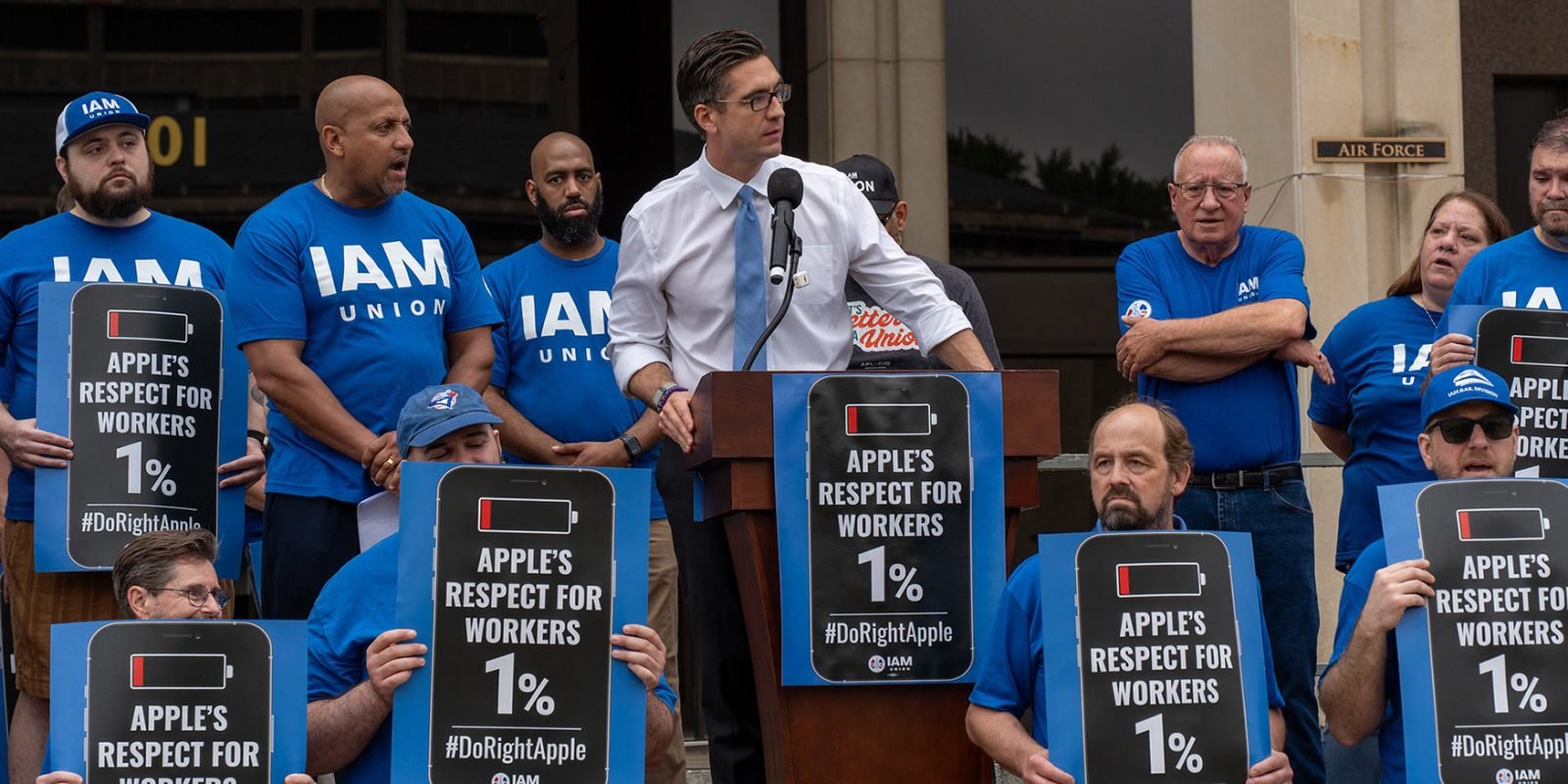
The protest rally drew significant attention, featuring Apple Towson employees alongside Maryland lawmakers, labor leaders, and civil rights groups. Demonstrators carried signs featuring an iPhone displaying a low battery icon with the message "Apple's respect for workers 1%," calling on the tech giant to "do right" by Towson employees before the store's scheduled June closure.
IAM Eastern Territory General Vice President David Sullivan delivered a passionate speech during the protest, framing Apple's actions as part of a broader pattern of corporations attempting to suppress organized labor.
"We know what it looks like when a corporation tries to make an example out of workers who dared to ask for a seat at the table," Sullivan stated. "We have seen that playbook. We have faced it down before. And we have beaten it before. Apple is not the first powerful employer to try to break the spirit of organized workers. They will not be the last. But they will hear from us. They will hear from us today. They will hear from us at the National Labor Relations Board. And they will keep hearing from us every single day until justice is done for the workers of this store."
The protest highlights the growing tension between Apple and its retail workforce, particularly as more Apple stores consider unionization efforts. The Towson location made headlines in 2022 when employees voted to unionize, becoming the first Apple retail store in the nation to do so under the IAM banner.
Apple has not publicly commented on the specific protest, though the company has previously stated that the closure decisions were based solely on business considerations related to the performance of the malls housing these retail locations.
This situation raises broader questions about Apple's retail ecosystem and labor relations. The company operates over 500 retail stores worldwide, serving as both sales channels and brand experience centers. These locations have historically been crucial to Apple's customer service and product demonstration strategies, particularly for its iPhone, Mac, and wearable product lines.
The closure of these three stores, while representing a small fraction of Apple's retail footprint, comes at a time when the company is facing increased scrutiny over its labor practices. The tech industry as a whole has seen rising unionization efforts, with employees at major companies including Amazon, Starbucks, and Google organizing in recent years.
For affected Apple employees, the immediate concerns center on job security and maintaining employment with the company. The union's demand for equal transfer opportunities reflects practical considerations for workers who may need to relocate to continue their careers with Apple, particularly in regions where the company has a significant presence.
The dispute may also have implications for Apple's retail strategy as the company continues to navigate changing consumer shopping behaviors and economic conditions. Apple has been gradually shifting its retail approach, with some locations being renovated to feature more interactive experiences and specialized service areas, while others have been closed as the company adjusts its physical footprint.
As the June closure date approaches, the IAM Union has indicated it plans to continue its advocacy efforts, potentially including formal complaints with the National Labor Relations Board. The outcome of this dispute could set a precedent for how Apple handles future store closures and labor negotiations, particularly as more of its retail locations consider organizing.
The protest at Apple's Towson store represents a significant moment in the ongoing conversation about labor rights in the tech industry and the specific challenges faced by workers at one of the world's most valuable companies. As Apple continues to expand its product ecosystem and retail presence, how it manages its workforce relations may increasingly become a factor in its corporate reputation and employee satisfaction.
This article has covered the key aspects of the protest, the background of the dispute, and the broader context of Apple's retail operations and labor relations. The content provides substantial depth on the situation while maintaining an accessible, informed tone appropriate for readers interested in both Apple's business practices and labor developments in the tech industry.
Comments
Please log in or register to join the discussion