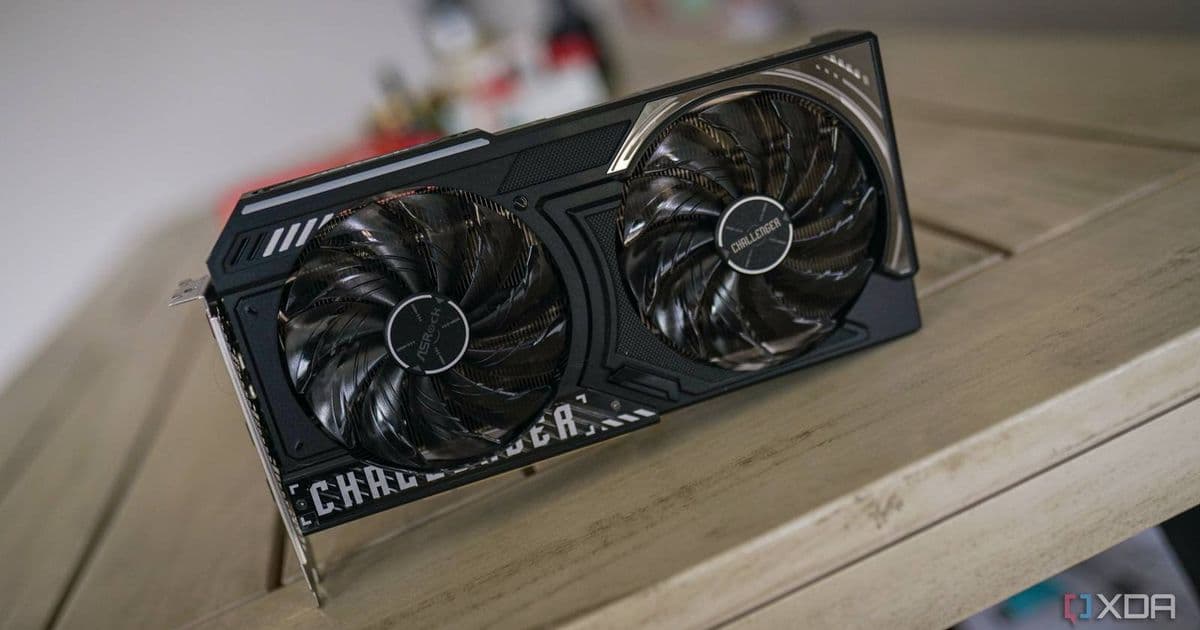
A kernel-level VRAM management fix developed by Valve developer Samuel Vock dramatically improves gaming performance on AMD's 4GB RX 6500 XT graphics card in Linux by preventing the operating system from evicting active game data from VRAM.
Linux gamers with AMD's 4GB Radeon RX 6500 XT graphics card are experiencing dramatic performance improvements thanks to a new VRAM management fix developed by Valve engineer Samuel Vock. The fix, which provides kernel-level context awareness for VRAM allocation, has been shown to nearly triple frame rates in some games by preventing the Linux kernel from evicting active game data from the GPU's limited memory pool.
The VRAM Bottleneck Problem
The RX 6500 XT's 4GB VRAM capacity has long been a limitation for modern games, particularly on Linux where the kernel's memory management system would sometimes evict critical game data to make room for other applications. This resulted in stuttering, texture pop-in, and significant frame rate drops as the GPU constantly swapped data between VRAM and system RAM.
Vock's solution addresses this by giving the Linux kernel better context about which data should remain in VRAM. The system considers factors like which application window is currently active and prioritizes keeping that application's data on the GPU. This prevents the common scenario where a game would be forced to reload textures and assets from system RAM while the player was actively engaged with it.
Real-World Performance Gains
YouTube channel NJ Tech conducted comprehensive benchmarks comparing performance before and after applying the fix on a CachyOS system with the "Install GPU boosters" option enabled. The results show a clear pattern: while many games saw minimal improvement, titles struggling with the 4GB VRAM limitation experienced dramatic gains.
Games with little to no improvement:
- Cyberpunk 2077: No change
- Crimson Desert: No change
- Silent Hill f: +1-3 FPS
- Hogwarts Legacy: +1-3 FPS
Games with significant improvements:
- Resident Evil: Requiem: 67 FPS → 78 FPS (+11 FPS)
- Alan Wake II: 14 FPS → 41 FPS (+27 FPS, nearly triple)
Technical Implementation
The fix works by modifying how the Linux kernel handles VRAM pressure situations. When the system needs to free up VRAM, it now has better information about which data is actively being used by the foreground application versus background processes. This prevents the kernel from making poor eviction decisions that would negatively impact gaming performance.
For Linux gamers, the implementation is straightforward. Using distributions like CachyOS that support the "Install GPU boosters" option automatically applies these optimizations during installation. The fix appears to be part of Valve's broader effort to improve gaming performance on Linux through kernel-level optimizations.
Limitations and Expectations
It's important to note that this fix isn't a universal performance booster. Games that were already running well on the RX 6500 XT saw minimal improvements, while those struggling with VRAM limitations experienced the most dramatic gains. This suggests the fix is particularly effective at solving specific memory management issues rather than providing blanket performance improvements.
The pattern indicates that gamers with playable frame rates (30+ FPS) may see only modest gains, while those with unplayable performance due to VRAM constraints could see their games become actually playable. This targeted approach makes the fix valuable for addressing specific hardware limitations rather than serving as a general performance enhancement.
Broader Implications
This development represents another step in Valve's ongoing commitment to improving Linux gaming performance. By addressing fundamental system-level issues like VRAM management, Valve is helping to close the performance gap between Linux and Windows gaming platforms.
The success of this fix also highlights the importance of kernel-level optimizations for gaming performance. While driver improvements and game-specific optimizations are valuable, addressing the underlying memory management system can have profound effects on real-world gaming experiences.
For RX 6500 XT owners on Linux, this fix offers hope that their hardware can handle more demanding titles than previously thought possible. While the 4GB VRAM limitation remains a constraint, smarter memory management means that limitation doesn't have to result in unplayable performance.
The ongoing development of these kinds of system-level optimizations suggests that Linux gaming performance will continue to improve, even on hardware with inherent limitations. As more developers contribute fixes like Vock's, the gap between Linux and other gaming platforms may continue to narrow.
Comments
Please log in or register to join the discussion