
Sega is treating Virtua Fighter Crossroads less like a numbered sequel and more like a full relaunch, with a 2027 home-console focus, a larger story campaign, and a more modern answer to Tekken 8 and Street Fighter 6.
What's new
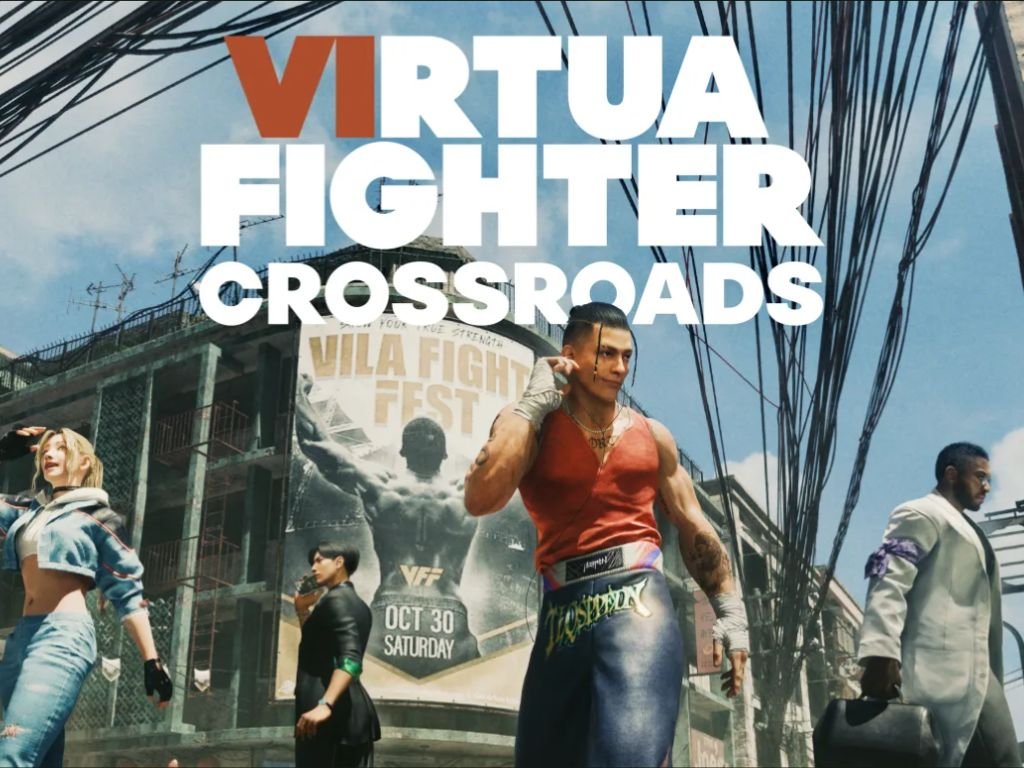
Sega's next mainline Virtua Fighter now has a name: Virtua Fighter Crossroads. The game was previously known as New Virtua Fighter Project, and many fans expected the final title to be Virtua Fighter 6. Producer and director Riichiro Yamada told Automaton that he wanted the game to feel like a new start rather than another entry inheriting the old numbering. That naming choice matters, because Sega is not just updating character models and calling it a sequel. It is trying to reposition Virtua Fighter for players who know Tekken 8, Street Fighter 6, Mortal Kombat 1, and rollback-era online play better than they know Sega's arcade history.
The confirmed release window is 2027. Sega has not announced final platform details or pricing, so buyers should treat anything beyond the broad home-console direction as unconfirmed for now. What is clear is the development setup: Sega is working with Ryu Ga Gotoku Studio, the team behind Like a Dragon and Judgment, with Sega AM2 involved in the broader Virtua Fighter lineage. That combination explains the two priorities shown so far: physically grounded fighting animation and a much bigger single-player push.
The largest practical change is the campaign. Virtua Fighter has always been respected for clean mechanics, tight timing, ring positioning, and martial-arts readability, but it has rarely sold itself on story. Crossroads appears to be changing that. The new story mode is set in Villasapara, a Southeast Asian city built around martial arts culture, and Sega is treating it as more than a string of arcade ladders with cutscenes between fights. Yamada's comments point to a substantial solo mode because the game is being designed for home release rather than as a traditional arcade-first product.
That is a smart correction. Modern fighting games cannot rely only on local versus and ranked matchmaking. Street Fighter 6 proved the value of a large onboarding mode with World Tour. Tekken 8 put more cinematic energy into its campaign and training tools. Even players who eventually spend hundreds of hours online need a low-pressure way to learn spacing, punishment, strings, throws, and defensive habits. If Crossroads wants to bring back older Virtua Fighter players while teaching new ones why the series is different, a serious campaign is not extra content. It is the tutorial, the sales pitch, and the retention system all at once.
The creative staff also shows Sega is putting weight behind the narrative side. The project includes Brad Kane, known for work connected to Ghost of Tsushima, while David Hayter is supervising worldbuilding and lore. Tsuyoshi Furuta, associated with Like a Dragon and Judgment, and Shinki Yamamoto, with credits tied to Atlus franchises such as Persona and Shin Megami Tensei, also point to a more authored single-player experience than the series has usually offered.
From a spec sheet perspective, the known profile is still incomplete. The title is Virtua Fighter Crossroads, the publisher is Sega, the lead development collaboration involves RGG Studio and Sega AM2, the launch target is 2027, and the major feature shift is a story-driven single-player mode alongside the series' technical 3D fighting base. Pricing, editions, PC requirements, performance targets, netcode details, roster size, and final platform list remain undisclosed. For a practical buyer, those missing items are not small footnotes. Input latency, rollback quality, cross-play, training mode tools, and platform performance will decide whether this becomes a serious competitive purchase or mainly a comeback curiosity.
How it compares
Compared with Virtua Fighter 5, Crossroads looks like a larger design reset. Virtua Fighter 5 has been refined through updates, including more recent releases such as Virtua Fighter 5 R.E.V.O., but it is still rooted in a 2006 foundation. That means its strengths are also its constraints: precise movement, clean attack logic, readable martial arts, and a high skill ceiling, but limited mainstream spectacle compared with newer fighters. Crossroads appears designed to keep the physical clarity while giving the series the presentation, story framing, and home-first structure expected in 2027.
The name change reinforces that. Calling it Virtua Fighter 6 would invite a simple sequel comparison: new roster, new stages, new balance, maybe a new engine. Crossroads tells players to expect a broader turn. That does not guarantee better design, but it does change the buyer expectation. A numbered Virtua Fighter 6 would mainly be judged by legacy players asking whether Akira, Wolf, Sarah, Pai, and the rest feel right. Virtua Fighter Crossroads will also be judged by players asking whether Sega can build a complete modern fighting game package.
Against Tekken 8, Sega's advantage is clarity. Tekken is visually loud, mechanically layered, and highly expressive, with heat systems, long strings, wall pressure, cinematic supers, and a massive roster identity. Virtua Fighter traditionally works differently. It puts more emphasis on timing, spacing, defensive reads, ring outs, throws, and small positional decisions. If Crossroads keeps that DNA, it can be the cleaner, more martial-arts-focused alternative to Tekken's heavier combo structure.
The risk is content density. Tekken 8 launched into a player base that expects large rosters, constant character discourse, online competition, customization, and tournament support. Crossroads cannot win by being merely prettier than Virtua Fighter 5. It needs strong netcode, strong matchmaking, cross-play if Sega wants healthy queues, excellent tutorials, and frame-data access that does not feel hidden from normal players. For competitive buyers, those features are as important as the character list.
Against Street Fighter 6, the comparison is less about 2D versus 3D and more about onboarding. Capcom did not just release a great fighting system. It gave players modern controls, World Tour, Battle Hub, strong training features, and an approachable route into difficult matchups. Crossroads' story campaign could serve a similar purpose if it teaches real Virtua Fighter habits rather than acting as a disconnected action mode. The ideal version would teach players why sidesteps, ring awareness, throw breaks, defensive crouching, and whiff punishment matter, then let those lessons carry directly into ranked play.
Against Mortal Kombat 1, Crossroads will likely be less cinematic in combat style, even if the story mode is more ambitious than past Virtua Fighter games. Mortal Kombat sells spectacle, finishing moves, character banter, and broad casual appeal. Virtua Fighter sells discipline. That is not a weakness, but Sega has to package that discipline better than it did in the past. A fighting game can be demanding, but it cannot feel opaque.
There is also the hardware angle. Sega has not published performance targets, but a modern Virtua Fighter needs extremely stable frame pacing. Fighting games live or die at 60 fps, and the real test will be consistency under stage effects, camera movement, online rollback correction, and high-detail character animation. A pretty trailer means less than stable input response. When review code arrives, the first things I would test are input latency across platforms, frame pacing in offline versus, rollback behavior under simulated poor connections, training mode frame tools, display options, and whether visual effects ever obscure hit confirmation.
Pricing remains the other open buyer question. Sega has not announced a price, collector's editions, DLC model, season pass structure, or upgrade path from Virtua Fighter 5 R.E.V.O. If Crossroads launches as a full-price premium fighter, it will be compared directly against content-rich releases from Bandai Namco and Capcom. If Sega prices it lower or uses a more focused launch roster with strong post-launch support, the expectations change. Until Sega confirms the business model, the best advice is to wait before preordering and judge the package, not only the comeback story.
Who it's for
Virtua Fighter Crossroads is most promising for players who like technical 3D fighting but want less visual noise than Tekken and less meter-driven momentum than many modern fighters. If your favorite part of a match is reading distance, baiting a whiff, landing a clean punish, and winning because you understood the opponent's body position, this is the Sega revival to watch. The footage and developer comments suggest a game built around impact, weight, and realistic martial-arts movement rather than projectile wars or exaggerated special effects.
It is also for lapsed Virtua Fighter players who loved the older games but wanted Sega to give the series a proper modern package. The gap since the last original mainline entry is almost two decades, and that creates a strange buyer problem. Nostalgia alone will not carry the game, because the competitive market has changed. Crossroads has to feel familiar in the hands but new in structure. A serious story mode, modern presentation, and home-console focus are the right first moves.
New players should be interested, but cautious. Virtua Fighter has a reputation for being simple on the surface and demanding underneath. The classic three-button setup can look easier than a six-button fighter, but the decision tree gets hard quickly because small mistakes are punishable and spacing matters constantly. If Crossroads uses its campaign to teach those ideas clearly, it could become one of the better entry points into 3D fighters. If the campaign is mostly cinematic padding, beginners may bounce off once online matches expose the knowledge gap.
Competitive players should wait for netcode and training-mode details. Rollback netcode, cross-play, ranked stability, replay tools, frame data, matchmaking filters, and tournament support will decide the game's long-term life. Sega has the brand history, but history does not reduce input delay or fill online brackets. For serious players, Crossroads becomes a day-one candidate only if Sega proves the technical layer is ready.
For buyers who mainly want a large single-player fighting game, Crossroads is suddenly much more relevant than Virtua Fighter used to be. The involvement of RGG Studio changes expectations. This is a team known for dense city spaces, character drama, side activities, and street-level brawling texture. If that experience carries over cleanly into Villasapara, Crossroads could offer a campaign that feels like more than a menu option attached to versus mode.
The bottom line is simple: Sega did not call this Virtua Fighter 6 because it does not want the game judged as only the next number in line. Crossroads is being positioned as a restart, with a 2027 release window, a heavier single-player focus, and a chance to reintroduce Virtua Fighter's precise 3D combat to an audience trained by newer rivals. The specs that matter most are still missing, especially price, platforms, netcode, roster, and performance targets. But as a direction, this is the most credible Virtua Fighter comeback Sega could have announced.
Comments
Please log in or register to join the discussion