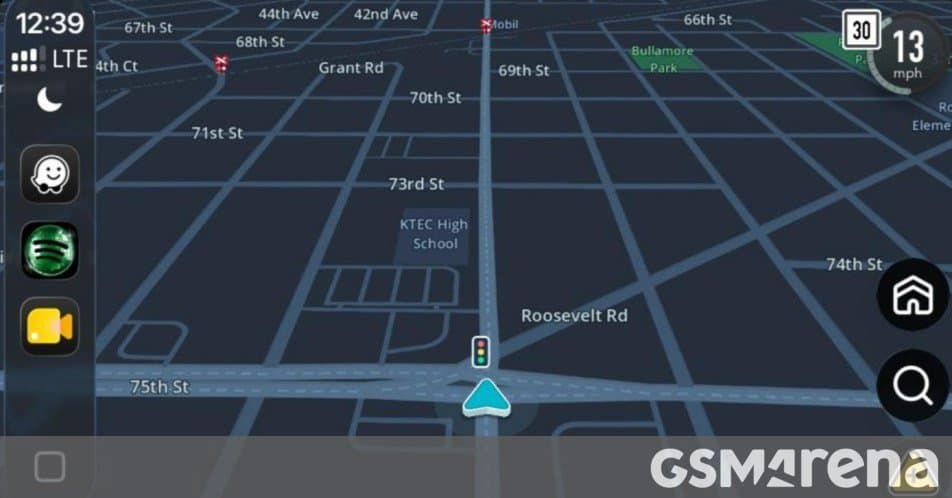
Six months after Waze began testing on-map traffic light indicators, the Google-owned navigation app is still trickling the feature out to users across multiple countries with no official announcement in sight.
Waze has spent the better part of a year slowly handing out one of its more practical additions in recent memory, and the rollout still hasn't reached everyone. The crowd-sourced navigation app, owned by Google, began testing a feature last December that displays traffic lights directly on the map along your route. Half a year later, that same feature is still being seeded to drivers in different regions, and a fresh Reddit thread confirms it remains a gradual, somewhat random expansion rather than a finished launch.
What the feature actually does
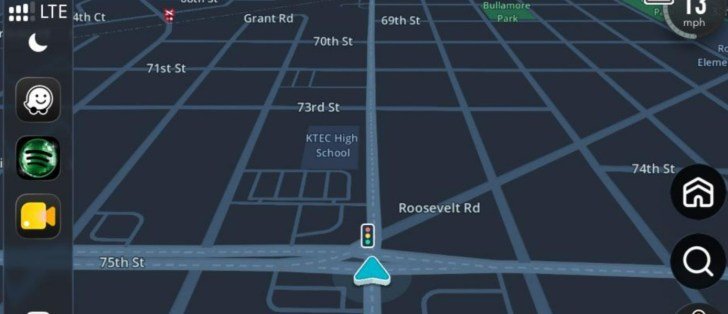
The addition is straightforward in concept. As you drive a route in Waze, the app overlays the locations of traffic lights onto the map, giving you a heads-up about upcoming intersections where you'll likely need to stop. It's the kind of small quality-of-life touch that makes navigation feel more aware of the road ahead, especially in dense urban areas where signal-heavy corridors can throw off your sense of timing and arrival estimates.
This is not new technology in the broader navigation space. Google Maps, which sits under the same corporate roof as Waze, has shown traffic lights on its maps for a while now. Several other GPS apps offer comparable functionality. What's notable here is less the feature itself and more how cautiously Waze is treating its release, and how long that caution has stretched on.
Why the rollout looks so random
Comments scattered across multiple Reddit threads paint a consistent picture: the traffic lights feature is appearing for users seemingly at random, with no clear pattern tied to device, region, or app version. Two people on the same Waze version in the same country might have completely different experiences, with one seeing traffic lights and the other seeing nothing.
That behavior is the signature of a server-side staged rollout. Rather than shipping the feature to everyone at once through an app update, Waze appears to be enabling it remotely for slices of its user base. This approach lets the company watch how the feature performs at increasing scale, catch problems before they hit millions of drivers, and pull back if something breaks without forcing users to download a new build. It also neatly explains the lack of any official announcement. Companies rarely make a formal statement about a feature that's still in active testing, since the experience can change or get rolled back entirely.
For Waze specifically, the crowd-sourced foundation of the app adds another wrinkle. The platform relies heavily on user-contributed data, so a feature tied to road infrastructure like traffic signals benefits from careful validation across many different cities and traffic systems before a global push.
The ecosystem picture
Google's ownership of both Waze and Google Maps creates an interesting dynamic. The two apps overlap heavily in purpose yet maintain distinct identities and loyal user bases. Waze leans into its community-driven personality with real-time hazard reports, police sightings, and road closures contributed by drivers. Google Maps positions itself as the more comprehensive, all-purpose mapping platform with deeper points-of-interest data and tighter integration into the wider Google ecosystem.
Features tend to flow between the two over time, and traffic lights arriving on Waze after living on Google Maps fits that pattern. Google has continued investing in both apps rather than consolidating them, recently bringing Waze incident reports to Android Auto and pushing Gemini-powered tools like Ask Maps and Immersive Navigation into Google Maps. The traffic lights expansion is part of a steady stream of updates keeping Waze competitive with its sibling.
What to do if you don't have it yet
If you've updated to the latest version of Waze and still don't see traffic lights on your map, there's nothing to fix on your end. The feature simply hasn't been switched on for your account yet, and there's no setting to force it. Patience is the only real option, since server-side rollouts arrive on Google's schedule rather than yours.
In the meantime, drivers who want traffic light guidance can fall back on Google Maps or another navigation app that already supports it. Given how long this rollout has run, a wider release likely isn't far off, but Waze has shown it's in no hurry to rush a feature out before it's confident in the experience.
You can grab the latest builds from the Google Play Store or the App Store and keep an eye on your map. For a feature this small, the staged approach might feel overly cautious, but it reflects how carefully Google handles changes to apps that millions of people trust to get them home every day.
Comments
Please log in or register to join the discussion