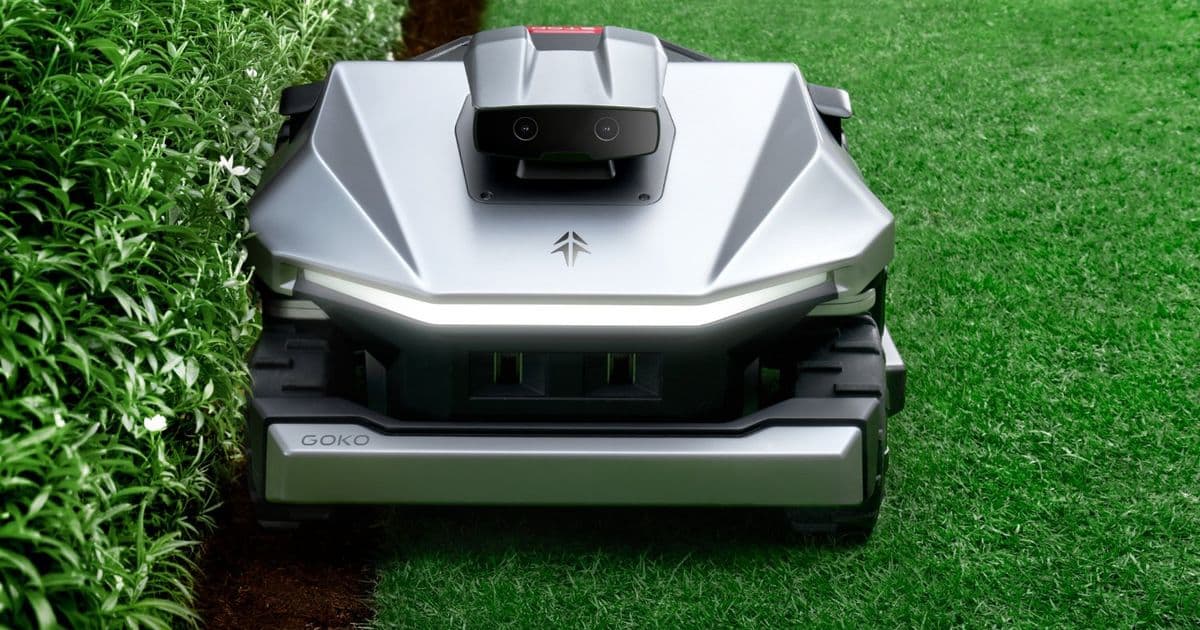
GOKO's first residential mower skips the flat-lawn assumptions most robots are built around. The M6 pairs a four-wheel-drive chassis rated for 42-degree slopes with a four-camera AI vision stack and RTK positioning, aiming squarely at the large, awkward yards that defeat cheaper competitors.
Robotic mowers have spent the last decade getting smarter at one specific job: trimming flat, rectangular suburban lawns. Step outside that comfort zone with a slope, a tree root, or a property measured in acres, and most of them stall, beach themselves, or give up entirely. The GOKO M6 is built by people who clearly noticed that gap. It is a four-wheel-drive machine with adaptive suspension, multi-camera obstacle recognition, and centimeter-grade navigation, and it is chasing the buyers that the rest of the category quietly ignores.
It launched on Kickstarter on May 12, 2025, and hit 200% of its funding goal on the first day. That early traction tells you less about marketing polish and more about pent-up demand from people who own difficult yards and have already been burned by hardware that couldn't cope. GOKO is the consumer robotics brand of Robot++, and the M6 is the company's move from industrial robotics into residential lawn care.
What's New
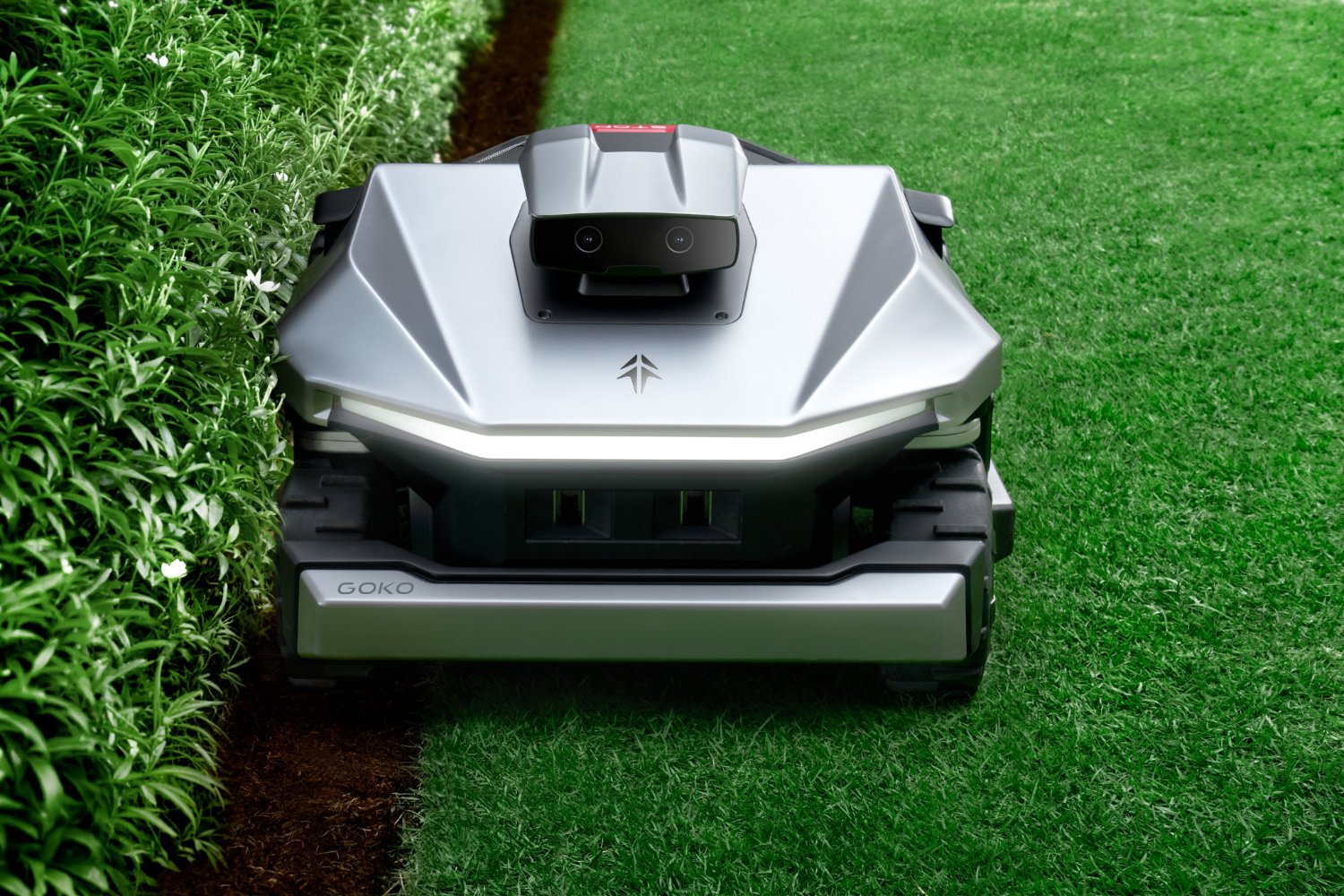
The headline change versus a typical robot mower is traction. The M6 runs a genuine four-wheel-drive system paired with adaptive suspension, and GOKO rates it for slopes up to 90% grade, or 42 degrees. That is steep enough that a person mowing by hand would be bracing carefully. The suspension is the part that matters here, because keeping all four wheels loaded on uneven ground is what separates a mower that climbs from one that spins a single wheel and stops.
Ground clearance backs this up. The M6 can cross obstacles up to 7.5 cm tall, which covers the realistic hazards of a rough yard: exposed roots, frost-heaved soil, the lip of a drainage channel. When it does get stuck in mud or loose ground, the combination of large tires and an automated recovery routine is meant to free it without you walking out to lift it. Anyone who has rescued a stranded robot mower from a wet patch will understand why that feature gets billing.
{{IMAGE:2}}
Navigation uses two systems working together. RTK (real-time kinematic) positioning keeps cutting accurate to the centimeter under open sky. When the satellite signal drops, behind a dense tree line or along a wall, VSLAM visual navigation takes over and keeps the mower running for up to 10 minutes or 150 square meters before it needs the signal back. The M6 supports both Network RTK and a Local RTK base station, which gives you options depending on whether your property has reliable connectivity or needs its own reference point.
The vision side is branded AI QuadVision, a four-camera array that includes two side cameras for peripheral awareness. The practical payoff is edge work and tight spaces: more cameras looking sideways means the mower can hug borders and thread through narrow gaps with less guesswork. GOKO says the obstacle-avoidance model recognizes more than 200 object types, the everyday clutter of a real lawn, including garden furniture, pets, toys, and forgotten tools.
How It Compares
Most mainstream robot mowers in the wire-free, RTK-guided class top out well below the M6's slope rating and are designed around lawns measured in hundreds of square meters, not thousands. The M6's coverage numbers are aggressive: up to 1 acre (4,000 square meters) per charge, and with expandable battery support, up to 2 acres (8,000 square meters) per day. It also supports unlimited mowing zones, so a property with separate front, back, and side lawns plus garden paths can be managed as distinct areas rather than one map the robot tries to force into a single plan.
{{IMAGE:3}}
The cutting hardware is sized to match. The M6 uses a 42 cm (16.5-inch) cutting system, wider than the small spinning-disc cutters common on compact robots, with two swappable blade options. A mulching blade handles thick or dense growth, and a razor disc runs quieter for routine maintenance trims. Cutting power is rated at 250W per blade in a dual-blade configuration. A wider deck and real motor power are what make the per-day acreage figures plausible rather than marketing optimism.
Lawn care is not just about cutting, though, and the M6 puts effort into not wrecking the surface it drives over. It uses 180-degree independent front-wheel steering to turn cleanly instead of skidding, which reduces scuffing on wet or soft grass. Zone mapping divides each lawn and picks an efficient mowing direction per section, and the mower shifts its lateral path and nudges its mowing angle slightly between passes so it doesn't compress the same strips of grass into permanent tire tracks. An optional alternating mowing mode smooths out the turns further. These are the details that distinguish a machine built by people who understand turf from one that simply drives in lines.
Day-to-day living with it looks familiar for the category: app control and scheduling, a 4.3-inch TFT display on the body, anti-theft measures, AirTag support, and real-time tracking. The whole unit carries IPX6 waterproofing, so rain and washdowns are not a concern.
{{IMAGE:4}}
The styling is a deliberate departure. Where almost every robot mower hides under the same rounded plastic shell, the M6 borrows the angular, faceted look of the Cybertruck. It is a polarizing choice, but it earned the M6 a Gold Award at the FDA French Design Award, so the industrial aesthetic is landing with at least some judges. GOKO is also showing the X5 alongside it, a 3-in-1 commercial RC machine that handles mowing, snow removal, and towing, which signals the brand is building a broader smart-yard lineup rather than a single product.
Who It's For
This is not the robot mower for a tidy quarter-acre of flat grass. For that, cheaper and simpler machines already do the job well, and the M6's capabilities would be overkill. The M6 makes sense for a specific buyer: the acreage owner, the homeowner with a genuinely steep or terraced lawn, or anyone who bought a robotic mower once already and returned it after watching it fail to climb the back slope or strand itself on a root.
The Kickstarter campaign runs until June 25, 2025, with a retail launch on GOKO's official website expected in late June. Crowdfunded hardware always carries the usual caveats about delivery timelines and the gap between spec sheets and shipped units, and the slope and recovery claims are exactly the kind that deserve hands-on verification once review samples are in the wild. But on paper, the M6 is one of the few robot mowers that treats difficult terrain as the design target rather than an edge case, and for the people who own that terrain, it earns a close look.
Comments
Please log in or register to join the discussion