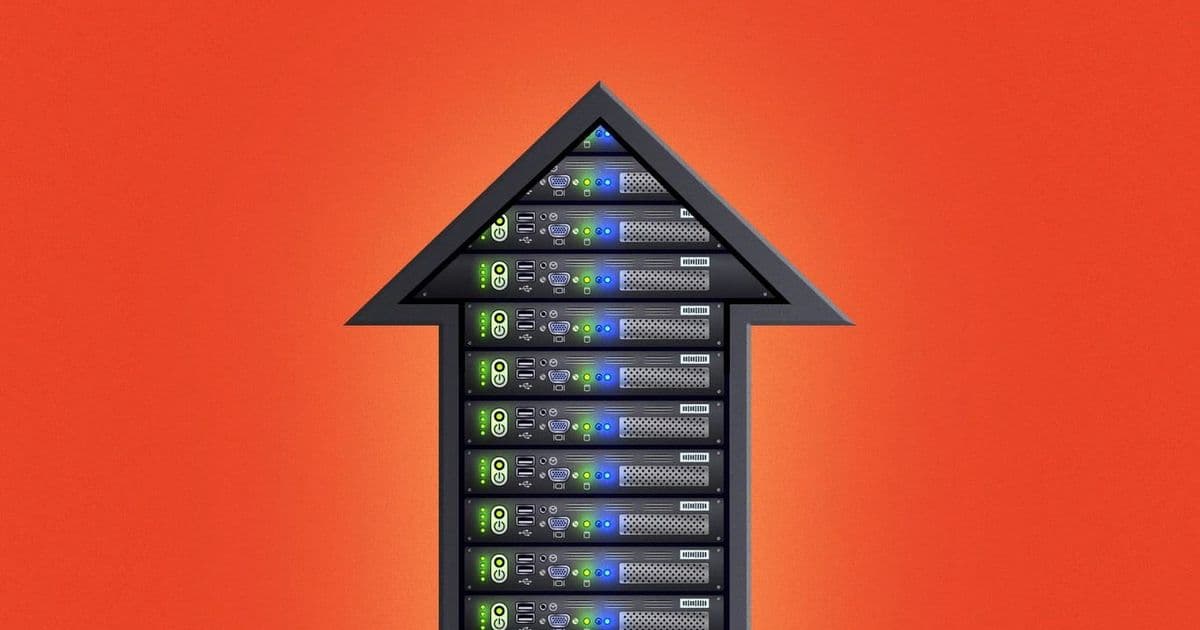
Global AI data center expansion faces mounting delays as energy constraints, regulatory hurdles, and economic uncertainty collide with surging demand for AI infrastructure.
The global AI data center boom is hitting a wall, with major projects facing delays and cancellations across North America, Europe, and Asia. What was once projected as an unstoppable wave of infrastructure investment is now encountering a perfect storm of challenges that threaten to slow the AI revolution's physical foundation.
Energy constraints emerge as primary bottleneck
Power availability has become the critical constraint. In Virginia's data center corridor, Dominion Energy has placed a moratorium on new connections until 2026, affecting over 10 gigawatts of proposed capacity. The situation is even more acute in Ireland, where data centers now consume 21% of the country's electricity, prompting Dublin to halt new data center construction in 2023.
The numbers are staggering: Training a single large language model can consume 126,000 kilowatt-hours of electricity—equivalent to the annual consumption of 11 U.S. households. As models grow larger and more complex, each training run requires exponentially more power, creating a fundamental mismatch between AI's energy demands and grid capacity.
Regulatory and environmental pushback intensifies
Local communities and environmental groups are increasingly challenging data center projects. In the Netherlands, a proposed 200MW facility near Amsterdam was blocked in 2024 after residents raised concerns about water usage and heat emissions. Similar battles are playing out in Texas, where drought conditions have made water-cooled data centers politically toxic.
The regulatory landscape is shifting rapidly. The EU's Corporate Sustainability Reporting Directive now requires detailed disclosure of data center energy consumption and carbon emissions. Some U.S. states are considering similar mandates, while others are offering tax incentives to encourage more efficient designs.
Economic headwinds cool investment fever
The economic calculus for massive data center investments is becoming more complex. Interest rates have risen sharply since 2022, increasing the cost of capital for billion-dollar facilities. Meanwhile, the ROI timeline for AI infrastructure remains uncertain as companies struggle to monetize their AI investments.
Major tech companies are recalibrating. Amazon, Google, and Microsoft have collectively slowed their data center expansion plans, with some analysts estimating a 15-20% reduction in projected capacity additions for 2025. The hyperscalers are now prioritizing efficiency improvements and alternative architectures over raw capacity growth.
Grid infrastructure struggles to keep pace
Building a data center takes 18-24 months, but upgrading the electrical grid to support it can take 5-7 years. This mismatch creates a dangerous bottleneck. In Northern Virginia, the grid infrastructure is already operating near capacity, with some substations running at 95% utilization.
The transmission challenge is particularly acute. Data centers require not just large amounts of power, but extremely reliable power. This means building redundant transmission lines, on-site backup generation, and sophisticated power management systems—all of which add significant cost and complexity.
Alternative approaches gain traction
Faced with these constraints, the industry is exploring alternative approaches. Edge computing deployments are accelerating, with companies pushing AI processing closer to end users to reduce the load on centralized data centers. Liquid cooling technologies are gaining adoption, offering 30-50% improvements in energy efficiency compared to traditional air cooling.
Modular data center designs are also emerging as a potential solution. These prefabricated units can be deployed more quickly and with less grid impact than traditional builds. Companies like Schneider Electric and Vertiv are developing "data center in a box" solutions that can be scaled incrementally.
The geopolitical dimension
The data center slowdown has significant geopolitical implications. The U.S. and China are engaged in a race for AI supremacy, but both face similar infrastructure constraints. China's data center capacity grew by only 8% in 2023, down from 15% in 2021, as power shortages and regulatory restrictions took their toll.
Europe faces a particularly acute challenge. The continent's push for digital sovereignty requires building more data centers, but strict environmental regulations and limited renewable energy capacity create a difficult trade-off. Some European countries are now considering nuclear-powered data centers as a potential solution.
What comes next
The AI data center boom isn't over—it's evolving. The industry is shifting from a "build it and they will come" mentality to a more measured approach that prioritizes efficiency, sustainability, and grid compatibility. This transition will likely result in slower but more sustainable growth.
The winners in this new environment will be companies that can innovate on multiple fronts: developing more energy-efficient AI models, designing data centers that can operate within existing grid constraints, and creating business models that justify the massive capital expenditures required.
As one industry executive put it: "We're not building data centers anymore—we're building power plants with compute attached." This reframing of the challenge suggests that the AI infrastructure boom will continue, but on a fundamentally different timeline and scale than originally envisioned.
Comments
Please log in or register to join the discussion