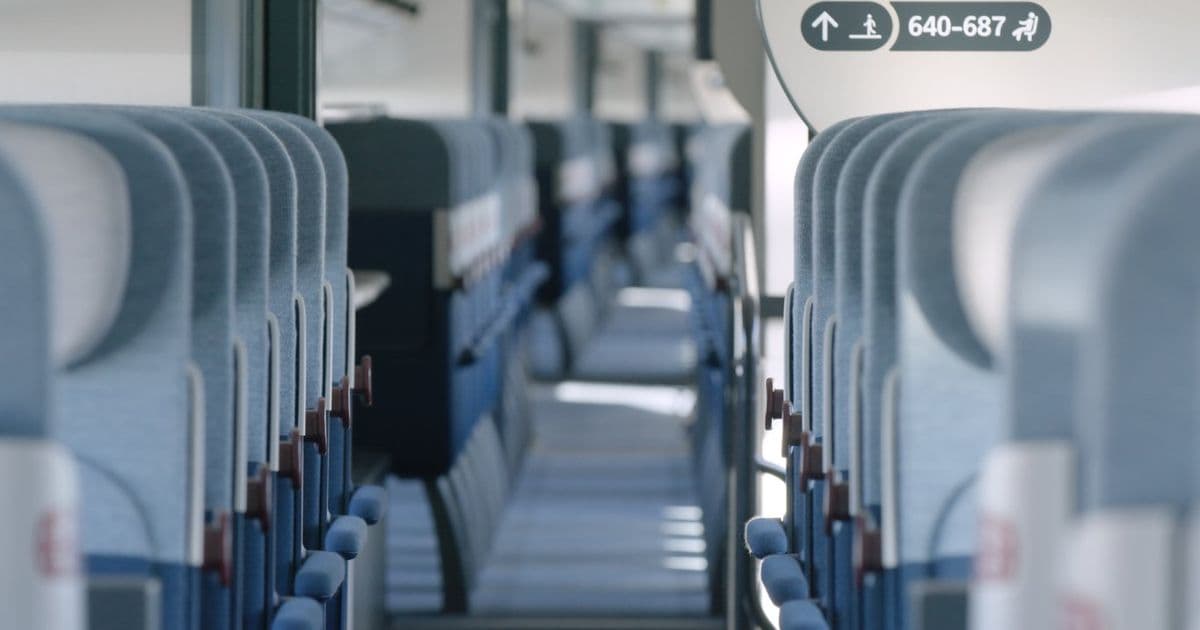
Alstom’s Avelia Horizon (TGV M) adds an extra car, shortens power units and reshuffles systems to lift capacity from 600 to up to 740 seats on a 656‑ft train. The first Inoui‑configured sets will enter service in September 2026, with a Eurostar “Celestia” variant slated for 2031.
Why the TGV M packs more seats than its predecessors and when it will start running
The new TGV M (Alstom’s Avelia Horizon) arrives with a noticeable jump in passenger capacity while staying virtually the same length as the older TGV 2N2/Duplex. On paper the train can hold 740 seats in a low‑cost layout, but the standard Inoui configuration that SNCF will launch in September 2026 provides 600 seats – still a solid increase over the 560‑seat norm of the current fleet.
How the extra space is achieved
| Feature | Legacy TGV 2N2/Duplex | TGV M (Avelia Horizon) |
|---|---|---|
| Train length | 656 ft (200 m) | 656 ft (200 m) |
| Number of cars | 8 (including two power cars) | 9 (adds one passenger car) |
| Power‑car length | 70 ft each | 57 ft each (‑13 ft) |
| Intermediate car length | 65 ft | 62 ft (‑3.3 ft) |
| Seats (low‑cost) | ~600 | up to 740 |
| Seats (standard Inoui) | ~560 | 600 |
| Seat pitch | 35.4 in | 35.6 in (standard) |
The capacity boost comes from three engineering choices:
- Shorter power cars – By moving a large share of the traction electronics into a more compact package, each power car loses 13 ft of length. This frees up space at both ends of the train.
- One extra passenger car – The freed length allows a ninth car to be inserted between the two power units. The car follows the familiar double‑deck (duplex) layout that has been a hallmark of French high‑speed trains.
- System relocation – In earlier TGVs many auxiliary systems (cooling, compressors, etc.) lived in the bar car, taking up passenger volume. Alstom has shifted most of those modules back into the power cars, freeing the bar area for seats or for a larger lounge.
The result is a seat‑per‑foot ratio of 3.0 in the standard layout, rising to 3.7 in the low‑cost variant. For comparison, the Austrian ÖBB Railjet (853 ft) offers 532 seats (≈0.62 seat/ft) and the German ICE 3 Neo (656 ft) only 439 seats.
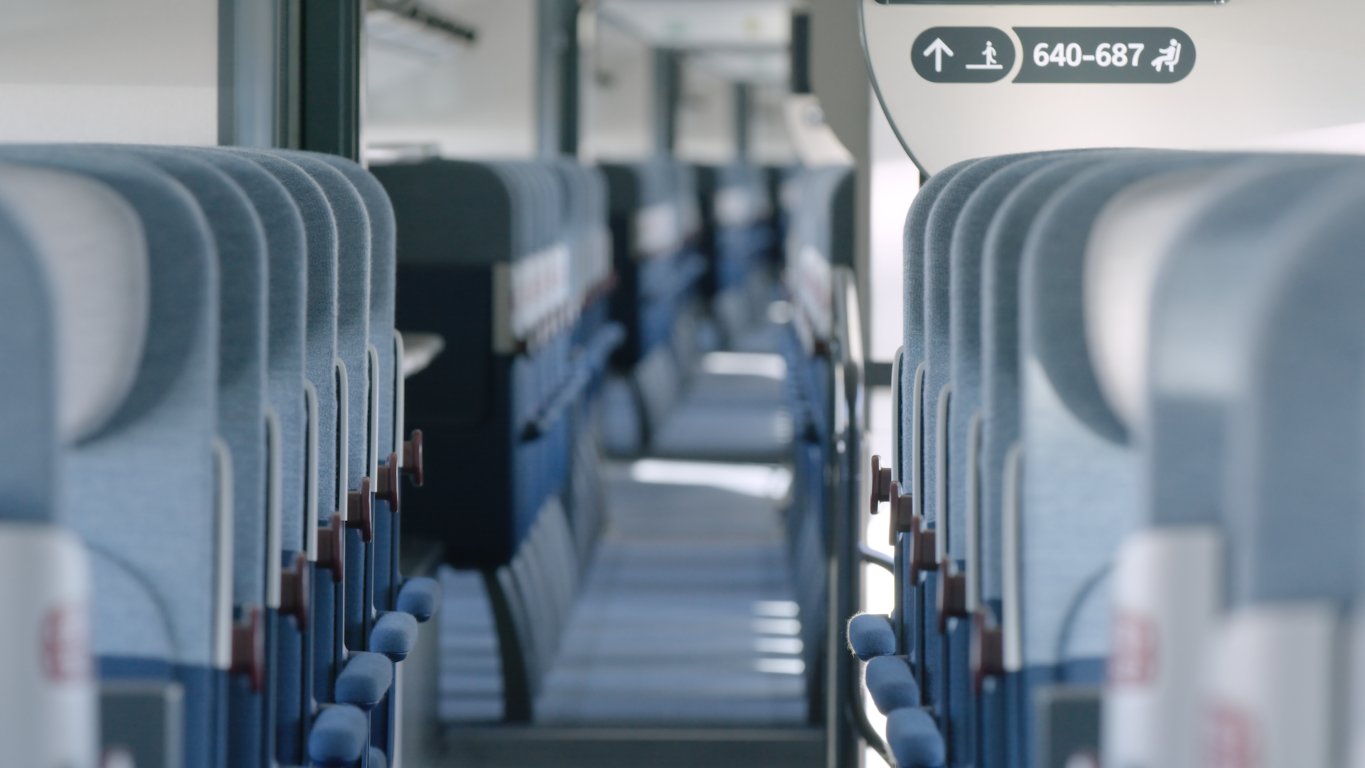 Lounge area of the TGV M with plenty of space
Comfort isn’t sacrificed
Alstom stresses that the extra seats do not come at the cost of passenger comfort. The seat pitch in the regular Inoui configuration is 35.6 in, a marginal increase over the 35.4 in of the older TGV. While the difference is small, it still exceeds typical airline economy pitches (31‑33 in) and matches the comfort levels of contemporary European intercity trains (DB’s ICE 4 ranges from 33.9 in to 38.2 in).
The cabin design retains the dark‑tone colour scheme of previous TGVs, which can make the interior feel a bit enclosed. However, the added car and wider aisles in the low‑cost layout should improve the perception of space, especially for passengers working with laptops. On‑board Wi‑Fi will be supplied via a 5G‑based backhaul, and power outlets are planned throughout the train, although the exact USB configuration is still being finalised.
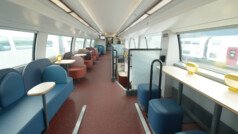 First‑class and PRM area
When will the TGV M run?
Alstom and SNCF announced network approval on 22 May 2026 and published the press release on 29 May 2026. The first commercial service is slated for the start of the French school year, early September 2026, in the Inoui two‑class configuration with a bar car.
Delivery schedule (as of the latest update):
- June 2026 – first two trainsets arrive in France
- August 2026 – four additional sets
- End of 2026 – SNCF will operate six TGV M units
- 2027‑2028 – fleet expands to 13 units (≈10 % of the total order)
The full order comprises 130 trainsets, matching the size of earlier generations. By the end of the decade the majority of the fleet should be in service on the core high‑speed corridors (Paris‑Lyon, Paris‑Marseille, etc.).
The Eurostar “Celestia” variant
SNCF Voyageurs has also placed an order for 30 (with an option for 20 more) Eurostar‑branded versions of the Avelia Horizon, to be delivered by 2031. These will be marketed as Eurostar Celestia and feature a three‑class layout (Standard, Plus, Premier) with roughly 540 seats in a single‑traction configuration. When operated in double‑traction for the Channel Tunnel, capacity can double to about 1,080 seats.
Because Eurostar will run the Celestia on international routes, the train will be equipped for 1.5 kV and 25 kV electrification and will support ETCS as well as the national signalling systems of France, the UK, Belgium, the Netherlands and Germany. This broader compatibility contrasts with the French‑only TGV M, which is limited to French signalling.
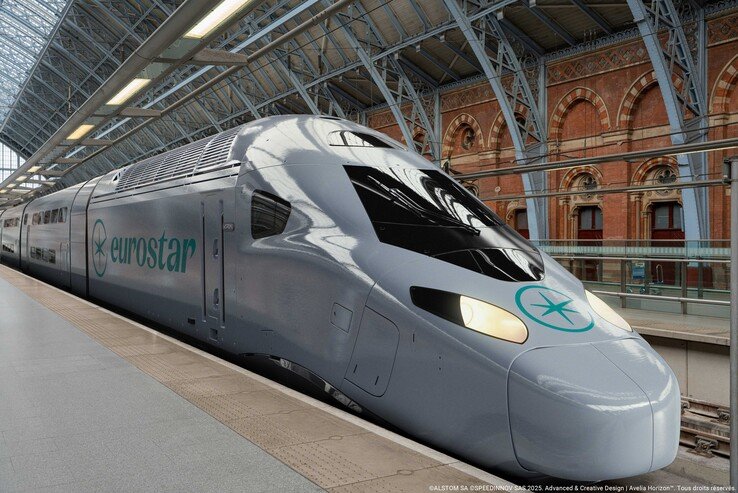 Eurostar Celestia render
Bottom line
The TGV M demonstrates how modest dimensional tweaks – shorter power cars, an extra passenger module and smarter system packaging – can translate into a 30 % increase in seat count without lengthening the train. Even in the standard 600‑seat Inoui layout the train offers a slightly larger seat pitch and more flexible interior zones, making it a practical upgrade for both commuter‑heavy routes and longer‑distance services.
With service slated for September 2026, passengers will be able to test the new layout this summer on the existing high‑speed lines. The Eurostar Celestia variant will arrive later, promising a premium, cross‑border experience while still benefiting from the same space‑optimising architecture.
Sources: Alstom press kit, SNCF press release (PDF), ÖBB fleet overview (PDF), ICE 3 Neo specifications, Hochgeschwindigkeitszüge.com
Comments
Please log in or register to join the discussion