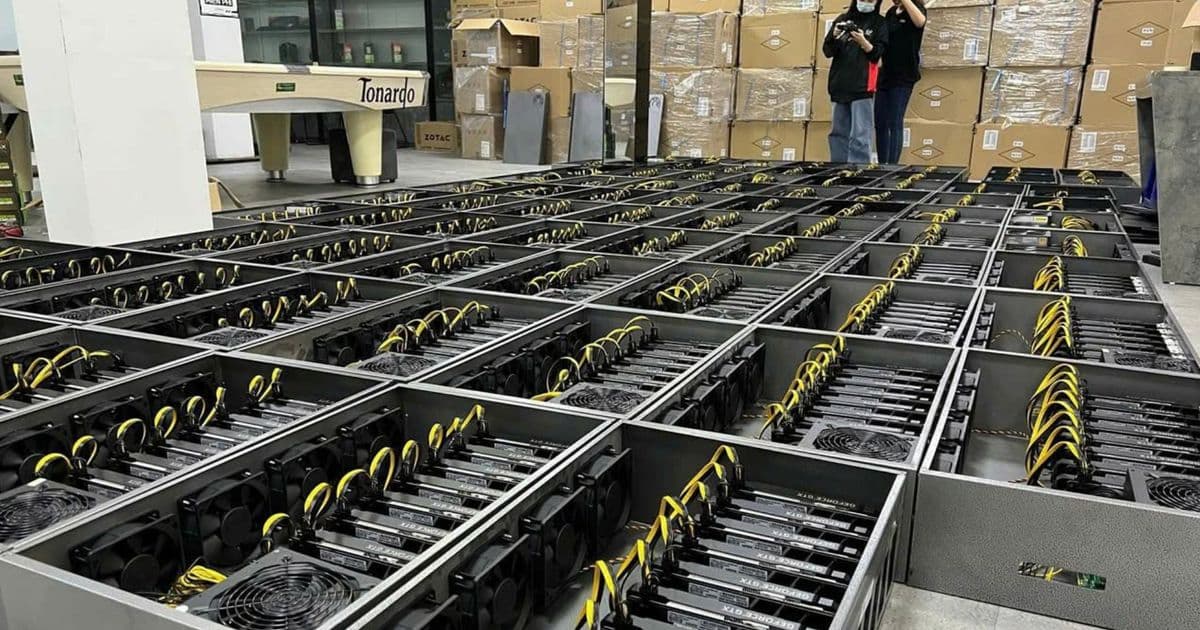
A research preprint claims Pearl's blockchain network, marketed as converting cryptocurrency mining into useful AI computation, runs on approximately 320,000 RTX 3090-class GPUs consuming 112 megawatts while producing no actual AI workloads, sparking a 38% jump in budget GPU rental costs as miners flood the market.
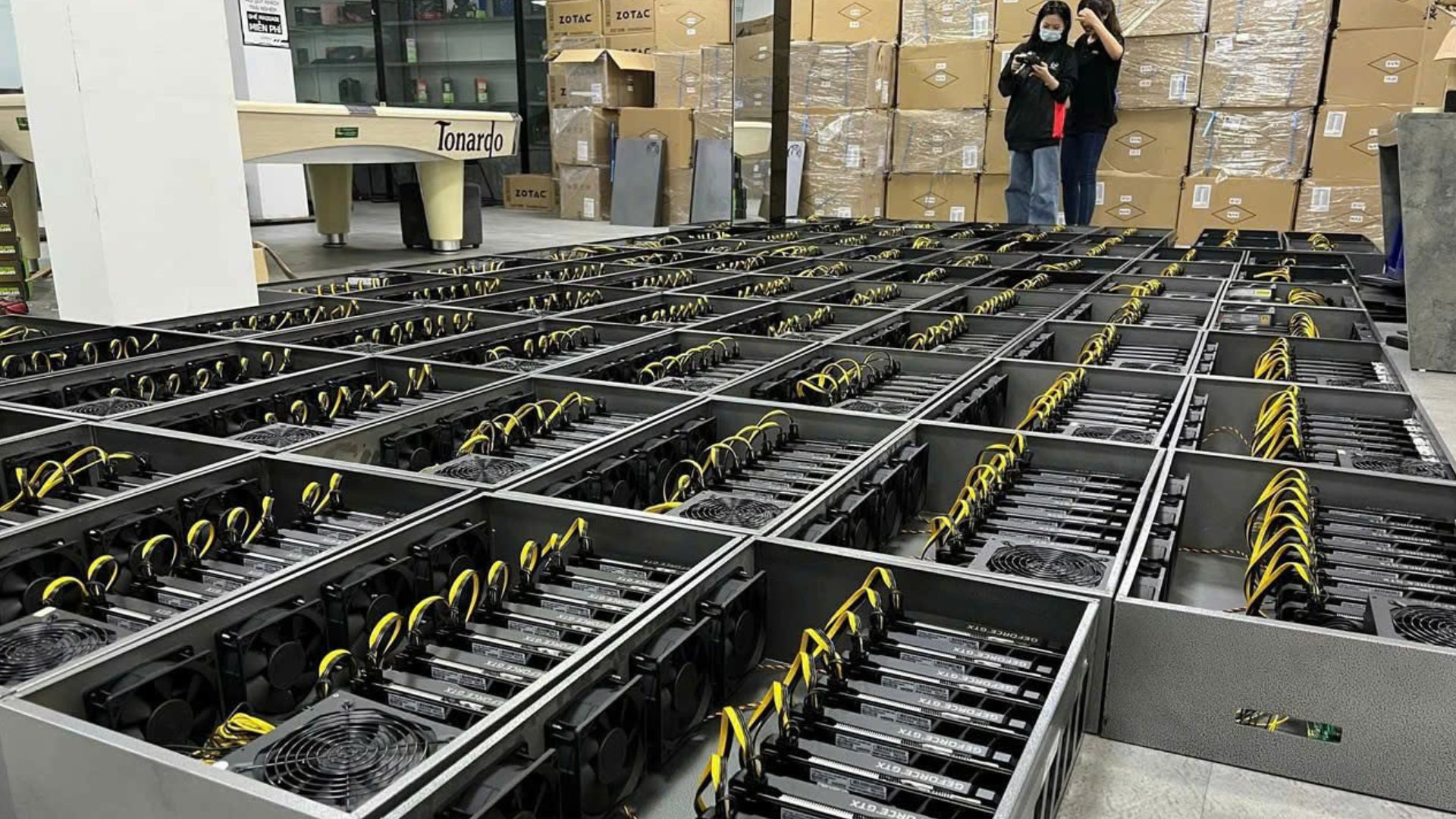
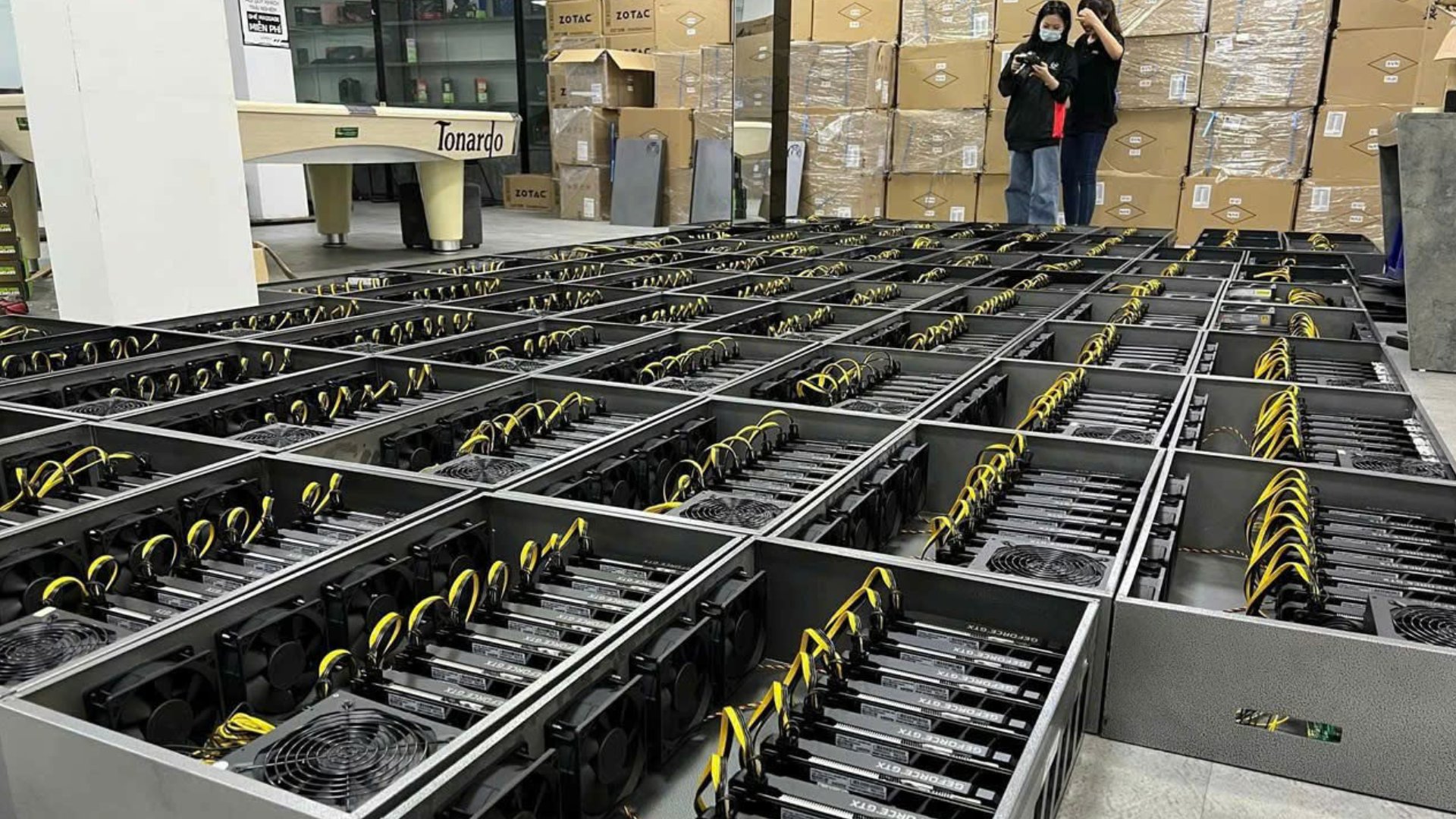
A research preprint titled "The Usefulness Gap in Proof-of-Useful-Work" has exposed critical flaws in Pearl, a Layer-1 blockchain that markets itself as the first system where cryptocurrency mining simultaneously performs useful artificial intelligence computation. The study estimates Pearl's network operates at approximately 24 exahashes per second (EH/s), drawing power equivalent to roughly 320,000 Nvidia RTX 3090-class GPUs consuming an estimated 112 megawatts of electricity, all while producing what researchers characterize as "zero useful AI computation."
Technical Architecture: How Pearl's cuPOW Protocol Works
Pearl replaces Bitcoin's SHA-256 hashing algorithm with a scheme it calls cuPOW, which requires miners to compute noised integer matrix multiplications and generate zero-knowledge proofs verifying correct execution. Matrix multiplication forms the computational backbone of neural network inference and training operations, creating Pearl's foundational premise that mining and AI compute are mathematically equivalent workloads.
The protocol's verification step confirms that matrix multiplication was performed correctly according to the cuPOW specification, but does not validate whether input matrices originate from actual machine learning models, customer workloads, or any legitimate AI application. This distinction represents the core technical vulnerability identified in the research.
Researcher Abhinaba Basu constructed a miner that feeds Pearl's network uniformly random matrices with no inference workload attached, then submitted the output to mining pools. The paper documents 44 pool-accepted shares across Nvidia and AMD hardware configurations, with the same miner benchmarked on server CPUs and Apple Silicon through Metal compute shaders. An on-chain payout was earned using the standard mining software without modification.
If randomly generated numbers collect rewards as readily as genuine AI workloads, the network cannot distinguish between productive computation and cryptographic busywork, creating strong economic incentives for miners to bypass AI processing entirely.
Hardware Analysis: 8,012 Workers Show No ML Framework Evidence
Basu analyzed 8,012 mining workers within a single pool representing approximately 21% of Pearl's total hashrate. All measured workers ran hardware capable of AI inference operations, yet the dominant mining binary contained no identifiable code signatures for any machine learning framework.
The binary analysis relied on string inspection techniques, which the paper acknowledges can be circumvented through stripped or obfuscated code. The research presents this finding as strong evidence rather than definitive proof, though the consistency across thousands of workers strengthens the statistical significance.
Runtime profiling corroborated the static analysis findings. Miners demonstrated heavy compute utilization coupled with light memory bandwidth usage, a performance signature consistent with pure matrix arithmetic and inconsistent with transformer inference workloads that demand substantial memory bandwidth for weight matrix access patterns.
GPU Market Impact: Budget Card Rental Costs Surge 38%
The resource competition extends beyond theoretical concerns. The study attributes a roughly 38% increase in budget GPU rental prices on vast.ai marketplace to Pearl mining activity, with utilization rates climbing from 57% to 94% following the mining software's public release in May. Using difference-in-differences methodology against pricier datacenter GPU classes, Basu estimates approximately $600,000 per year in additional rental costs imposed on independent researchers competing for the same hardware tier.
At PRL's recent trading price near $0.76, the paper calculates mining remains marginally profitable on budget cards such as the RTX 3060 Ti and approximately breakeven on RTX 3090 configurations. The narrow profit margins suggest miners operate on thin spreads, making the network particularly sensitive to token price fluctuations and electricity costs.
Multi-Vendor Mining: First Non-Nvidia Shares Demonstrated
The research documents the first Pearl shares ever mined on non-Nvidia hardware, including an AMD Instinct MI300X achieving 10.6 million tiles per second, faster than the closed-source Nvidia miner managed on an RTX 3090. Basu benchmarked identical workloads on server CPUs and Apple M2 processors through Metal compute shaders, demonstrating the computation relies on commodity integer arithmetic rather than vendor-specific instruction sets.
This multi-platform capability undermines narratives of Nvidia lock-in within the Pearl ecosystem. The absence of technical barriers to cross-vendor mining suggests the network's computational requirements are fundamentally vendor-agnostic, differing from workloads optimized for CUDA-specific features.

Together AI Partnership: Financial Arbitrage vs. Useful Mining
Pearl's response strategy centers on its exclusive partnership with Together AI, announced in May, which framed the collaboration as enabling "every GPU cycle powering AI training and inference" to simultaneously mint PRL tokens. Together AI now offers a discounted Gemma-4-31B-it-pearl inference endpoint subsidized by mining proceeds.
Basu counters this arrangement represents financial arbitrage rather than proof of useful mining. Together AI's own GPUs perform inference workloads separately from the mining network, with PRL revenue subsidizing endpoint pricing. The 8,012 mining workers measured in the study produced none of that inference themselves, operating as parallel computational streams rather than integrated AI-mining workloads.
Semiconductor Supply Chain Implications
The Pearl network's computational demands highlight broader tensions in GPU allocation across AI inference, cryptocurrency mining, and scientific computing. At 112 megawatts, Pearl's estimated power consumption rivals medium-scale datacenter operations, diverting silicon capacity from workloads with direct economic output.
For GPU manufacturers, the situation complicates demand forecasting and channel management. Mining-driven demand historically creates volatile purchasing patterns that disrupt normal supply chain operations, as evidenced by the 2021-2022 mining boom's impact on consumer GPU availability and pricing.
The study's finding that Pearl mining generates no identifiable AI inference workloads challenges the premise that proof-of-useful-work systems can simultaneously serve computational and economic objectives without explicit verification mechanisms. Without protocol-level validation that mining operations produce genuine AI outputs, the distinction between productive computation and energy-intensive hash generation remains undefined.
Proof-of-Useful-Work: Theoretical Potential vs. Practical Implementation
The research concludes that Pearl's current design leaves a significant enforcement gap between theoretical capability and practical deployment. The protocol enables useful work in principle but does not require it in practice, creating a system that performs real computation while lacking mechanisms to verify that computation serves AI objectives rather than cryptocurrency mining with AI-shaped mathematical structures.
This gap has implications beyond Pearl for the broader proof-of-useful-work research community. Any PoUW system must solve the verification problem: how to confirm that computational work produces genuine utility rather than synthetic benchmarks designed to satisfy protocol requirements. Pearl's implementation demonstrates that matching the arithmetic operations of AI inference is insufficient without validation of input authenticity and output purpose.
The 320,000 GPUs operating at 112 megawatts represent a substantial allocation of semiconductor resources. Whether that allocation produces useful AI computation or simply demonstrates the difficulty of proving computational utility remains the central question for Pearl and the proof-of-useful-work paradigm.
Comments
Please log in or register to join the discussion