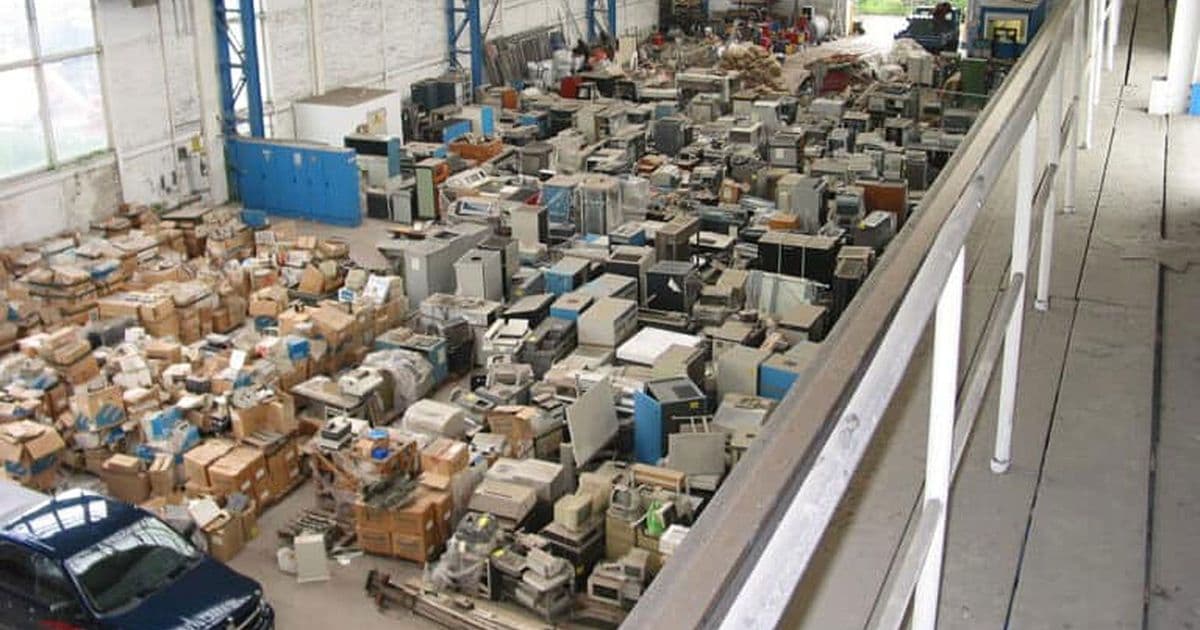
A tax advisor's tip led CHM curators to Castrop-Rauxel, where they discovered 2,000+ computing artifacts spanning five decades. The collection required seven tractor-trailers to ship to California and prompted CHM to expand its storage facilities.
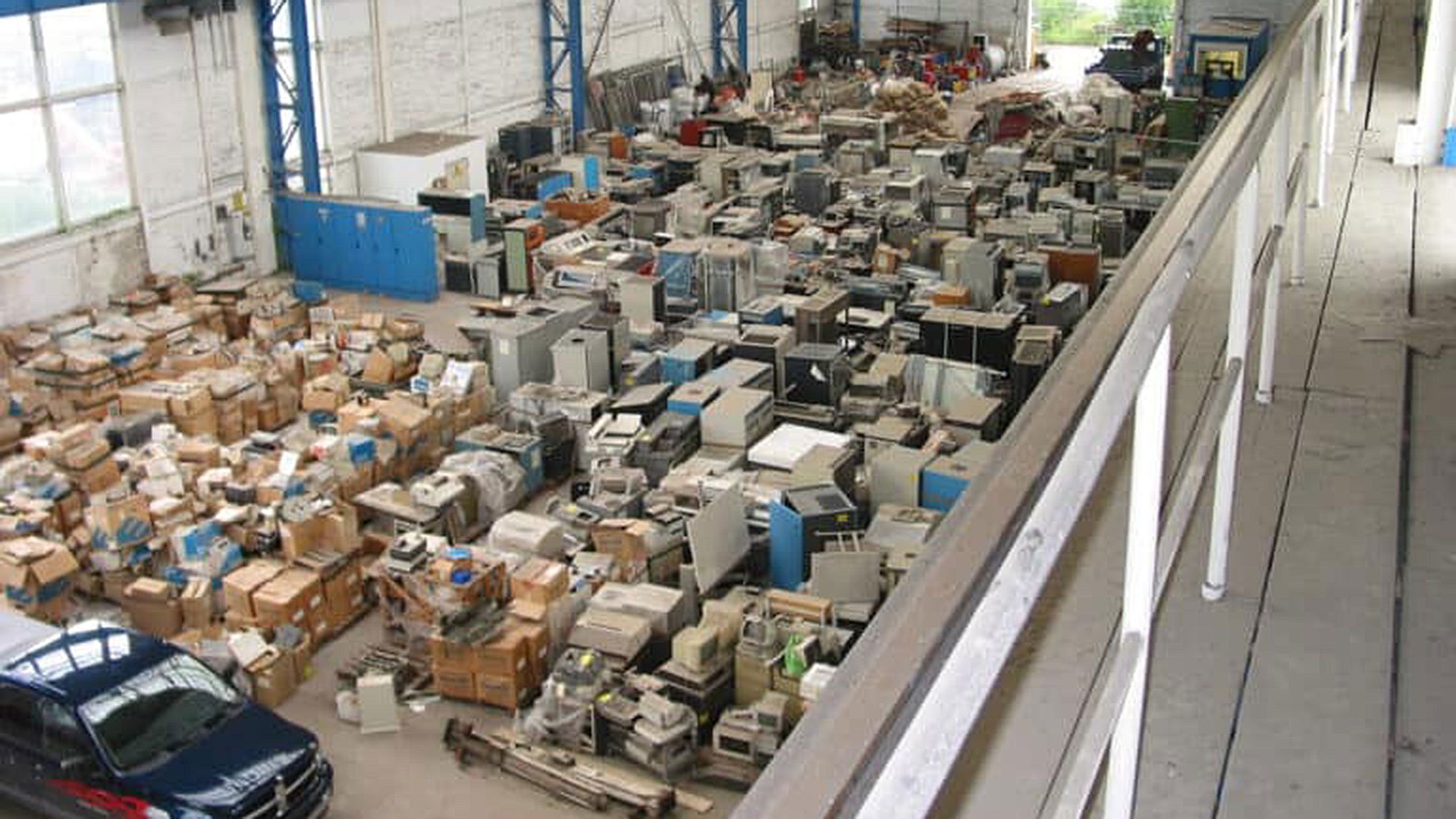
A tax advisor in Dortmund, Germany inadvertently uncovered one of the largest collections of vintage computing hardware ever recovered. The Computer History Museum (CHM) dispatched curators Dag Spicer and Alex Bochannek to investigate a lead on rare computing artifacts stored in an abandoned warehouse in Castrop-Rauxel, a town in the Ruhr region northwest of Dortmund. What they found would fill seven tractor-trailers and require the museum to acquire new climate-controlled storage.
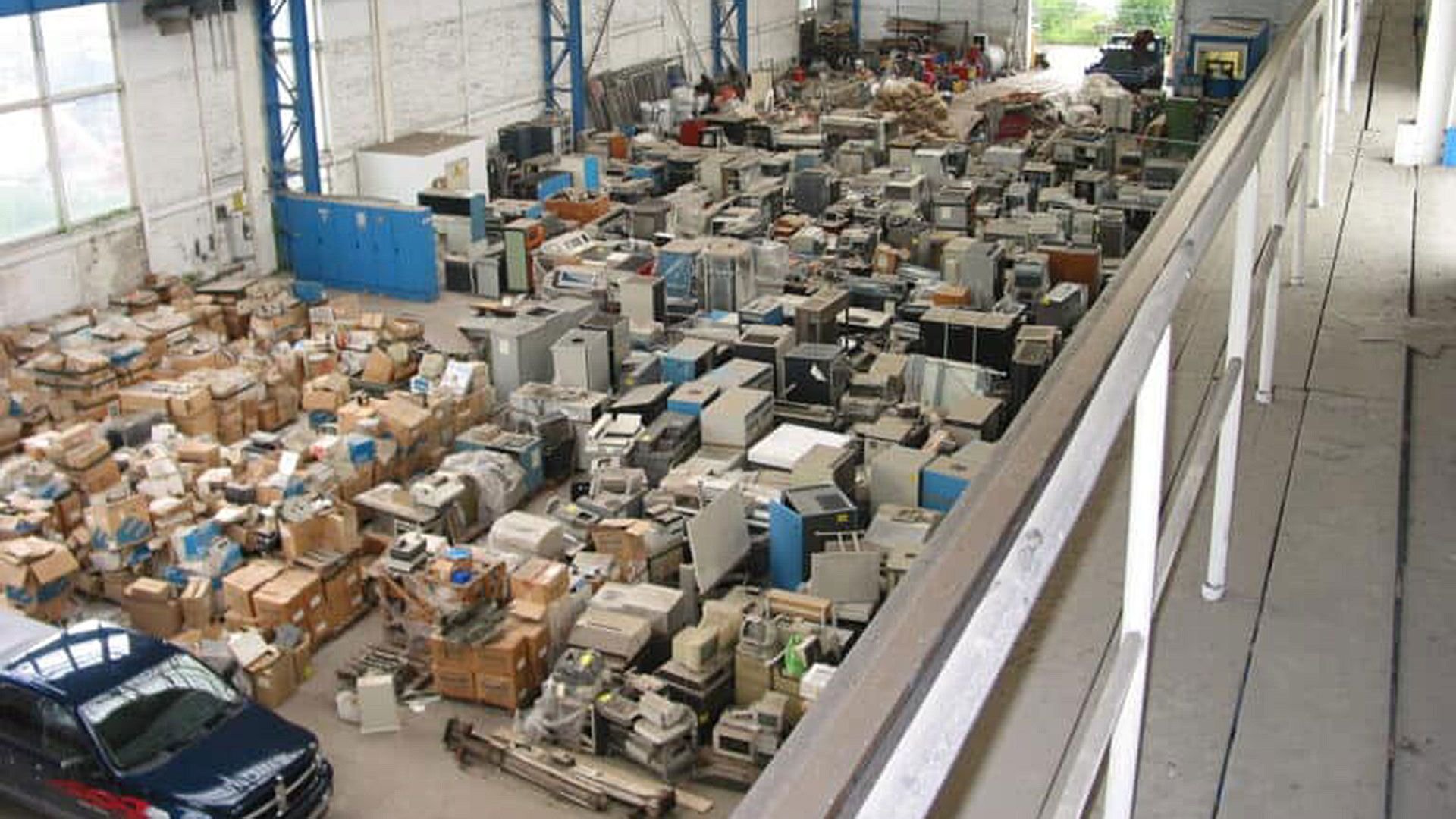
The warehouse, described as aircraft hangar-sized with three stories, contained over 2,000 artifacts spanning computing history from the 1930s through the 1980s. The collection occupied roughly 11,840 square feet of floor space (72 x 165 feet). CHM documented 2,056 total pieces after cross-referencing against existing museum stock.
What Was Inside
The haul encompassed an unusually broad range of computing eras and technologies:
- Storage media: Large disk packs including Diablo and RK05 types, paper tape, both 80-column and 96-column punch cards, magnetic tape, DECtape, magnetic strips, cartridges, and floppy disks
- Hardware: Mainframes, minicomputers, disk drives, line printers, and punched card equipment
- Documentation: Code libraries and technical documentation spanning decades
The collection included Cold War-era Eastern Bloc machines alongside more conventional European hardware from the 1980s. The diversity suggests systematic acquisition over decades rather than opportunistic collecting.
The Collector
Investigations traced the collection to a professor who chaired electronics and data processing systems at Aachen University. He was alive during CHM's 2006 discovery, estimated to be around 80 years old at the time, but died four years later. The circumstances of how his collection ended up abandoned in a warehouse remain unclear.
Castrop-Rauxel sits in the Ruhr region, which Allied forces heavily bombed during WWII due to its concentration of manufacturing facilities. This historical context became relevant when CHM's work was halted by the discovery of an unexploded Allied bomb near the warehouse.
Logistics and Preservation
The curators implemented a pallet grid system to organize and catalog the massive collection. CHM described the finds as "astonishing" in scale. Some equipment had deteriorated significantly: one OCR machine had plants growing through it, while a punched card sorter nicknamed the "guano sorter" had accumulated years of bird droppings from nesting in the warehouse rafters.
The recovered collection is now part of CHM's SAP Collection and is accessible through the museum's online galleries. The acquisition prompted CHM to expand its climate-controlled storage facilities to accommodate the volume of material.

Scale in Context
Seven tractor-trailers of computing history represents a significant material transfer. To put this in perspective, CHM's entire physical collection spans multiple buildings in Mountain View, California. A single warehouse discovery adding this volume suggests either the previous owner was extraordinarily systematic in acquisition, or that significant computing heritage has been accumulating undetected in private collections across Europe.
The recovery highlights gaps in preservation infrastructure for computing history. Unlike established archives for other technologies, computing heritage often depends on individual collectors and institutional memory. When collectors die or lose interest, irreplaceable artifacts face destruction or abandonment.
CHM's experience in Castrop-Rauxel demonstrates both the fragility of private collections and the value of institutional networks. A tax advisor's recognition of the materials' significance, combined with CHM's capacity to investigate and transport them, prevented the likely destruction of historically significant computing artifacts.
Comments
Please log in or register to join the discussion