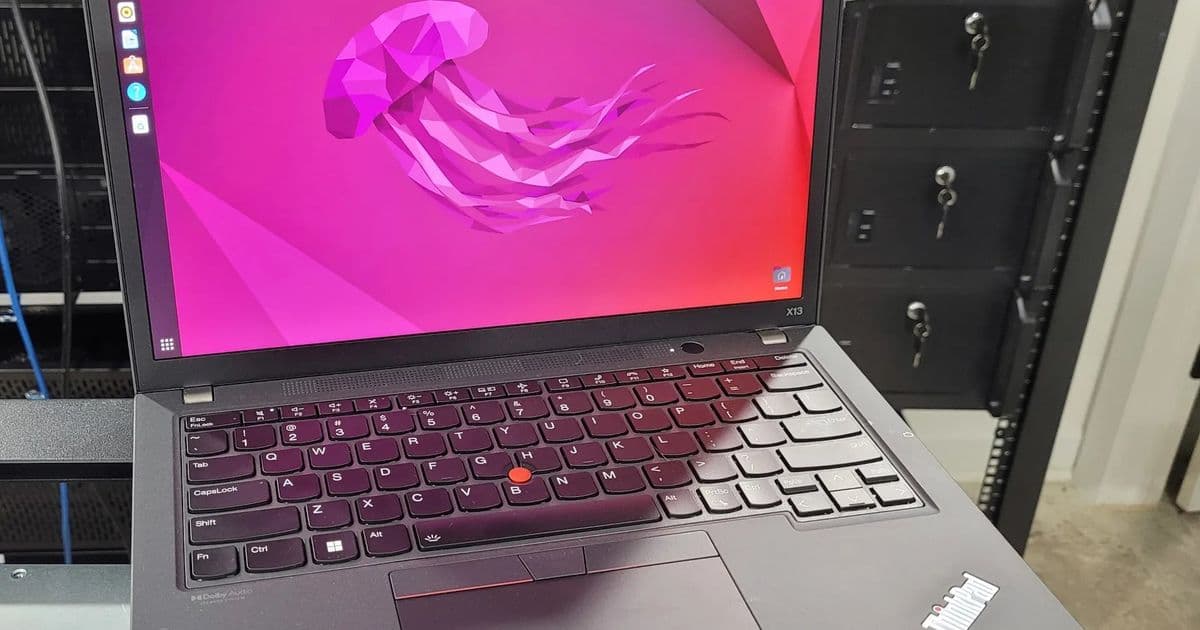
Linux 7.1 kernel update adds missing ECC memory support for AMD Ryzen 6000 series mobile processors, addressing an oversight in the amd64_edac driver.
The Error Detection and Correction (EDAC) subsystem in the Linux kernel continues to evolve with the latest updates for version 7.1, bringing crucial support for AMD's Zen 3 Rembrandt APUs with ECC memory capabilities. This seemingly small but important addition fills a gap in error reporting for modern AMD mobile processors.
What is EDAC and Why It Matters
The EDAC subsystem is a critical component of the Linux kernel that monitors and reports hardware errors, particularly those related to memory integrity. When ECC (Error-Correcting Code) memory is present, EDAC tracks single-bit errors (correctable) and multi-bit errors (uncorrectable), providing system administrators with valuable information about hardware health and potential failures.
For servers, workstations, and increasingly for mobile devices used in critical applications, ECC memory is essential for maintaining data integrity. The ability to detect and correct memory errors on the fly prevents silent data corruption that could lead to system instability or incorrect calculations.
The Zen 3 Rembrandt Oversight
The recent kernel update adds support for Family 19h, Model 40h to 4fh CPUs in the amd64_edac driver. This corresponds specifically to AMD's Zen 3 Rembrandt architecture used in the Ryzen 6000 series mobile processors. What makes this addition noteworthy is that it was an oversight - these processors had ECC capability but lacked driver support in Linux.
The patch itself is remarkably minimal, consisting of just three lines of code to add coverage for these previously unsupported models. Despite its simplicity, this change has significant implications for users running Rembrandt-based systems with ECC memory in Linux environments.
Technical Details
The AMD EDAC driver is responsible for communicating with the hardware's error reporting mechanisms and translating that information into meaningful kernel messages that can be monitored by system administrators. For Rembrandt APUs, this includes accessing the integrated memory controller's error registers and reporting any detected ECC events.
The confirmation that Rembrandt hardware supports ECC memory is particularly valuable. This suggests that AMD maintained ECC support in their mobile APUs, even if it wasn't widely marketed or utilized. The fact that a customer (or customers) specifically requested this driver support indicates there are real-world deployments using Ryzen 6000 series processors with ECC memory in Linux environments.
Intel's Parallel Updates
While the AMD side of the EDAC update is relatively small, Intel's contributions to Linux 7.1's EDAC subsystem are more substantial. The i10nm driver has added Granite Rapids error information decoder support as an alternative to Granite Rapids' firmware-based decoder.
This enhancement provides more flexible error reporting options for Intel's latest server processors, allowing system administrators to choose between firmware-based and kernel-based error decoding depending on their specific requirements and configuration.
Implications for Users
For Linux users running AMD Ryzen 6000 series processors with ECC memory, this update means:
- Full ECC functionality: Memory errors will now be properly detected and reported
- Improved reliability: System administrators can monitor memory health and take proactive measures
- Better troubleshooting: When system issues occur, ECC logs can help identify memory-related problems
This is particularly relevant for:
- Mobile workstations used for critical applications
- Development environments where data integrity is paramount
- Embedded systems running Linux on AMD hardware
- Users who specifically purchased systems with ECC memory capability
Broader Context
The addition of Rembrandt ECC support continues Linux's commitment to supporting modern hardware features across all form factors. While ECC memory has been common in servers and high-end workstations for years, its presence in mobile platforms represents a convergence of enterprise and consumer technologies.
This update also highlights the importance of community feedback in kernel development. The fact that a relatively small patch was necessary suggests that users and vendors are actively testing and providing feedback on hardware support.
For those interested in monitoring ECC events on their systems, the EDAC information can typically be found in /sys/devices/system/edac/mc/ or through the edac-util package on distributions that support it.
The Linux 7.1 kernel, with these EDAC improvements, continues to demonstrate the operating system's robust support for modern hardware error detection and reporting capabilities across both AMD and Intel platforms.
For more information on EDAC in Linux, you can refer to the official kernel documentation.
Comments
Please log in or register to join the discussion