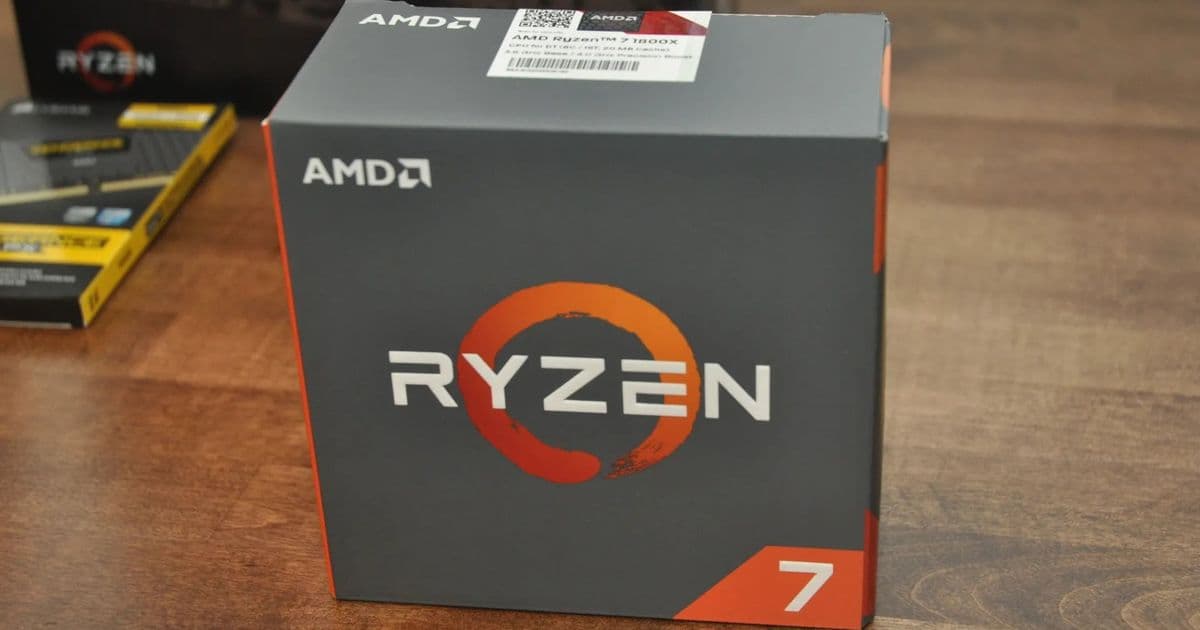
A newly disclosed transient execution vulnerability affecting AMD's original Zen 1 and Zen 1+ processors has been patched in the Linux kernel, requiring only a simple MSR bit flip to mitigate the Floating Point Divider State Sampling (FP-DSS) bug.
A security vulnerability affecting AMD's original Zen 1 and Zen 1+ processor architectures has been publicly disclosed, with the Linux kernel already implementing a mitigation patch. The Floating Point Divider State Sampling bug (FP-DSS or FPDSS) represents a transient execution vulnerability that could potentially allow a local user with privileged access to leak sensitive data through the floating point divisor units.

The vulnerability specifically impacts the first generation of AMD Ryzen desktop processors and EPYC server processors based on the Zen 1 microarchitecture, as well as the Zen 1+ refresh found in some second-generation Ryzen parts. Importantly, this security issue does not affect newer Zen architectures including Zen 2, Zen 3, Zen 4, or the latest Zen 5 processors released in recent years.
According to AMD's security bulletin published on their official website, the risk assessment indicates that the potential for data loss is considered low. This assessment is based on the observation that floating point operations in privileged code contexts are not particularly common in typical workloads. The vulnerability requires local user access to the system, meaning it cannot be exploited remotely without first compromising the system at some level.
Security researchers discovered that the bug could be leveraged by an attacker with user privileges to sample state information from the floating point divider units. This type of side-channel information leakage could potentially expose sensitive data, though the practical exploitation scenarios appear limited given the specific conditions required.
The Linux kernel community has responded swiftly to this disclosure, with a patch already merged into the mainline kernel repository. The mitigation approach is remarkably straightforward: setting bit 9 of Model Specific Register (MSR) C001_1028 to 1. This single-bit change provides the necessary protection against the FP-DSS vulnerability without requiring more complex workarounds or performance-impacting measures.
For Linux users still running systems with Zen 1 or Zen 1+ processors, the patch is available in Linux Git and will be included in the upcoming Linux 7.1 release. Additionally, the mitigation will be back-ported to stable kernel branches in the coming days, ensuring that production systems can receive the security fix without requiring immediate kernel version upgrades.
System administrators and users with affected hardware should monitor their distribution's security advisories for when the patched kernel becomes available through standard update channels. The simplicity of the mitigation means that applying the fix should be straightforward once the updated kernel packages are released for various Linux distributions.
This disclosure highlights the ongoing security challenges in modern processor architectures, particularly around speculative execution and transient execution vulnerabilities that have become increasingly common since the initial Spectre and Meltdown disclosures several years ago. While this particular vulnerability affects only older hardware, it serves as a reminder that even mature processor designs can harbor security issues that require ongoing attention and patching.
The fact that AMD and the Linux kernel community have been able to respond so quickly with an effective mitigation demonstrates the maturity of the security disclosure and patching processes in the open-source ecosystem. Users of affected systems can take comfort in knowing that a simple, low-overhead solution is already available and will be widely deployed in the near future.
Comments
Please log in or register to join the discussion