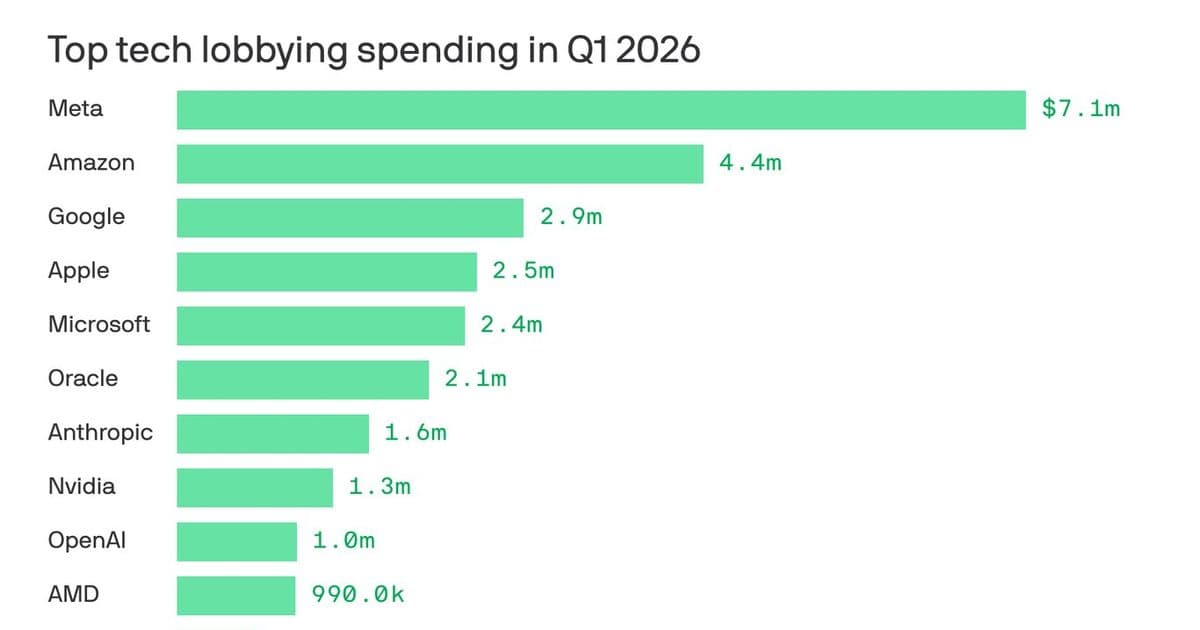
AI companies dramatically increased lobbying expenditures in Q1 2026 as regulatory scrutiny intensifies, with Anthropic spending $1.6M and OpenAI $1M compared to their Q1 2025 figures of $360K and $560K respectively.
The rapid acceleration of AI development has triggered a corresponding surge in lobbying activity, with Anthropic and OpenAI dramatically increasing their Washington spending in the first quarter of 2026. According to recent filings, Anthropic spent $1.6 million on lobbying efforts during Q1 2026, while OpenAI allocated $1 million—representing a fourfold increase for Anthropic and a nearly twofold increase for OpenAI compared to the same period in 2025 when they spent $360,000 and $560,000 respectively.
This substantial increase in lobbying expenditures comes as both companies face mounting regulatory scrutiny over their AI technologies. The timing is particularly notable given the broader context of AI regulation debates that have intensified throughout 2026, with policymakers grappling with questions about AI safety, data privacy, and the potential societal impacts of increasingly powerful AI systems.
Meta topped Big Tech lobbying spending with $7.1 million in Q1 2026, maintaining its position as the most aggressive corporate lobbyist among major technology companies. This spending pattern reflects the high stakes involved as AI companies seek to shape the regulatory environment that will govern their operations in the coming years.
The increased lobbying activity coincides with several high-profile developments in the AI sector. Anthropic recently unveiled its Mythos model, which has already generated controversy after reports emerged that unauthorized users accessed the system through private Discord channels. The company has since implemented stricter access controls, including requiring government-issued photo IDs and selfies from some users to prevent access from US adversaries.
OpenAI, meanwhile, has been focused on expanding its product offerings, most recently releasing ChatGPT Images 2.0 with enhanced capabilities including web search functionality and improved rendering of non-Latin text in languages like Japanese, Korean, Hindi, and Bengali. The company has also begun experimenting with cost-per-click advertising within ChatGPT, setting bids between $3 and $5 per click.
Industry analysts suggest the lobbying surge reflects both defensive and offensive strategies. On the defensive side, AI companies are seeking to head off potentially restrictive regulations that could hamper their development efforts. On the offensive side, they're working to ensure that any regulatory framework allows for continued innovation and market competition.
The timing of this lobbying push is particularly significant given the political landscape. With the 2026 midterm elections approaching, AI companies are positioning themselves to influence both current policy debates and the regulatory priorities of potential future administrations. The substantial increase in spending suggests that these companies view the current regulatory environment as particularly critical to their long-term business strategies.
This lobbying activity also occurs against the backdrop of broader tech industry trends. Apple recently announced that CEO Tim Cook would be stepping down, with John Ternus taking over leadership—a transition that could have implications for Apple's AI strategy and its regulatory approach. Meanwhile, Microsoft has been cutting prices for its Xbox Game Pass service, while Google continues to develop its AI coding tools under the Antigravity platform to compete with offerings from Anthropic and OpenAI.
The substantial increase in lobbying expenditures by Anthropic and OpenAI underscores the growing recognition within the AI industry that regulatory outcomes will significantly impact their business models and technological trajectories. As these companies continue to push the boundaries of AI capabilities, their efforts to shape the regulatory landscape through lobbying are likely to remain a prominent feature of the AI policy debate throughout 2026 and beyond.
The contrast between the current lobbying figures and those from Q1 2025—when Anthropic spent just $360,000 and OpenAI spent $560,000—illustrates how quickly the regulatory landscape has evolved for AI companies. What was once a relatively low-priority issue has become a central concern requiring significant financial investment to influence.
As AI technologies continue to advance and their societal impacts become more apparent, the lobbying battle is likely to intensify further. The substantial resources being deployed by Anthropic and OpenAI suggest that they view regulatory engagement as essential to their continued growth and innovation in an increasingly complex policy environment.
Comments
Please log in or register to join the discussion