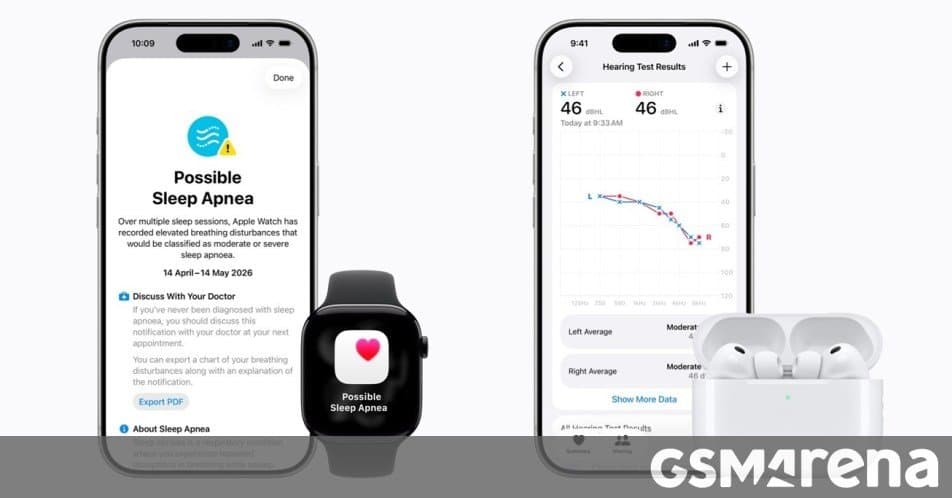
Apple brings its sleep‑apnea detection and at‑home hearing‑test features to India, supporting the latest Watch models and AirPods Pro. The move adds health‑focused functionality to the Indian ecosystem while highlighting Apple’s broader push for clinical‑grade monitoring across its wearables.
Apple brings Sleep Apnea Alerts and Hearing Test to India
Apple announced that its sleep‑apnea notifications and clinical‑grade hearing‑test feature are now available to users in India. The rollout adds two health‑focused services to the Indian ecosystem, leveraging the Apple Watch’s motion sensors and the acoustic capabilities of AirPods Pro.
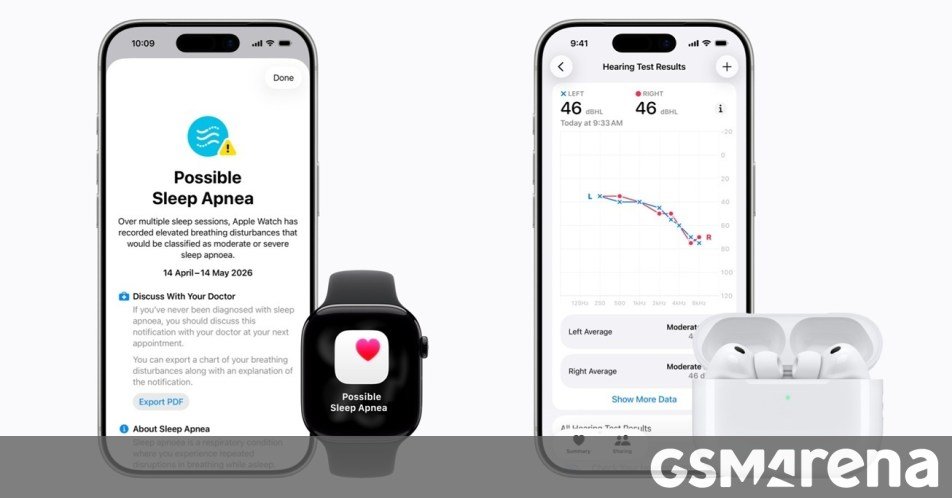
Sleep‑apnea notifications on the Apple Watch
The Apple Watch has been tracking a metric called Breathing Disturbances for several releases. Using the watch’s accelerometer, the sensor picks up subtle wrist movements that correlate with irregular breathing patterns during sleep. Every 30 days the device aggregates this data and, if it detects a consistent pattern of moderate‑to‑severe disturbances, it sends a notification prompting the user to consult a doctor.
How it works
- Motion capture – The accelerometer records micro‑vibrations at the wrist while the wearer sleeps.
- Signal processing – Apple’s on‑device algorithms filter out noise from normal arm movements, isolating the characteristic motion linked to breathing pauses.
- Trend analysis – Data is stored locally and evaluated in 30‑day windows. If the frequency of disturbances exceeds a threshold, the watch flags the user.
- Health‑app integration – Users can view a timeline of Breathing Disturbances in the Health app, alongside sleep‑stage data and other metrics.
The feature is compatible with Apple Watch Series 9, Series 10, Series 11, Watch Ultra 2 and Watch Ultra 3. Apple warns that factors such as alcohol consumption, certain medications, or sleeping position can influence the metric, so the notification is meant as an early‑warning sign rather than a diagnosis.
At‑home hearing test with AirPods Pro
Apple’s hearing‑test feature lets users perform a pure‑tone audiometry exam using AirPods Pro 2 or AirPods Pro 3. The test runs on an iPhone or iPad with iOS 18 / iPadOS 18 and requires the latest firmware on the earbuds.
Test flow
- Calibration – The app plays a series of tones at different frequencies and volumes through the AirPods, measuring the user’s response.
- Result generation – After roughly five minutes, the app produces an audiogram and a numeric hearing‑loss rating for each ear.
- Recommendations – Based on the audiogram, Apple suggests whether a professional hearing‑aid evaluation is advisable.
- Privacy – All results are encrypted and stored only in the Health app; Apple does not share the data with third parties.
Apple describes the test as “clinical‑grade” because it follows the same pure‑tone methodology used in audiology clinics. While it is not a substitute for a full professional exam, it gives users a convenient baseline and can help catch early signs of hearing degradation.
Why the Indian rollout matters
India represents a rapidly growing market for wearables, with an estimated 120 million smartwatch users by 2027. Adding health‑monitoring capabilities that are tied to local regulatory approvals signals Apple’s intent to deepen its ecosystem foothold.
- Ecosystem lock‑in – The features require a recent Watch model and AirPods Pro, encouraging users to stay within Apple’s hardware family.
- Healthcare integration – Results appear in the Health app, which can be linked to Indian tele‑medicine platforms and hospital portals that already support Apple HealthKit data.
- Competitive pressure – Competitors such as Samsung and Google have introduced similar sleep‑analysis tools, but Apple’s approach of combining motion‑based detection with a direct doctor‑prompt is relatively unique in the region.
Global context
Apple’s health push is not limited to India. Earlier this year the company launched Hearing Aid support in Italy and Hypertension Notifications in Taiwan. The pattern shows Apple targeting markets where regulatory pathways for medical‑grade wearables are becoming clearer, while also using these launches to showcase the broader capabilities of watchOS 10 and iOS 18.
What users should do next
- Update software – Ensure your Apple Watch is running watchOS 10.5 or later and your iPhone/iPad is on iOS 18.
- Check device compatibility – Only Series 9, 10, 11, Ultra 2 and Ultra 3 support the sleep‑apnea alerts; AirPods Pro 2/3 are needed for the hearing test.
- Enable Health permissions – Open the Health app, go to Browse → Sleep or Hearing, and allow the new notifications.
- Consult a professional – If you receive a sleep‑apnea alert or a hearing‑loss rating above mild, schedule an appointment with a qualified clinician.
Apple’s expansion of these health tools to India underscores the company’s strategy of turning its wearables into everyday medical assistants. By embedding clinically relevant metrics into devices that people already wear, Apple is making health monitoring more accessible, while simultaneously strengthening the appeal of its hardware ecosystem.
Sources: Apple press release, Apple Watch documentation, iOS 18 release notes.
Comments
Please log in or register to join the discussion