
Apple's latest hardware updates bring significant performance improvements and new features to both iPad Air and iPhone lineups, with implications for developers and cross-platform applications.
Apple has announced significant updates to its mobile hardware lineup, introducing a refreshed M4-powered iPad Air and the new iPhone 17e featuring the A19 chip with an upgraded camera system. These updates represent Apple's continued push to enhance performance across its mobile devices while maintaining differentiation between its product tiers.
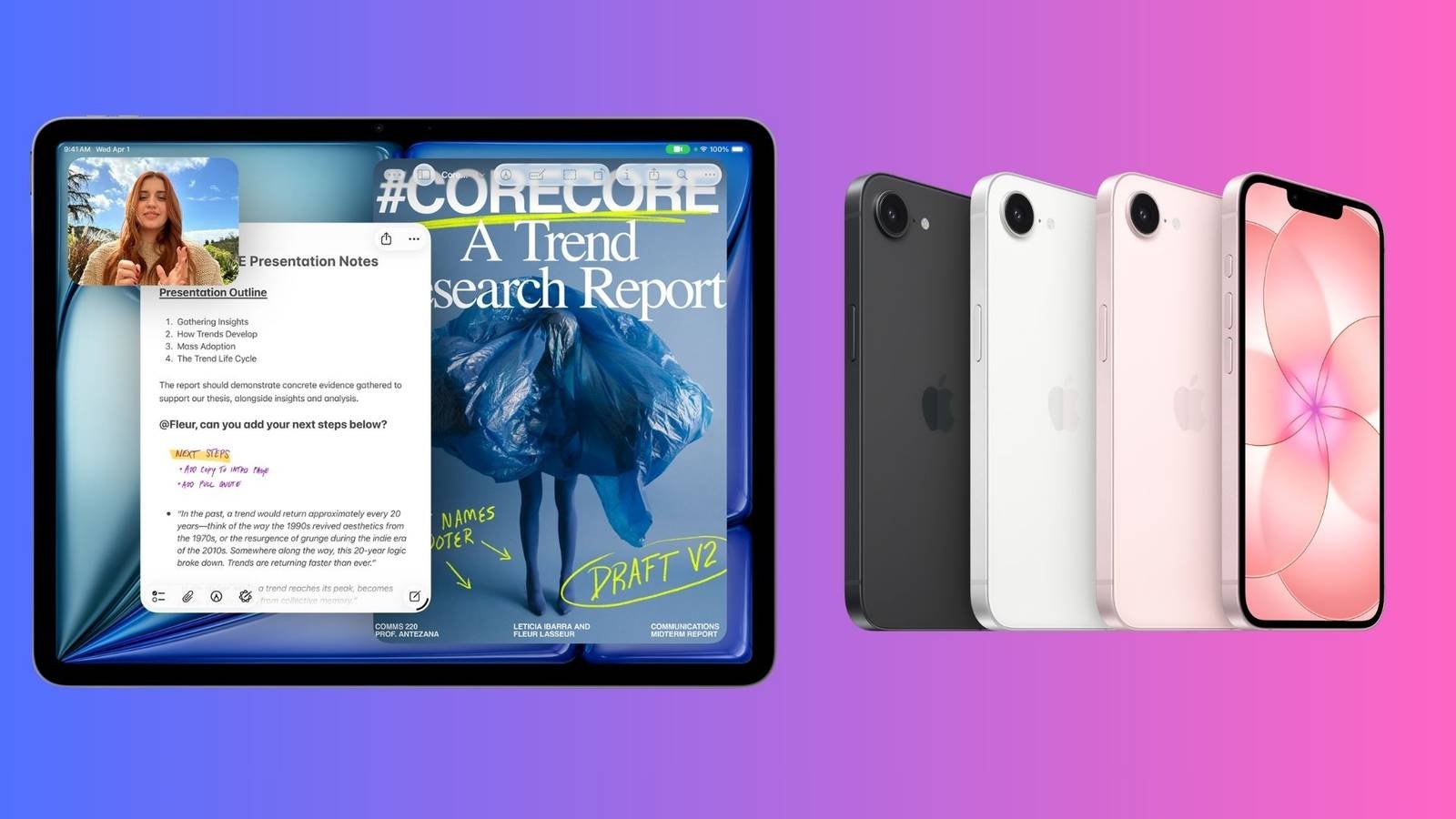
The M4 iPad Air: Performance Meets Portability
The new iPad Air represents a substantial upgrade over its predecessor, featuring Apple's latest M4 chip. This processor builds upon the architecture introduced in the M4 iPad Pro but with optimizations specifically tailored for the Air's form factor and price point. The M4 chip brings an 8-core CPU configuration with 4 performance cores and 4 efficiency cores, paired with a 10-core GPU that delivers up to 50% faster graphics performance compared to the M2 chip in the previous generation.
For developers, this means applications that leverage Metal API for graphics-intensive tasks will see significant performance improvements. The M4's Neural Engine, with 16 cores capable of 38 TOPS (trillion operations per second), opens new possibilities for on-device machine learning applications. Developers targeting iPadOS can now build more sophisticated AI features without relying heavily on cloud processing.
The display remains a 10.9-inch Liquid Retina panel with 2360 x 1640 resolution and 264 pixels per inch, but Apple has improved the brightness to 600 nits for standard content and 800 nits for HDR content. This enhancement benefits developers creating visual applications by providing more accurate color representation and better visibility in various lighting conditions.
The new iPad Air also supports Wi-Fi 6E, providing faster connectivity and lower latency for applications that rely on network communication. This improvement is particularly relevant for real-time collaboration apps, multiplayer gaming, and cloud-based development environments.
Developers should note that the M4 iPad Air runs iPadOS 18, which includes new APIs specifically designed to leverage the enhanced hardware capabilities. Apple's documentation highlights improvements in areas like ARKit, Core ML, and Metal, all of which benefit from the M4's architecture.
iPhone 17e: Budget-Friendly with Premium Camera Upgrades
The iPhone 17e appears to be positioned as Apple's most affordable iPhone model, yet it introduces significant camera upgrades that were previously reserved for higher-end models. At its heart is the new A19 chip, Apple's latest mobile processor built on a second-generation 3-nanometer process.
The A19 features a 6-core CPU with 2 performance cores and 4 efficiency cores, alongside a 5-core GPU. While not as powerful as the A18 Pro or A19 Pro chips found in Apple's flagship devices, the A19 still delivers substantial performance improvements over the A16 chip in previous-generation budget iPhones. Developers will appreciate the enhanced computational photography capabilities, which are now more accessible to users across Apple's iPhone lineup.

The camera system represents the most significant upgrade in the iPhone 17e. It features a dual-camera setup with a 48-megapixel main sensor (up from 12 megapixels in previous budget models) and a 12-megapixel ultrawide lens. This brings computational photography features like Photographic Styles, Smart HDR 5, and improved Night Mode to more affordable devices.
For developers creating camera-centric applications, this means a larger user base will have access to higher-quality hardware. Apps that leverage Apple's Camera APIs can now take advantage of the improved sensor capabilities, potentially reducing the need for complex post-processing to achieve acceptable image quality.
The iPhone 17e also introduces features previously exclusive to Pro models, including improved Cinematic mode with better subject tracking and focus transitions. Developers working on video applications will find new APIs that allow for more sophisticated video processing effects.
Developer Impact and Cross-Platform Considerations
These hardware updates present both opportunities and challenges for developers, particularly those working with cross-platform frameworks like React Native, Flutter, or Xamarin.
For React Native developers, the improved hardware performance means applications can achieve higher frame rates and more responsive UI interactions. The enhanced Neural Engine capabilities open possibilities for more sophisticated on-device ML features without requiring platform-specific native modules.
Flutter developers will benefit from the improved graphics performance, allowing for more complex animations and visual effects without compromising battery life. The increased RAM in both devices (8GB in the iPad Air, 6GB in the iPhone 17e) provides more headroom for memory-intensive applications.
Xamarin developers should take note of the new iOS 18 and iPadOS 18 APIs that leverage the enhanced hardware. While Xamarin provides a unified API surface, performance optimizations often require platform-specific implementations to fully utilize hardware capabilities.
Migration Recommendations
Developers maintaining existing applications should consider the following migration strategies:
Performance Optimization: With the increased processing power, developers should profile their applications to identify bottlenecks and implement performance improvements. The Metal Performance Shaders (MPS) framework can help optimize image processing tasks on both devices.
Leverage New Hardware Features: The improved camera systems in the iPhone 17e and the Neural Engine in the M4 iPad Air present opportunities to enhance application features. Consider implementing new capabilities that were previously impractical due to hardware limitations.
Cross-Platform Framework Updates: Ensure you're using the latest versions of your chosen cross-platform framework that take advantage of the new hardware capabilities. Frameworks like Flutter and React Native often release updates specifically to leverage new iOS and iPadOS features.
Testing Strategy: Expand your testing matrix to include these new devices, particularly focusing on performance characteristics and hardware-specific features. Consider using Apple's device lab programs or third-party services to test on physical hardware.
Future Outlook
Apple's continued investment in its mobile processor architecture suggests that future devices will further blur the lines between mobile and desktop computing capabilities. The M4 chip in the iPad Air demonstrates Apple's ability to bring high-end performance to more affordable devices, a trend likely to continue with future iterations.
For developers, this means an expanding canvas for creating sophisticated mobile applications that were previously limited to desktop environments. The combination of powerful processors, advanced camera systems, and improved displays creates new opportunities across various application categories, from augmented reality and professional creative tools to advanced machine learning applications.
Developers should stay informed about Apple's developer documentation and WWDC sessions, which typically provide deeper insights into how to best leverage new hardware capabilities. Apple's developer portal offers specific guides and sample code for implementing features that take advantage of the M4 and A19 chips.
As Apple continues to innovate in its mobile hardware, developers who adapt and optimize their applications for these new capabilities will be well-positioned to deliver compelling experiences to the growing base of users with powerful devices in their hands.
Comments
Please log in or register to join the discussion