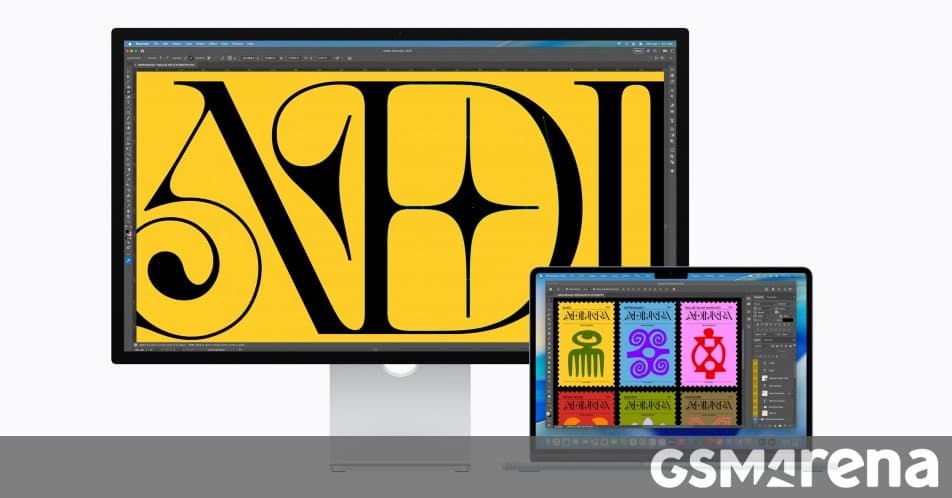
Apple has announced updated MacBook Air and Pro models featuring its latest M5 processor family, including the new M5 Pro and M5 Max chips. The refresh brings performance improvements, enhanced connectivity, and updated displays to Apple's laptop lineup.
Apple has unveiled its latest MacBook lineup, introducing updated MacBook Air and MacBook Pro models powered by the new M5 processor family. The refresh includes the standard M5 chip for the MacBook Air, along with the brand-new M5 Pro and M5 Max chips for the MacBook Pro lineup. Apple also announced two new Studio Display models, including a high-end XDR version with mini-LED technology.
MacBook Air Gets M5 Upgrade
The 2026 MacBook Air now features the Apple M5 chip, which was first introduced last year on the 14-inch MacBook Pro and iPad Pro. This chip maintains the same 10-core CPU configuration as its predecessor but with all cores running faster. The GPU options remain at 8 or 10 cores, though each core now includes a neural accelerator for improved machine learning performance.
Storage has seen a significant bump, with base configuration now starting at 512GB instead of 256GB, while topping out at 4TB. Memory configuration remains unchanged at 16GB base with a maximum of 32GB. The MacBook Air also gains Wi-Fi 7 and Bluetooth 6 connectivity, along with a faster 40W Dynamic Power Adapter with 60W Max output replacing the previous 30W and 35W chargers.
The price increase is notable, with the 13-inch model now starting at $1,099 and the 15-inch at $1,299 – a $100 increase across the board.
MacBook Pro Gets M5 Pro and M5 Max
The MacBook Pro models receive the most significant upgrades with the introduction of the M5 Pro and M5 Max chips. These new processors are built on Apple's Fusion Architecture, which combines two dies to create a single SoC with high core counts.
The M5 Pro features up to 6 high-performance "super cores" and up to 12 performance cores. GPU configurations range from 16 to 40 cores depending on the model. The 14-inch MacBook Pro can be configured with M5, M5 Pro, or M5 Max, while the 16-inch model is available only with Pro and Max configurations.
Specific configurations include:
- M5 Pro: 15-core CPU with 18-core GPU (14-inch), or 18-core CPU with 20-core GPU (14 and 16-inch)
- M5 Max: 18-core CPU with 32-core GPU or 18-core CPU with 40-core GPU
Memory options start at 24GB for the M5 Pro and go up to 128GB for the M5 Max. Storage begins at 1TB and maxes out at 8TB. Like the MacBook Air, the Pro models gain Wi-Fi 7 and Bluetooth 6 connectivity.
The price increase here is even more substantial, with the 14-inch M5 Pro model starting at $2,199 and the 16-inch at $2,699 – a $200 increase over previous models.
New Studio Display Models
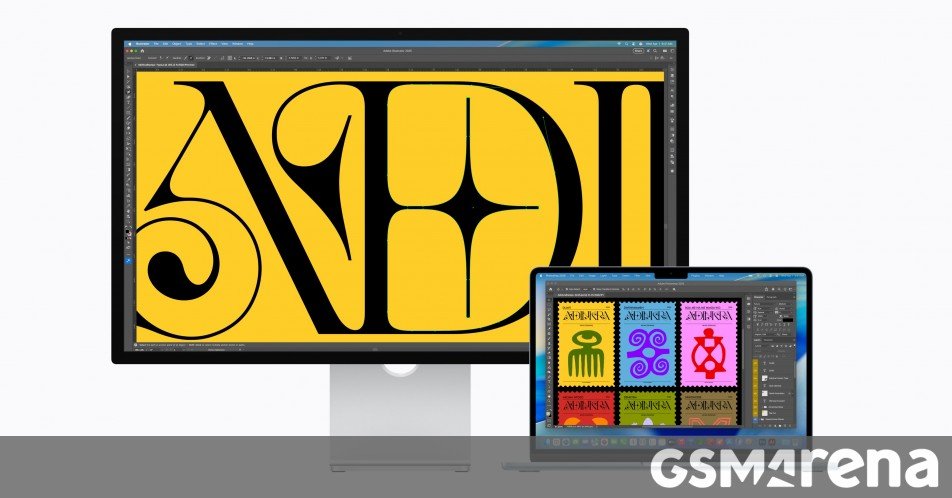
Apple also refreshed its monitor lineup with two new Studio Display models. The standard Studio Display receives internal upgrades including a new 12MP webcam, three-microphone array, six-speaker system with spatial audio, and Thunderbolt 5 connectivity. The external design and 27-inch 5K 60Hz IPS panel remain unchanged, as does the $1,599 price tag.
More significantly, Apple introduced the Studio Display XDR, which replaces the discontinued Pro Display XDR. This new model features a 27-inch 5K IPS panel with 120Hz refresh rate and mini-LED backlighting with 2,304 local dimming zones. It achieves 1,000 nits peak brightness in SDR and 2,000 nits in HDR, significantly outperforming the standard Studio Display's 600 nits. The XDR model also supports wider color gamuts including Adobe RGB and comes with a tilt and height-adjustable stand, unlike the standard model which only offers tilt adjustment.
The Studio Display XDR is priced at $3,299.
Market Context and Implications
The MacBook refresh comes at a time when Apple faces increasing competition in the laptop market, particularly from Windows-based machines with powerful dedicated GPUs and AI-focused hardware. The M5 family's improvements, particularly the neural accelerators in each GPU core, position Apple's laptops well for machine learning workloads and AI applications.
The significant price increases across the lineup may give some potential buyers pause, especially given the current economic climate. However, Apple's continued focus on unified memory architecture, tight hardware-software integration, and the performance-per-watt advantages of its silicon continue to justify premium pricing for many professional users.
The introduction of the Studio Display XDR with mini-LED technology and 120Hz refresh rate suggests Apple is positioning this monitor as a more accessible alternative to high-end reference monitors, potentially appealing to content creators who need accurate color reproduction but don't require the extreme precision of professional-grade displays.
Comments
Please log in or register to join the discussion