Apple's new free device management tools solve the entry barrier for small businesses, but enterprise IT needs more robust solutions for compliance, security, and automation.
Apple recently announced that the device management portion of its new Apple Business platform is now completely free. If you manage a fleet of Apple devices, this immediately caught your attention. It's the first free device management system I can remember since Meraki's System Manager. Giving small businesses a free tool to manage their Macs and iPhones is a huge win for the ecosystem. However, if you are an IT administrator looking at your current device management renewal and wondering if you can just cancel it and move everything to Apple, you need to pump the brakes a bit. Let's look at why.
The zero to one problem
For years, the biggest hurdle for small businesses moving to manage their devices was cost and complexity. If you only have 15 employees and limited IT support, paying a per-device fee and learning a management platform feels like overkill. Because of this, many small businesses just let employees set up their Macs as if they were personal ones.
Apple Business and its free device management solve this zero-to-one problem. It provides a free, simple way to push basic configurations, enforce passcodes, and deploy applications. By removing the financial barrier to entry, Apple is making "unmanaged" an inexcusable position for any business. It establishes a necessary security and management floor for the entire ecosystem.
Beyond configs and apps
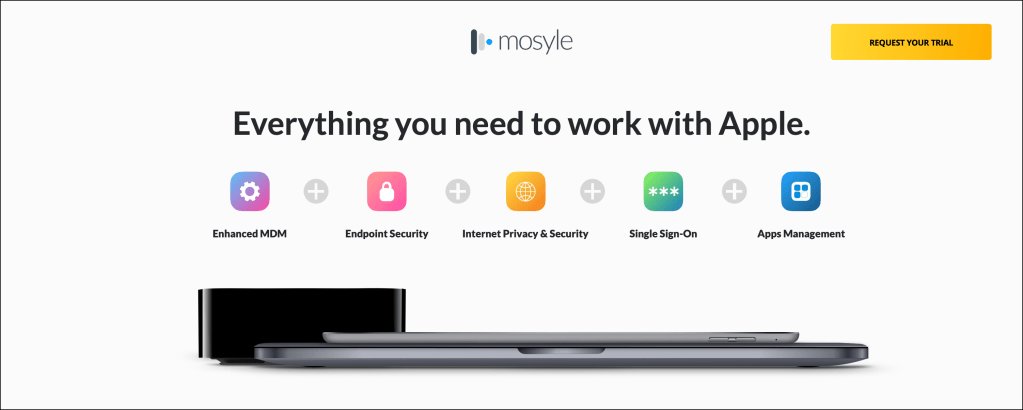
However, enterprise Apple device management requires much more than just pushing a Wi-Fi PSK profile and installing some apps. Modern IT teams are dealing with incredibly complex compliance requirements. You need granular reporting on patch levels. You need automated remediation when a device falls out of compliance. You need an identity provider integration that requires MFA for logins.
The native tools in Apple Business are fantastic for getting a device enrolled and configured out of the box, but they are not designed to be a full security stack that enterprises need. If a user downloads malicious software or a device goes rogue, basic profile delivery will not save you.
The reality of enterprise needs
When you're managing hundreds or thousands of devices across an organization, the requirements scale dramatically. You need:
- Compliance automation: Devices must automatically check in and report their compliance status
- Security enforcement: Real-time threat detection and response capabilities
- Identity integration: Seamless SSO with your existing identity provider
- Advanced reporting: Detailed analytics on device health, software versions, and security posture
- Remote troubleshooting: The ability to diagnose and fix issues without physical access
- Application management: Not just deployment, but updates, licensing, and version control
Free device management gets you started, but it doesn't get you to the finish line. It's the foundation upon which you build your enterprise management strategy, not the complete solution.
What this means for IT administrators
The free offering from Apple is a strategic move that benefits the entire ecosystem. It raises the bar for what constitutes acceptable device management practices. No longer can businesses claim they can't afford to secure their devices.
But for IT administrators, this announcement should be viewed as an opportunity to reassess your current setup. Ask yourself:
- Are we using our current MDM solution to its full potential?
- What compliance requirements are we struggling to meet?
- Could we consolidate multiple tools into a more integrated solution?
- Are we spending too much time on manual processes that could be automated?
The path forward
The future of Apple device management in the enterprise is not about choosing between free and paid solutions. It's about understanding that free device management is the baseline expectation, not the complete answer.
Organizations need to think about their device management strategy holistically. Start with the free tools to establish a foundation, then evaluate what additional capabilities you need based on your specific requirements, compliance needs, and security posture.
For small businesses with basic needs, Apple's free offering might be sufficient. For enterprises with complex requirements, it's the starting point of a conversation about what a comprehensive device management strategy looks like in 2026 and beyond.
The key takeaway is that Apple has raised the floor, not the ceiling. The baseline has been established, but the finish line remains where it always was: comprehensive, automated, secure device management that meets your organization's specific needs.
Comments
Please log in or register to join the discussion