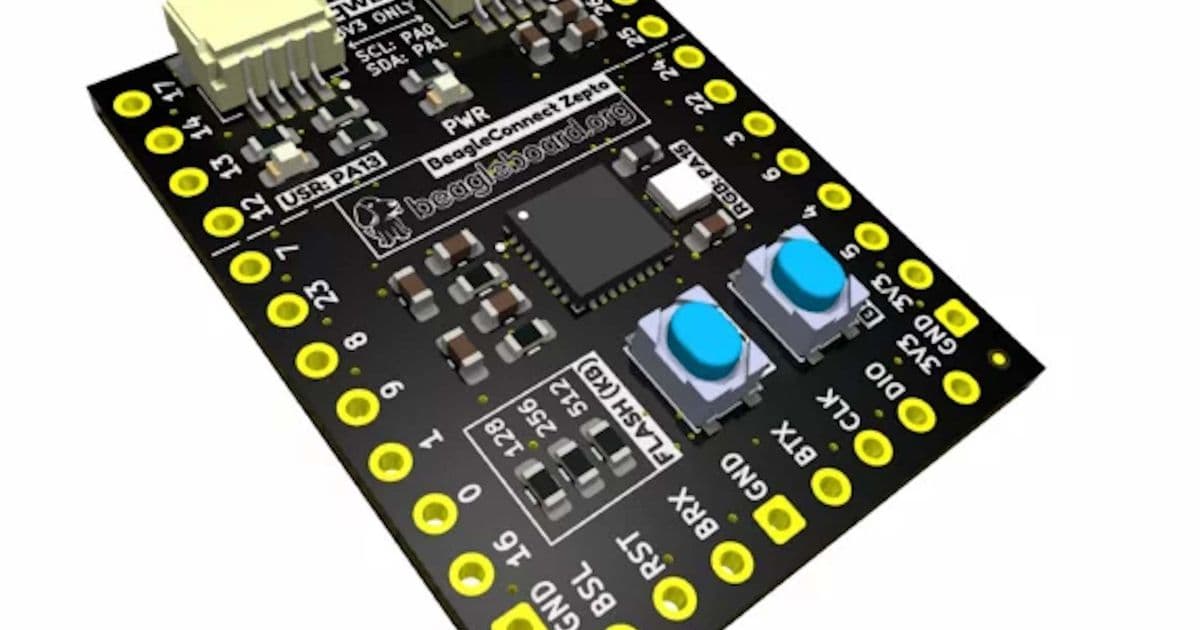
BeagleBoard's upcoming Zepto board packs a 32 MHz ARM Cortex-M0+ CPU for just $1, targeting smart home and maker projects with mikroBUS expansion and QWIIC connectivity.
The BeagleConnect Zepto is an upcoming developer board that, according to BeagleBoard, will cost just one dollar. However, the term “computer” should be taken loosely: the Zepto is not designed to run a desktop operating system, but targets smart home and maker projects instead.
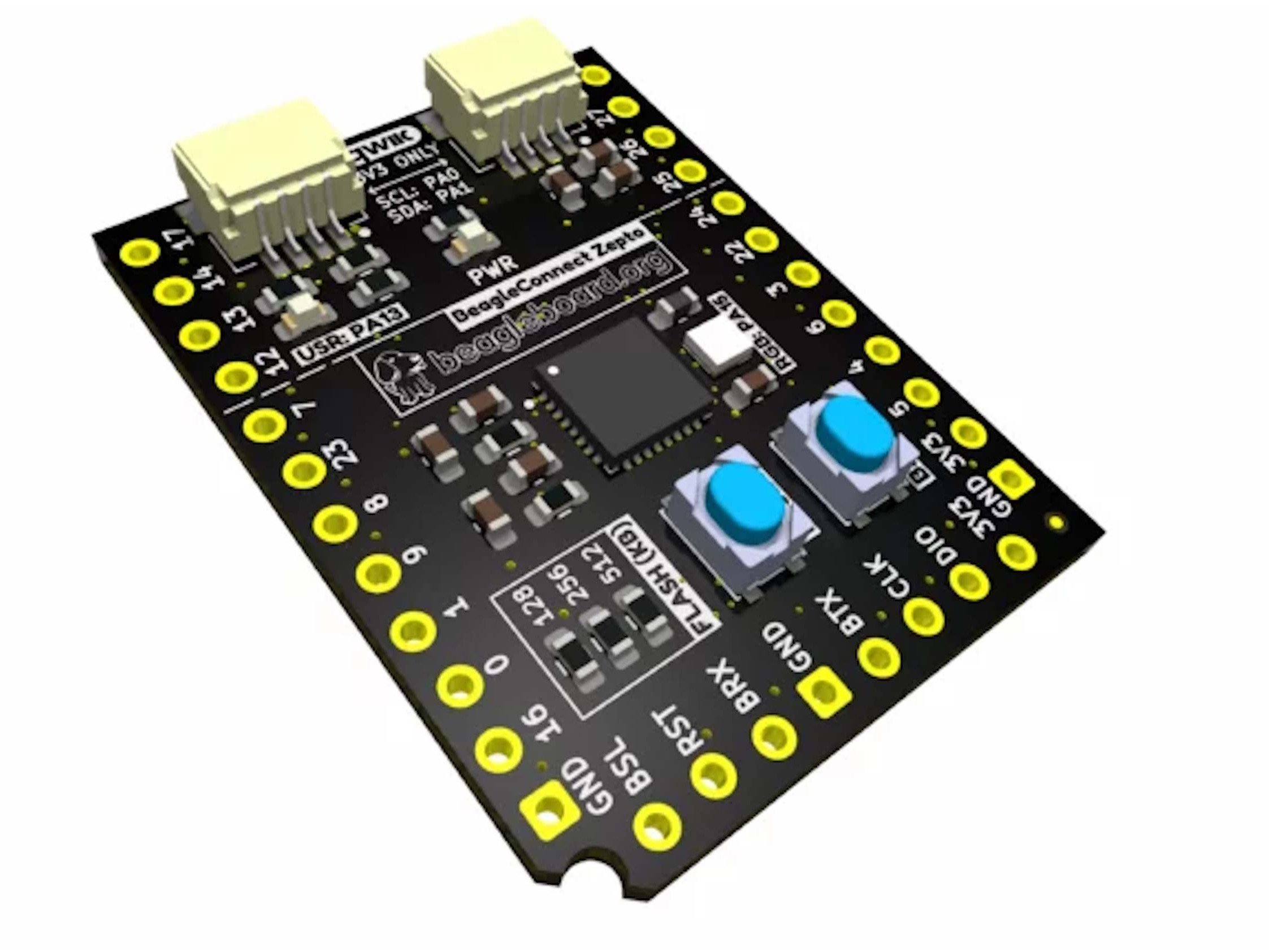
At its core is a Texas Instruments MSPM0L1117 with a 32 MHz ARM Cortex-M0+ CPU, delivering performance comparable to entry-level Arduino boards (available on Amazon). The ultra-low price is made possible by a combination of factors, including the use of a low-cost microcontroller, a simple two-layer PCB, and a reduced set of interfaces—there is no native support for displays or cameras.
The board relies on the license-free mikroBUS standard for expansion, ensuring compatibility with a range of add-on modules while keeping costs down. It also features two QWIIC connectors for easy integration of sensors and actuators. Notably, the Zepto itself can act as a QWIIC device, effectively functioning as an expansion module.
The platform is open, and developers are invited to contribute.
Source(s) BeagleBoard
This $1 price point represents a significant milestone in the maker community, potentially democratizing access to embedded development hardware. While the performance won't match more expensive boards, the Zepto's focus on smart home and IoT applications makes it an attractive option for hobbyists and educators working on budget-constrained projects.
The use of the mikroBUS standard is particularly noteworthy, as it provides access to a vast ecosystem of existing modules without requiring proprietary connectors or licensing fees. Combined with the QWIIC connectors, this gives makers flexibility in how they expand and customize their projects.
For comparison, typical Arduino-compatible boards start around $5-10, making the Zepto's $1 price point a compelling option for projects requiring multiple nodes or where cost is a primary constraint. The open nature of the platform also means the community can contribute to its development and create custom solutions tailored to specific use cases.
Comments
Please log in or register to join the discussion