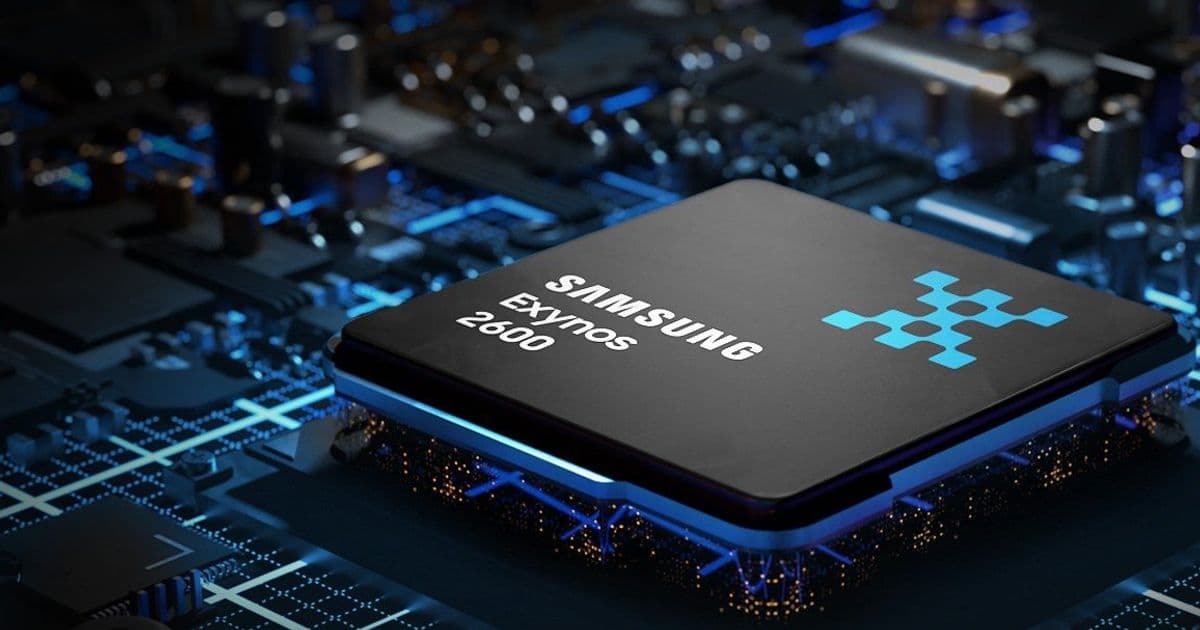
Arm has officially confirmed that Samsung's upcoming Exynos 2600 SoC will support SME2 (scalable matrix extensions) at launch, promising up to 70% faster AI workloads compared to previous architectures.
Samsung's upcoming Exynos 2600 SoC, set to debut alongside the Galaxy S26 series on February 25, has received an official confirmation from Arm regarding its support for SME2 (scalable matrix extensions). This hardware feature is expected to significantly enhance AI performance on mobile devices, with Arm claiming up to 70% speed improvements for AI-powered applications such as object detection.
The Exynos 2600 is shaping up to be a formidable competitor to Qualcomm's Snapdragon 8 Elite Gen 5 for Galaxy, with previous leaks suggesting it could match or even surpass its rival in certain scenarios. The inclusion of SME2 support provides valuable insight into the chip's architecture and capabilities.
Arm introduced SME2 alongside its new Lumex C1 CPU core family, which includes the C1-Ultra, C1-Premium, C1-Pro, and C1-Nano variants. Based on multiple Geekbench listings showing a 10-core configuration, the Exynos 2600 is expected to feature one Lumex C1-Ultra core, three Lumex C1-Premium cores, and six Lumex C1-Nano cores - following the pattern established by previous Exynos chips.
Stefan Rosinger from Arm provided additional context on the significance of SME2 in the Exynos 2600:
"As on-device AI becomes central to the mobile experience, efficiency and responsiveness are increasingly critical. Built on Arm compute subsystems with SME2-enabled C1-Ultra and C1-Pro, Exynos 2600 leverages SME2 to expand the potential of CPU-based AI, reducing the latency associated with offloading to discrete accelerators and making it well suited for short, interactive, and real-time AI workloads."
The statement's specific mention of only the C1-Ultra and C1-Pro cores, while omitting the C1-Premium variant, suggests Samsung might be using a more conservative core configuration. This approach could help manage the thermal budget, which is already constrained in mobile devices. The Exynos 2600's success is particularly crucial for Samsung Foundry's SF2 node technology and its ability to attract other major clients like Qualcomm and Nvidia.
The integration of SME2 represents a significant step forward for mobile AI processing, allowing for more efficient on-device computation without relying heavily on dedicated AI accelerators. This could translate to faster response times for AI features and improved battery life, as the CPU can handle AI workloads more efficiently.
With the official launch just around the corner, the Exynos 2600 appears poised to deliver substantial performance improvements, particularly in AI-related tasks, while potentially offering better power efficiency through its advanced architecture and SME2 support.
Comments
Please log in or register to join the discussion