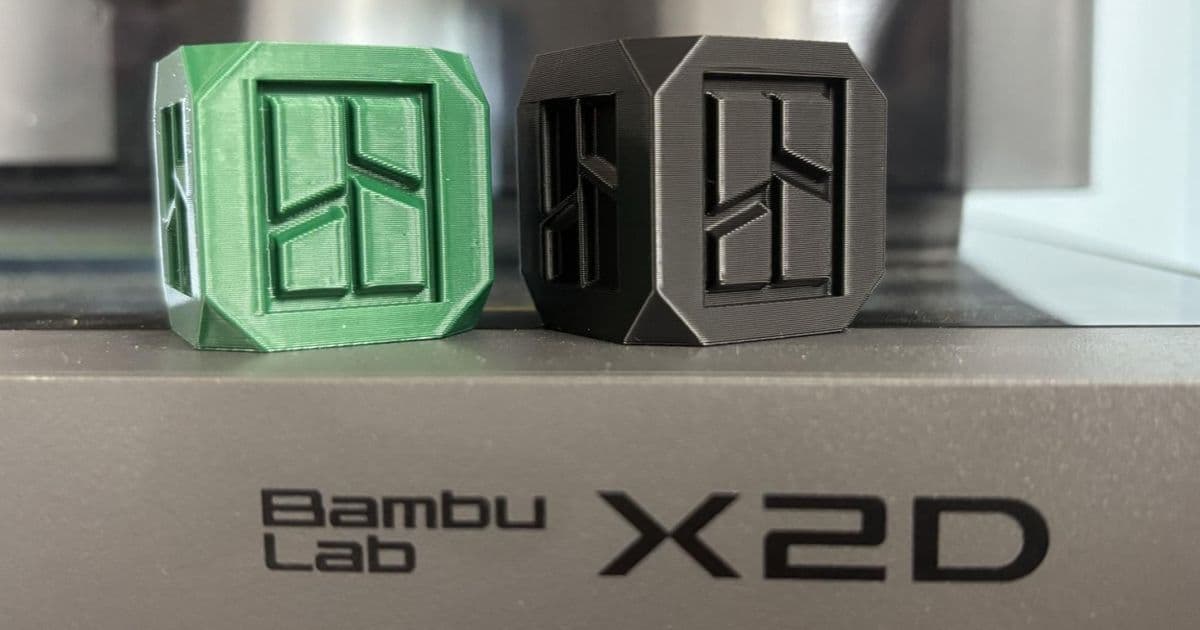
Bambu Lab has claimed the top spot in global entry-level 3D printer shipments for 2025, ending Creality's long-standing dominance with a 37% market share in the sub-$2,500 segment.
The 3D printing market has undergone a significant shift in 2025, with Bambu Lab emerging as the new leader in the budget segment after years of Creality's dominance. According to full-year market data from intelligence firm Context, Bambu Lab captured 37% of the global entry-level 3D printer market, overtaking Creality, Elegoo, and Anycubic in the sub-$2,500 price category.
This market transformation comes after a challenging period for the industry. The broader 3D printing market had been experiencing a prolonged downturn, but 2025 marked a turning point. Entry-level shipments rose 47% year over year in Q4 and 26% across all of 2025, effectively pulling the entire market out of its slump. The total global 3D printing market reached $16 billion in 2025, representing roughly 10% year-over-year growth, according to AM Research.
Bambu Lab's rise to the top wasn't instantaneous. When Context published its Q1 2025 data, Creality still led the entry-level category with a 39% share, while Bambu Lab trailed in second place with 64% year-over-year shipment growth. Over the following three quarters, Bambu Lab's aggressive growth rate widened the gap enough to claim the lead position.
The company's success extends beyond hardware sales. Bambu Lab's MakerWorld model-sharing platform reached approximately 10 million monthly active users by the end of 2025, with an impressive 83% user retention rate after one year, according to data published by Bambu Lab on its WeChat channels in February. This ecosystem approach has helped differentiate Bambu Lab from competitors and build customer loyalty.
Chinese manufacturers now dominate the entry-level segment, accounting for more than 90% of global shipments in 2025. This concentration has increased even as the market attracts more outside capital. Creality is preparing for an initial public offering, and other major players in the segment are drawing investment from Chinese financial firms, signaling continued consolidation and growth in the industry.
Interestingly, the professional 3D printer segment tells a different story. Systems priced between $2,500 and $20,000 saw shipments fall 12% in Q4 and 15% for the full year, with Formlabs maintaining a 38% market share in that category. Midrange systems, priced from $20,000 to $100,000, also declined, dropping 6% in Q4 and 12% for the year. Context attributed part of this decline to consolidation and mergers during 2025.
The year 2025 itself was characterized by a split personality, according to AM Research's Q4 report. The first half mirrored the sluggish conditions of 2023 and 2024, while the second half saw momentum return, with total market revenue growing from $4 billion in Q3 to $4.26 billion in Q4. This turnaround was driven primarily by the resurgence in budget-friendly options that made 3D printing more accessible to hobbyists and small businesses.
Looking ahead, Context expects growth across every price segment in 2026, with entry-level systems forecast to expand the fastest and industrial shipments expected to post near double-digit percentage increases. The firm cites several factors behind this optimistic outlook, including loosening U.S. interest rates, strength in China's domestic market, and continued momentum in aerospace and defense applications.
The shift in market leadership reflects broader trends in consumer preferences and technological advancement. Bambu Lab's success can be attributed to its focus on user-friendly features, reliable performance, and strong community engagement through platforms like MakerWorld. As the company takes the helm of the budget 3D printer market, it faces the challenge of maintaining its growth trajectory while continuing to innovate in an increasingly competitive landscape.
The resurgence of the 3D printing market, fueled by budget options, suggests that the technology is reaching a wider audience than ever before. As prices continue to fall and capabilities improve, 3D printing is becoming an increasingly viable tool for education, prototyping, and small-scale manufacturing, potentially opening up new applications and markets in the years to come.
Comments
Please log in or register to join the discussion