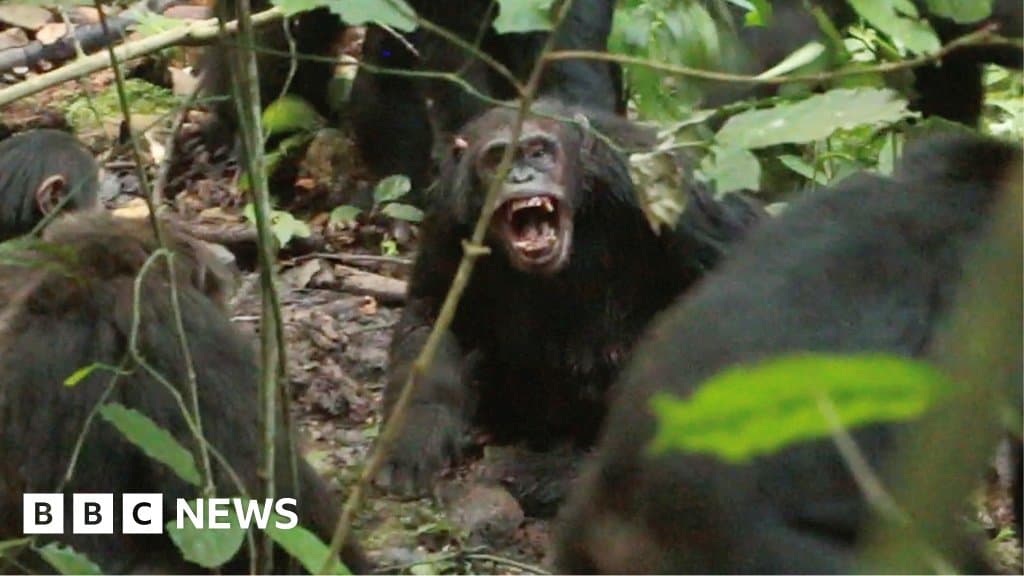
Researchers document unprecedented violence among Uganda's largest chimpanzee group, offering insights into the origins of conflict.
Researchers studying chimpanzees in Uganda's Kibale National Park have documented what they describe as a devastating "civil war" among the world's largest known group of wild chimpanzees, with 24 killings recorded since 2018.
The violence has torn apart the once-cohesive Ngogo chimpanzee community, which had lived together for decades. The group, numbering nearly 200 individuals, has split into two factions - Western and Central - that are now engaged in targeted attacks against each other.
"These were chimps that would hold hands," said lead author Aaron Sandel, an anthropologist from the University of Texas. "Now they're trying to kill each other."
The Breaking Point
The researchers first noticed signs of division in June 2015, when Western chimpanzees fled and were chased by Central group members. What followed was unprecedented: a six-week period of complete avoidance between the two sets, with interactions becoming increasingly aggressive when they did occur.
By 2018, the split was complete. Since then, the Western group has launched 24 targeted attacks, killing at least seven adult males and 17 infants from the Central chimpanzees. The researchers believe the actual death toll is likely higher.
Why Did This Happen?
The study, published in the journal Science, identifies several potential factors:
- Social disruption: The mysterious deaths of five adult males and one adult female in 2014 may have weakened social ties across subgroups
- Leadership change: A shift in the alpha male position in 2015 coincided with the first period of separation
- Epidemic impact: A respiratory outbreak in 2017 killed 25 chimpanzees, including key social connectors
- Resource competition: As the group grew larger, competition for food and territory may have intensified
- Male-male competition: Reproductive competition among males could have fueled aggression
What This Means for Understanding Human Conflict
The researchers suggest these findings have profound implications for understanding human warfare. Unlike humans, chimpanzees don't have religion, ethnicity, or political beliefs - yet they still engage in lethal intergroup violence based purely on group membership.
"If chimpanzees - one of the species closest to humans genetically - could do so without human constructs of religion, ethnicity and political beliefs, then 'relational dynamics may play a larger causal role in human conflict than often assumed,'" the researchers wrote.
James Brooks, a researcher at the German Primate Center, emphasized the broader significance: "Humans must learn from studying the group-based behaviour of other species, both in war and at peace, while remembering that their evolutionary past does not determine their future."
The Bigger Picture
This isn't the first time chimpanzee warfare has been documented. Similar patterns of intergroup violence have been observed in other populations, including the famous Gombe chimpanzee war studied by Jane Goodall in the 1970s.
However, the scale and duration of the Ngogo conflict is unprecedented. The researchers have been studying this group for over two decades, making it one of the longest-running chimpanzee research projects in the world.
As Sandel noted on the Science podcast, chimpanzees are "very territorial" and have "hostile interactions with those from other groups," comparing it to "a fear of strangers." But what makes the Ngogo situation unique is that these were chimpanzees who had lived together peacefully for years before turning on each other.
The study raises uncomfortable questions about the nature of conflict itself. If even our closest animal relatives can fall into patterns of lethal violence based solely on group identity, what does that suggest about the roots of human warfare?
For now, the researchers continue to monitor the situation in Kibale National Park, documenting what may be one of the most significant examples of animal conflict ever recorded.
Comments
Please log in or register to join the discussion