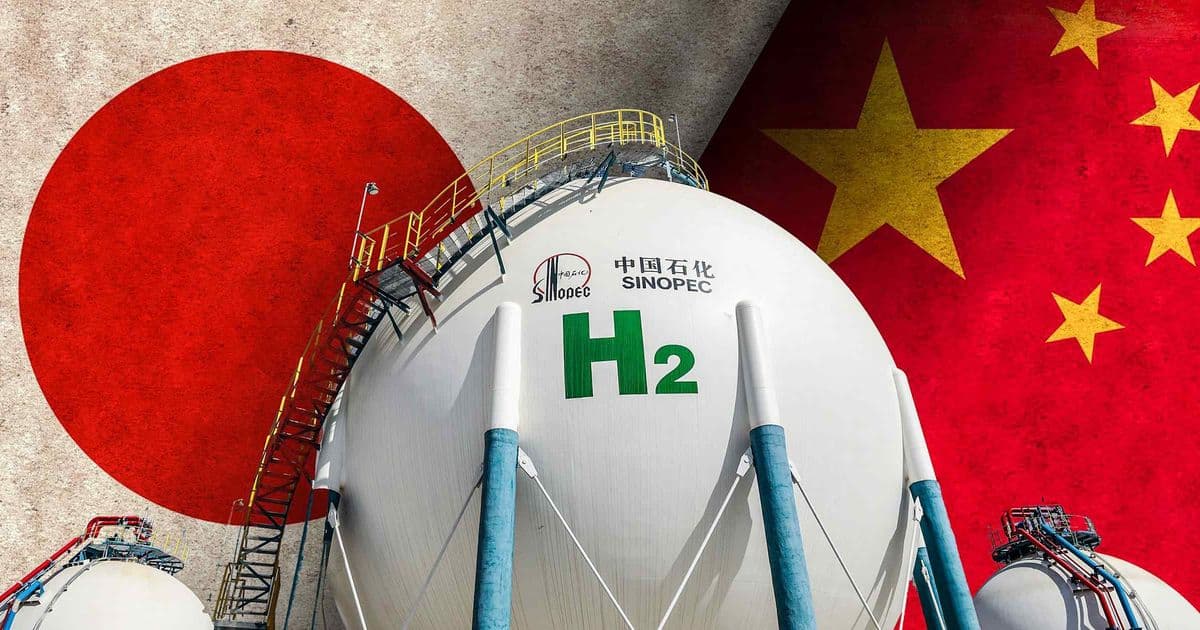
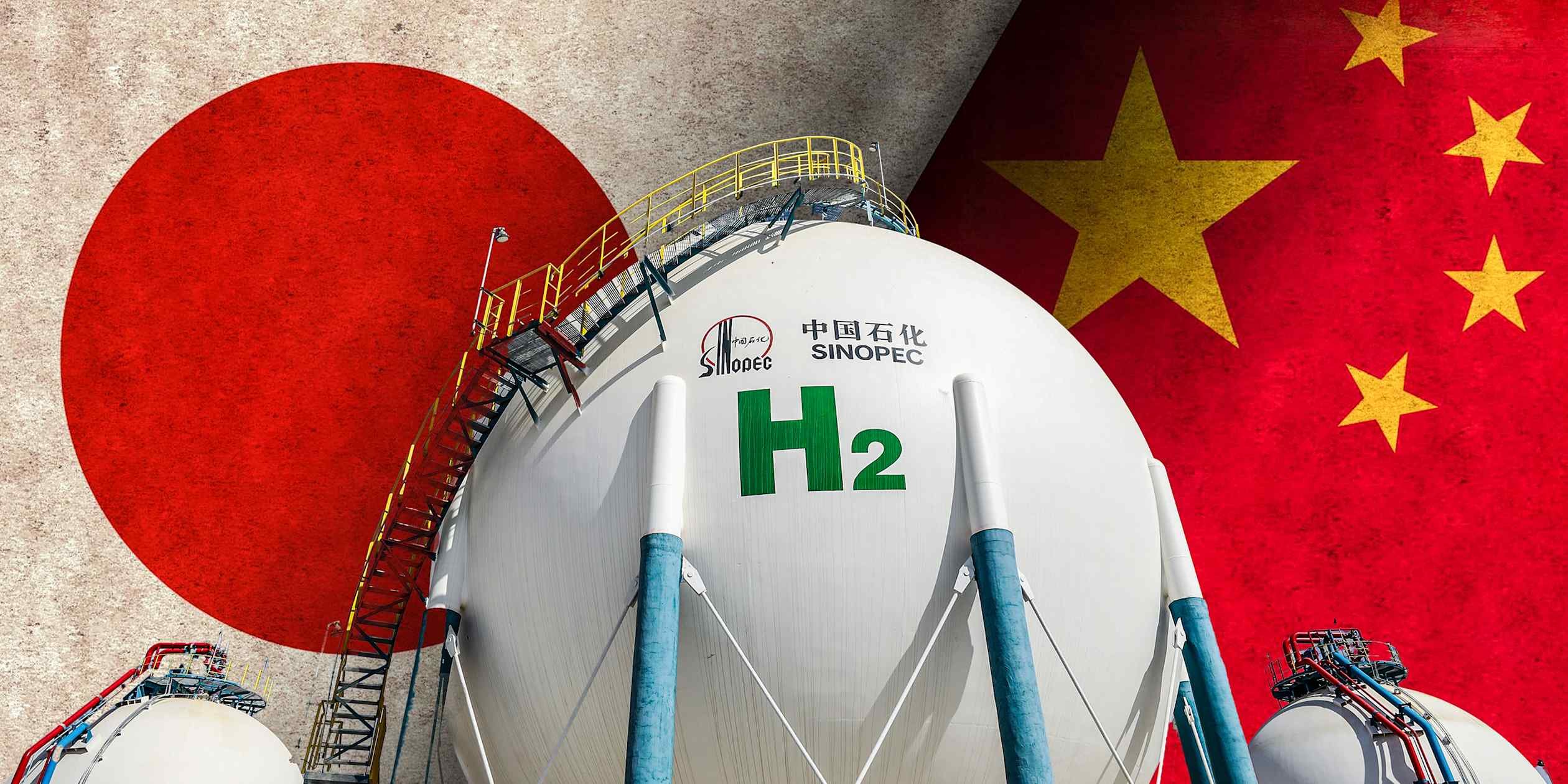
Japan wrote hydrogen into national policy in 2017 and spent years positioning itself as the fuel's first mover. A decade later, China's industrial-scale spending has flipped the standings, turning a Japanese head start into a cautionary tale about how fast manufacturing capacity can rewrite an energy market.
A truck driver in China pulls up to a blue-and-white pump, connects a nozzle, and fills his 18-wheeler with odorless hydrogen instead of diesel. That scene, reported by Nikkei Asia, is mundane by design. The story behind it is not. It marks a moment when the country that legislated a hydrogen economy first, Japan, has been passed by the country that simply built one faster.
What happened
Japan moved early on hydrogen. Tokyo enacted a national hydrogen strategy in 2017, the first country to formalize one, betting that fuel cells and clean-burning hydrogen would anchor a post-carbon industrial base. Toyota, Honda, and the country's heavy-industry conglomerates built the supply chain bets to match, from fuel-cell sedans to liquefied hydrogen carriers.
China arrived later and is now ahead. Heavy and sustained investment from Beijing has pushed the country past Japan across the metrics that matter for an emerging fuel: production volume, refueling infrastructure, patent filings, and deployment of hydrogen-powered commercial vehicles. The trucking example is the tell. While Japan's hydrogen ambitions leaned heavily on passenger cars that consumers never embraced, China concentrated on fleet vehicles, where centralized routing and refueling make the economics work sooner.
Green hydrogen, the variant produced by splitting water with renewable electricity rather than stripping it from natural gas, sits at the center of the contest. It is the version with a genuine climate case, and it is also the version that depends most on cheap electrolyzers and abundant renewable power. China happens to dominate both inputs.
Market context
To understand the reversal, follow the manufacturing base. China already controls the majority of global production capacity for solar panels, lithium batteries, and wind components. Electrolyzers, the machines that turn electricity and water into hydrogen, follow the same pattern. Chinese manufacturers have driven electrolyzer prices down sharply through scale, and Chinese capacity now represents a commanding share of global output. When the equipment that makes a fuel is built domestically at a fraction of competitors' prices, the fuel itself gets cheaper, and the buildout accelerates.
This is the same playbook that delivered Chinese dominance in solar and EVs, applied to a new molecule. Subsidies, provincial competition to host projects, state-backed financing, and a willingness to absorb early losses combine into a cost curve that erodes faster than rivals can match. Japan's strategy, by contrast, prioritized high-value engineering and international supply partnerships, including green ammonia and liquefied hydrogen import deals meant to bring cheap hydrogen from abroad. That model assumes Japan stays the demand-side technology leader while sourcing the molecule elsewhere. China's rise undercuts the premise.
The cost problem has not vanished for anyone. Green hydrogen remains expensive against fossil-derived hydrogen and against the diesel it aims to replace, and several flagship projects worldwide have stalled on economics. Australia's ambitions have wobbled as marquee plants failed to reach final investment decisions. India's plans, large on paper, run directly into the reality that Chinese equipment and Chinese cost structures set the global benchmark. The fuel's red light over high costs is real. What China has done is shorten the distance to the green light by manufacturing its way there.
What it means
For Japan, the lesson is uncomfortable and familiar. Writing a strategy first is not the same as winning a market. The 2017 head start bought policy clarity and corporate commitment, but it did not buy the industrial scale that ultimately determines cost, and cost determines adoption. Japanese firms still hold strong positions in specific niches, fuel-cell engineering, hydrogen-carrier shipbuilding, and the export deals that move the fuel across oceans. Those are valuable, but they are slices of a value chain whose center of gravity has moved.
For the broader clean-energy market, the hydrogen race is becoming a rerun of the solar and EV stories, with the same strategic implication for Western and allied economies. Dependence on Chinese manufacturing for yet another decarbonization technology raises the same questions policymakers are already wrestling with over batteries: whether to subsidize domestic capacity at higher cost, accept reliance on Chinese supply for the sake of speed, or carve out protected niches and concede the commodity layer. Each choice carries a price, and the window to make it narrows as China's cost advantage compounds.
The trucking angle is where this turns concrete. Heavy freight, ports, and industrial fleets are the use cases where hydrogen has its clearest near-term role, since batteries struggle with the weight and range demands of long-haul logistics. Whoever supplies the trucks, the fueling networks, and the molecule for that segment captures a durable industrial position. China is building all three at once. Japan's Toyota, having watched consumers reject hydrogen passenger cars, has pivoted toward trucks as well, a tacit admission that the original consumer-vehicle thesis was wrong.
The race is far from settled, because the economics still punish early movers and demand remains thin outside subsidized corridors. But the direction of travel is clear. A market that Japan tried to define through policy is being defined instead through factory output, and the country that builds the cheapest electrolyzers is on track to set the terms for everyone else.
Comments
Please log in or register to join the discussion