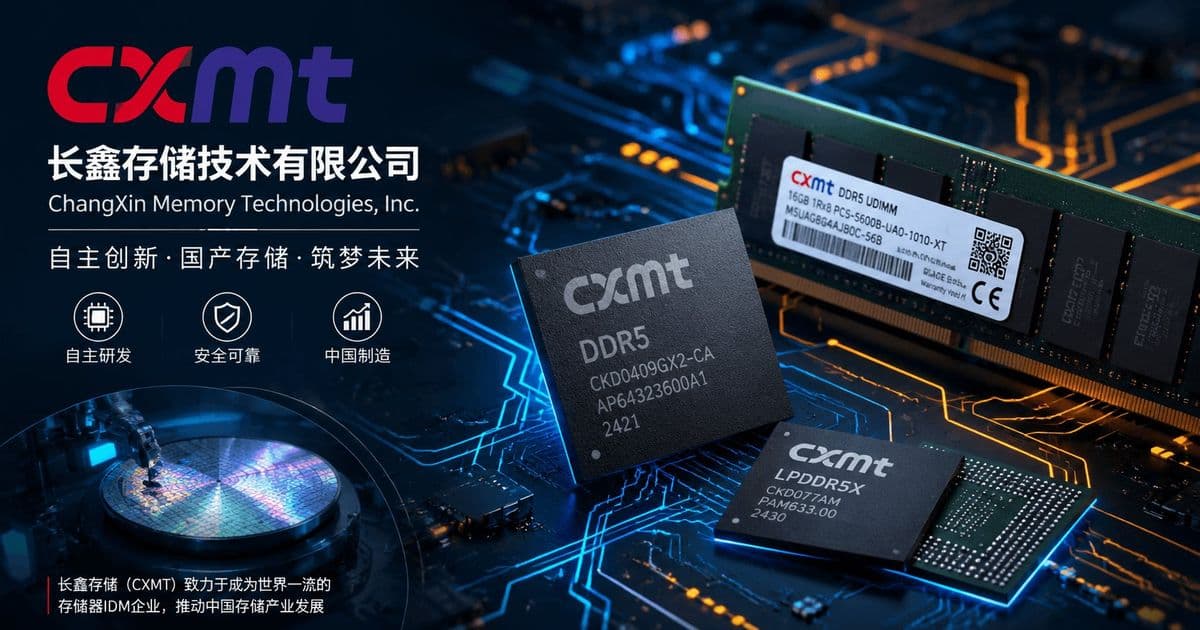
Geopolitical strain and concentration in the supply of rare‑earth precursors for DRAM and NAND have pushed Chinese device makers toward domestic supplier ChangXin Memory Technologies (CXMT). The article examines what the supply squeeze actually means for CXMT’s technology roadmap, pricing dynamics, and the limits of its current process nodes.
China’s CXMT Gains Ground as Critical DRAM Materials Tighten Globally
What is being claimed?
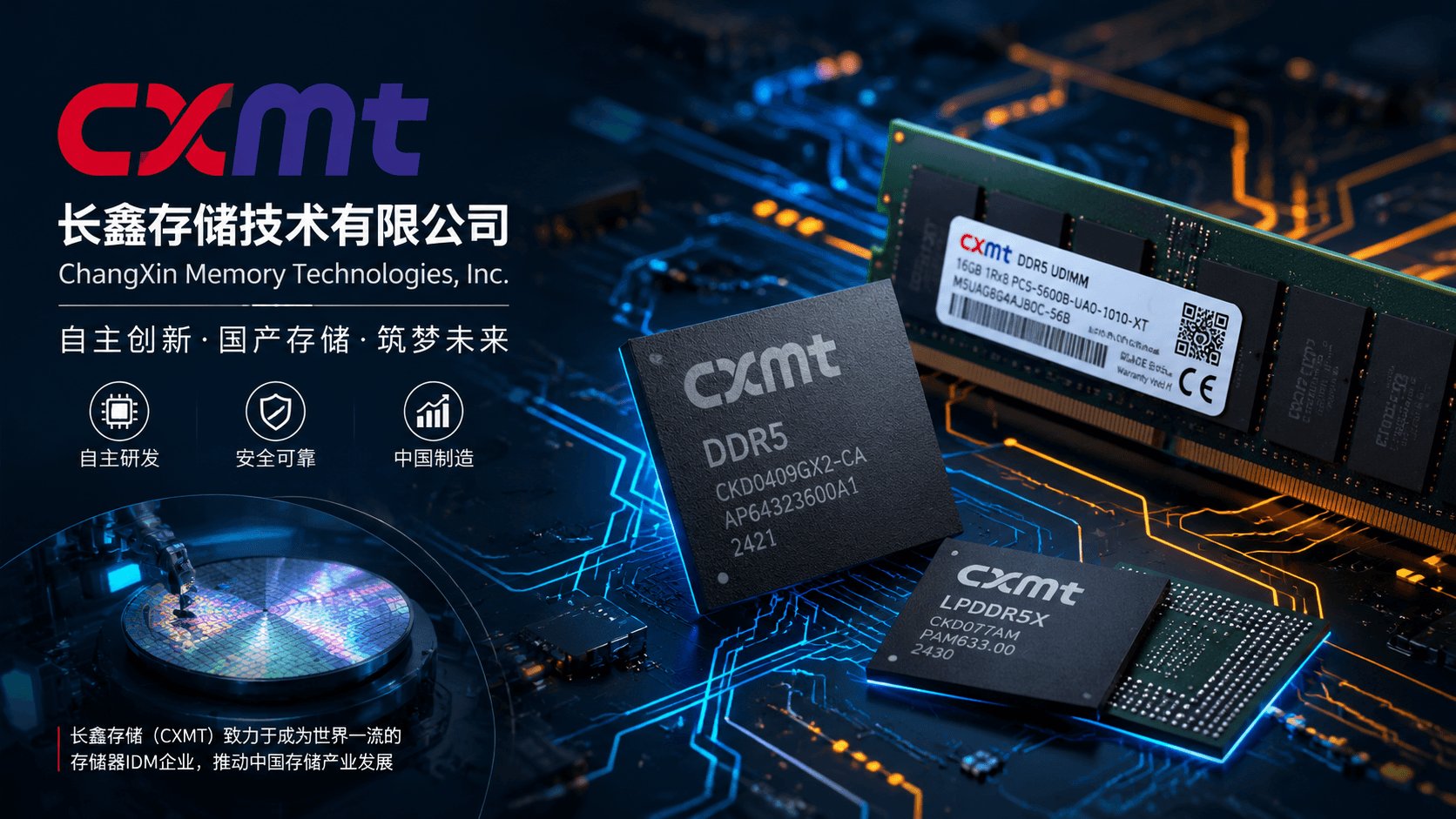
Industry chatter and a recent Pandaily piece suggest that a "disruption" in the supply of raw materials needed for DRAM and NAND flash has handed ChangXin Memory Technologies (CXMT) a decisive advantage. The narrative is that Chinese smartphone and server makers will now source most of their memory from CXMT, that the company is closing the gap with Samsung, SK Hynix and Micron, and that the current up‑cycle will cement CXMT’s place in the global DRAM hierarchy.
What the data actually shows
Material bottlenecks are real, but they are narrow
- Rare‑earth phosphates (used in high‑k dielectric stacks) and high‑purity silicon‑on‑insulator (SOI) wafers have seen supply constraints after export curbs on China‑based producers. Counterpoint reports a 15‑20 % YoY drop in available SOI wafer inventory for 2025‑26.
- The constraints are regional: most of the affected material originates from a handful of Japanese and Taiwanese firms. Alternative suppliers in Europe and the United States have been able to increase output, but at higher cost.
- Price impact: DRAM wafer fab cost estimates from IC Insights rise by roughly 8 % for a 1‑Gb die when using the scarce high‑k dielectric, compared with a 2‑3 % increase for standard dielectric stacks.
CXMT’s process technology
- CXMT is currently shipping 1‑Gb DDR5 chips on a 15‑nm class process (often described as “15‑nm class” because the node naming follows a marketing convention rather than a strict lithography metric). The company announced a 12‑nm pilot line in late 2025, but silicon‑level yields are still below 30 % for the first 1‑Gb lot.
- By contrast, Samsung and SK Hynix are in high‑volume production of 10‑nm class DDR5 and have begun early‑volume 8‑nm DDR5. Micron’s most recent public roadmap shows a 7‑nm DDR5 node slated for 2027.
- CXMT’s process‑node gap translates into roughly a 10‑15 % higher energy per bit and a 5‑10 % lower density for comparable die sizes. In data‑center workloads where power efficiency is a primary cost driver, this gap remains a barrier to large‑scale adoption.
Market pricing and demand elasticity
- Counterpoint’s DRAM contract price index shows an 80‑90 % QoQ increase in Q1 2026, driven largely by inventory shortages in the United States and Europe. However, the price surge is price‑elastic: a 10 % price rise in DRAM typically reduces end‑user demand by about 3 % in the smartphone segment.
- Chinese OEMs have begun price‑hedging with forward contracts from CXMT, but the contracts are priced at a 5‑7 % premium over the current market average, reflecting the perceived risk of supply disruption.
Why the advantage is limited
- Yield uncertainty – CXMT’s 12‑nm pilot is still in a "ramp‑up" phase. Historical yield curves for new DRAM nodes suggest a six‑month to one‑year period before stable >70 % yields are achieved. Until then, volume shipments will remain modest.
- Design ecosystem – Most DDR5 memory controllers in mainstream servers are tuned for the timing and power characteristics of Samsung/Hynix parts. Switching to CXMT parts requires BIOS updates and validation, which OEMs are reluctant to perform for a short‑term supply fix.
- Geopolitical risk – The same export controls that limited raw‑material flow could also target CXMT’s equipment imports. Recent licensing data shows a 30 % slowdown in the delivery of EUV lithography tools to Chinese fabs in 2025‑26.
- Long‑term cost trajectory – Even if CXMT secures a larger share of the Chinese market this year, the global DRAM price correction expected in late 2026 (as new capacity from Samsung’s 10‑nm line comes online) will erode the premium CXMT can command.
What this means for practitioners
- Design teams should treat CXMT parts as a contingency option rather than a primary source. Validate memory controller compatibility early if you anticipate a supply crunch.
- Supply‑chain managers can lock in short‑term CXMT contracts to hedge against price spikes, but they should keep a dual‑source strategy that includes at least one established supplier.
- Investors looking at CXMT’s upcoming IPO should factor in the technology gap and the volatile raw‑material market; the current up‑cycle may boost near‑term revenues, but sustainable market share will depend on yield improvements and ecosystem adoption.
Sources
- Counterpoint Research – DRAM Market Index Q1 2026
- IC Insights – Semiconductor Materials Outlook 2025‑26
- CXMT press release on 12‑nm pilot line (June 2025) – official site
- Samsung DRAM roadmap – Samsung Semiconductor
- SK Hynix DDR5 production update – SK Hynix Newsroom
The article reflects a practitioner’s view of the supply‑chain shift, focusing on what is technically new, what the numbers actually support, and where the limitations remain.
Comments
Please log in or register to join the discussion