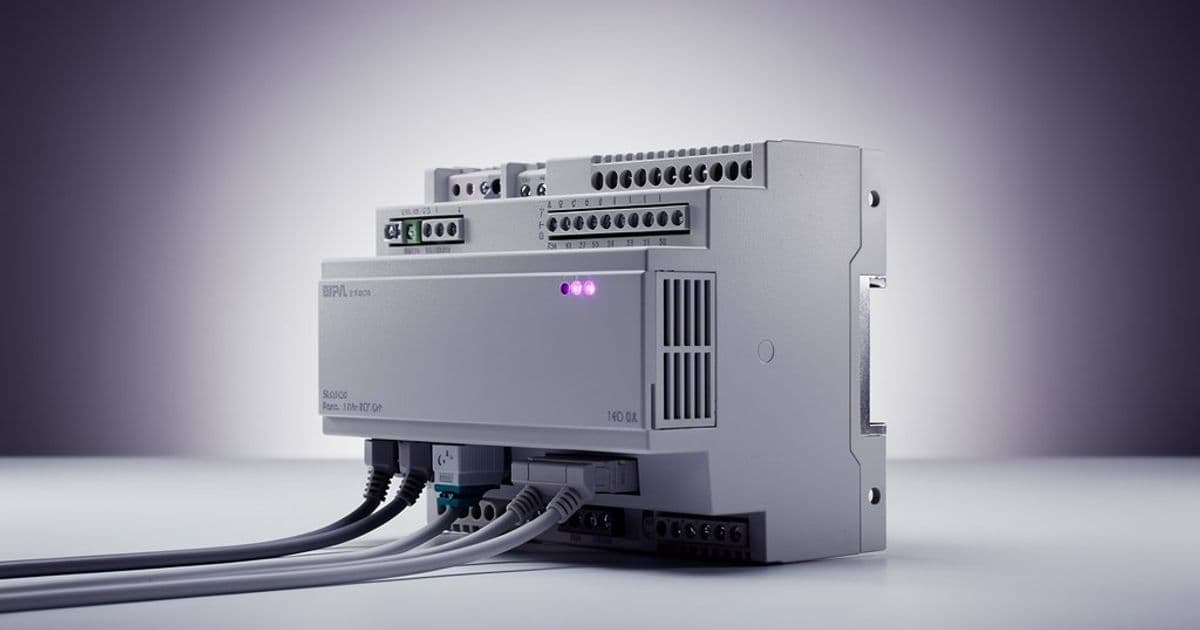
The Cybersecurity and Infrastructure Security Agency (CISA) has released an advisory detailing multiple vulnerabilities affecting AutomationDirect's CLICK Programmable Logic Controllers (PLCs), highlighting the ongoing security challenges in industrial control systems and the need for proactive patching and network segmentation.
The Cybersecurity and Infrastructure Security Agency (CISA) has published a new advisory detailing multiple vulnerabilities affecting AutomationDirect's CLICK Programmable Logic Controllers (PLCs). This alert underscores the persistent security challenges facing industrial control systems (ICS) and the critical need for robust defense-in-depth strategies in operational technology (OT) environments.
The vulnerabilities, tracked under CVE identifiers, affect several CLICK PLC models, including the C0-10DD1E-D, C0-10DD1E-D-2, and C0-10DD1E-D-3, among others. The flaws include improper authentication mechanisms and insufficient input validation, which could allow an attacker to remotely execute code or disrupt operations. According to CISA, these vulnerabilities have a CVSS v3.1 base score of 7.5 (High), indicating significant risk if exploited in a networked environment.
AutomationDirect, a prominent supplier of industrial automation components, has acknowledged the issues and released firmware updates to address them. The company's security bulletin outlines the specific patches for each affected model. However, the advisory emphasizes that patching alone is not sufficient. Many industrial environments operate with legacy systems that cannot be easily updated, and downtime for maintenance can be costly or logistically challenging.
From a practical standpoint, security experts recommend a layered approach. First, organizations should immediately apply the available firmware updates from AutomationDirect's support portal. For systems that cannot be patched immediately, network segmentation is critical. Placing PLCs on isolated networks, separate from corporate IT systems and the internet, reduces the attack surface. Implementing firewalls with strict rules to control traffic to and from the PLC network is essential.
Another key recommendation is the use of secure remote access solutions. Many PLCs are accessed remotely for monitoring and configuration, but this can be a vector for attack if not secured properly. Virtual private networks (VPNs) with multi-factor authentication (MFA) should be used for any remote access, and direct internet access to PLCs should be avoided.
The CISA advisory also highlights the importance of continuous monitoring and anomaly detection. Deploying industrial intrusion detection systems (IDS) can help identify suspicious activity on the OT network. These systems are designed to understand industrial protocols and can flag unusual commands or traffic patterns that may indicate an ongoing attack.
For organizations using CLICK PLCs, the first step is to review the CISA advisory and AutomationDirect's security bulletin to identify which models are affected. Then, develop a remediation plan that prioritizes critical systems. If patching is not immediately feasible, implement compensating controls such as network segmentation and enhanced monitoring.
This incident is part of a broader trend of increasing attacks on industrial systems. As OT and IT networks converge, the attack surface expands, making it imperative for organizations to adopt a security-by-design approach. Regular vulnerability assessments, employee training, and incident response planning are all crucial components of a comprehensive OT security strategy.
For more detailed information, refer to the CISA advisory (ICSMA-24-254-01) and the AutomationDirect security bulletin.
Comments
Please log in or register to join the discussion