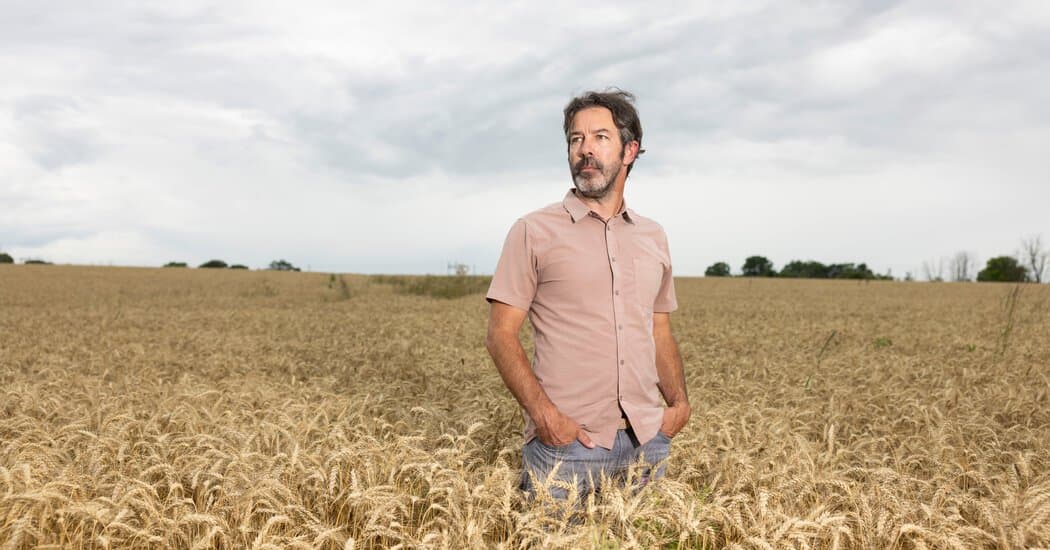
Brian Janous, a former Microsoft executive, has raised $300 million for Cloverleaf, a company that packages electricity and land for data centers, positioning itself as the modern-day land man in the AI infrastructure boom.
Brian Janous, a former Microsoft executive who helped build the tech giant's massive cloud infrastructure, has raised $300 million for Cloverleaf, a company positioning itself as the modern-day land man for the AI gold rush. The startup strikes deals with utility companies and secures land for AI companies and their data center needs, packaging electricity and land into turnkey solutions for the industry's insatiable appetite for computing power.
The comparison to land men—those who secured mineral rights during oil booms—is apt. Just as wildcatters needed access to land and resources to extract oil, today's AI companies need massive amounts of electricity and physical space to build the data centers that power their models. Cloverleaf has become the intermediary that makes these deals happen, navigating the complex web of utility regulations, land rights, and infrastructure requirements that would otherwise slow the industry to a crawl.
This business model reflects a fundamental truth about the AI boom: it's not just about algorithms and model architectures. The physical infrastructure—the concrete, steel, and copper that make up data centers—has become the bottleneck that could determine who wins and who loses in the race to build the most capable AI systems. Companies like OpenAI, Anthropic, and Google need to train ever-larger models, which requires exponentially more computing power, which in turn requires exponentially more electricity and physical space.
Cloverleaf's approach is to remove these friction points. Instead of AI companies having to negotiate separately with utilities, landowners, and construction firms, Cloverleaf offers a one-stop shop. They've likely developed relationships with utilities that allow them to fast-track power connections, understand zoning laws that could derail projects, and have the capital to secure prime locations before competitors even know they're available.
The $300 million raise suggests investors see this as a critical piece of the AI infrastructure puzzle. While it might seem unglamorous compared to the headline-grabbing model releases from OpenAI or Anthropic, Cloverleaf's work enables those breakthroughs. Without reliable access to power and land, even the most sophisticated AI models can't be trained or deployed at scale.
This dynamic also highlights a broader trend in the AI industry: the winners won't just be the companies with the best algorithms, but those who can most efficiently solve the practical problems of scaling. That includes everything from data center construction to chip manufacturing to power generation. Cloverleaf represents the land and power side of that equation, and their success suggests we're entering an era where the infrastructure players are becoming just as important as the model developers.
The irony isn't lost on industry observers: the AI revolution, which promised to be about software and intelligence, is increasingly about concrete, steel, and the physical limits of our power grids. Companies like Cloverleaf are the unsung heroes making sure the lights stay on while the algorithms do the heavy lifting.
As AI continues to expand, expect to see more companies like Cloverleaf emerge, each solving a different piece of the infrastructure puzzle. The next phase of the AI boom won't just be about who has the smartest model—it'll be about who can most efficiently turn electricity and land into computing power. In that world, the land men of the AI age might just be the most valuable players of all.
Comments
Please log in or register to join the discussion