
Badri Ratnam's journey through 40 MITx courses shows how accessible online education can provide world-class engineering knowledge at a fraction of traditional costs.
For Badri Ratnam, the decision to enroll in MIT's first massive open online course in 2012 wasn't just about learning—it was about testing whether he could measure up to one of the world's most prestigious technical institutions. Nearly 40 courses later, the mechanical engineer has transformed his career through what he describes as getting "a Ferrari for the price of an electric scooter."

Ratnam's educational journey began with a bachelor's degree in engineering from the University of Delhi, where he admits he focused more on passing exams than deep learning. After earning master's degrees from the University of South Florida and Simon Fraser University, he still felt gaps in his fundamental understanding of engineering principles. When MIT launched its MITx platform offering free online courses, Ratnam saw an opportunity to revisit and master the subjects he had initially learned as an undergraduate.
Over the past decade, Ratnam has completed courses spanning physics, mechanical engineering, materials science, and mathematics. His recent coursework includes Vibrations and Waves, a demanding 18-week class with over 40 lessons, 13 assignments, and three exams. "I don't think I could have ever learned this very difficult subject without this structure," Ratnam explains. The course, taught by Yen-Jie Lee, Alex Shvonski, and Michelle Tomasik, cost him less than $100—a fraction of what traditional education would require.
Beyond the technical content, Ratnam has found the discussion forums to be invaluable. "This is where the rigorous, engaging, yet automated, courses come to life," he says. Learners from around the world collaborate on problem sets, discuss conceptual doubts, and receive guidance from MIT staff who ensure all questions are answered and errors corrected.
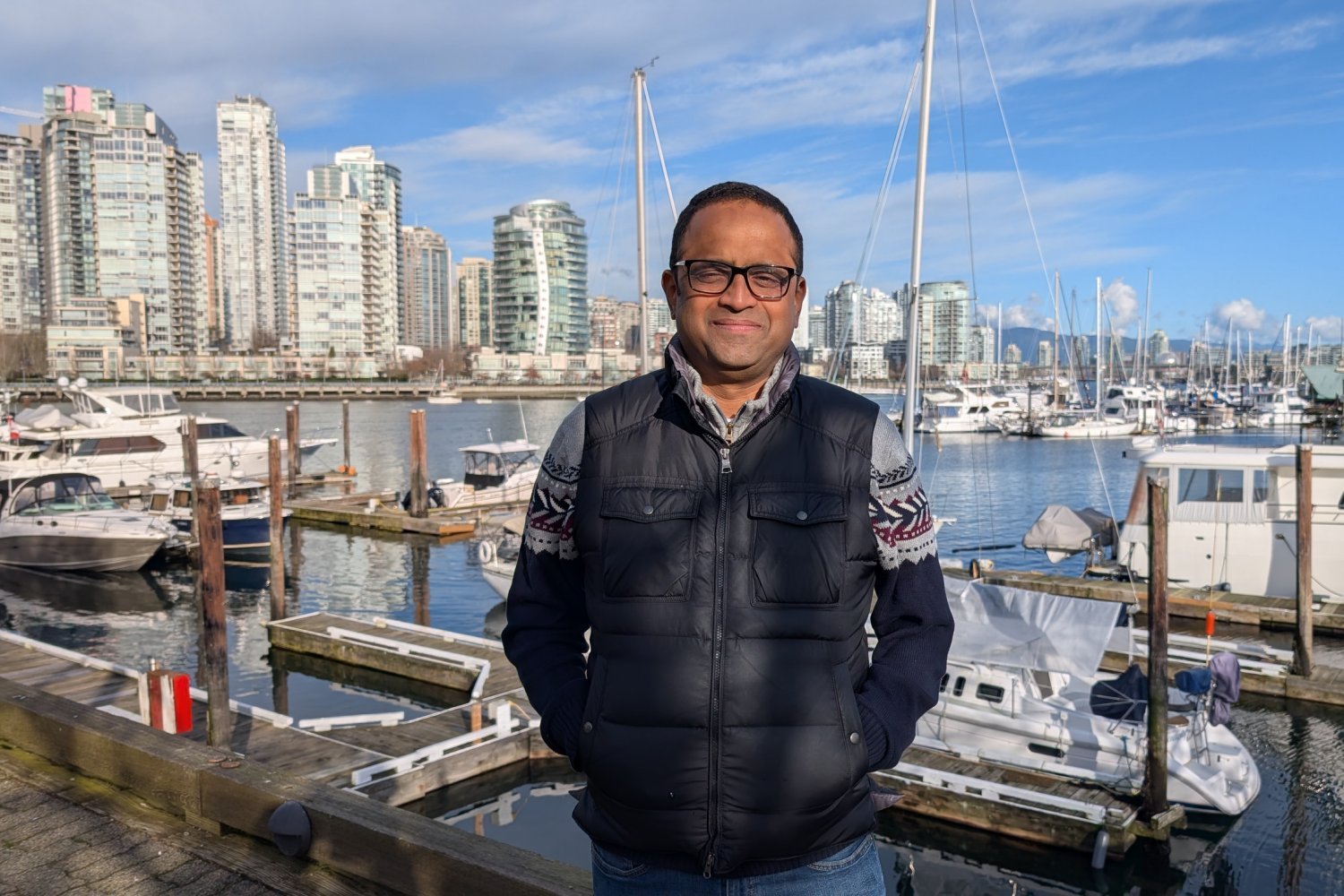
The impact on Ratnam's professional life has been profound. Working for companies including Freudenberg e-Power Systems, Siemens, GE, and Westport Fuel Systems, he has expanded his expertise into areas like transport phenomena, failure analysis, vibration signal processing, and statistical quality control. His MITx studies have given him the confidence to tackle complex engineering problems and become the go-to person for technical questions in his workplace.
What makes Ratnam's story particularly compelling is how it challenges conventional notions about professional development. While workplace training often focuses on specific, short-term goals, Ratnam found that MITx courses provided a broader, more profound understanding of engineering phenomena. "The benefit of the classes might not always come immediately," he notes. "It can be a long gestation period for the information to all gel together."
This patient, comprehensive approach to learning has fundamentally changed how Ratnam approaches new challenges. "As I've taken more and more courses, I've learned to never fear learning new things and exploring new areas," he says. Where he once felt intimidated by unfamiliar subjects, he now approaches them with confidence, knowing that with time and effort, he can acquire new skills and knowledge.
Ratnam's experience also highlights the global reach and accessibility of MITx. Learners from diverse backgrounds and locations can access the same rigorous curriculum that MIT students receive, complete with challenging problem sets and comprehensive exams. The platform's structure—with deadlines, assignments, and discussion forums—provides the framework that Ratnam finds essential for his learning style.
His journey represents a broader trend in engineering education, where professionals increasingly supplement traditional degrees with targeted online coursework. The ability to review fundamentals, explore new areas, and gain certifications at low cost has democratized access to high-quality technical education. For Ratnam, this approach has been transformative, allowing him to build a wide base of knowledge that spans multiple engineering disciplines.
The story of Badri Ratnam and his 40 MITx courses illustrates how online learning platforms can serve as powerful tools for career advancement and personal growth. By combining the rigor of MIT's curriculum with the accessibility of online delivery, MITx has enabled engineers like Ratnam to continuously expand their capabilities throughout their careers. In an era where technological change demands lifelong learning, such platforms may represent the future of professional development in engineering and beyond.
For those considering a similar path, Ratnam's experience suggests that the key ingredients are persistence, curiosity, and willingness to engage deeply with challenging material. The structure provided by MITx—with its deadlines, assignments, and community forums—can help learners stay motivated and accountable, while the low cost removes financial barriers that might otherwise prevent access to world-class education.
As Ratnam continues to take courses and apply his learning in the workplace, his story serves as a testament to the power of accessible, high-quality online education to transform careers and expand human potential. In a world where the half-life of technical knowledge continues to shrink, the ability to efficiently acquire and master new skills may be the most valuable capability of all.
Comments
Please log in or register to join the discussion