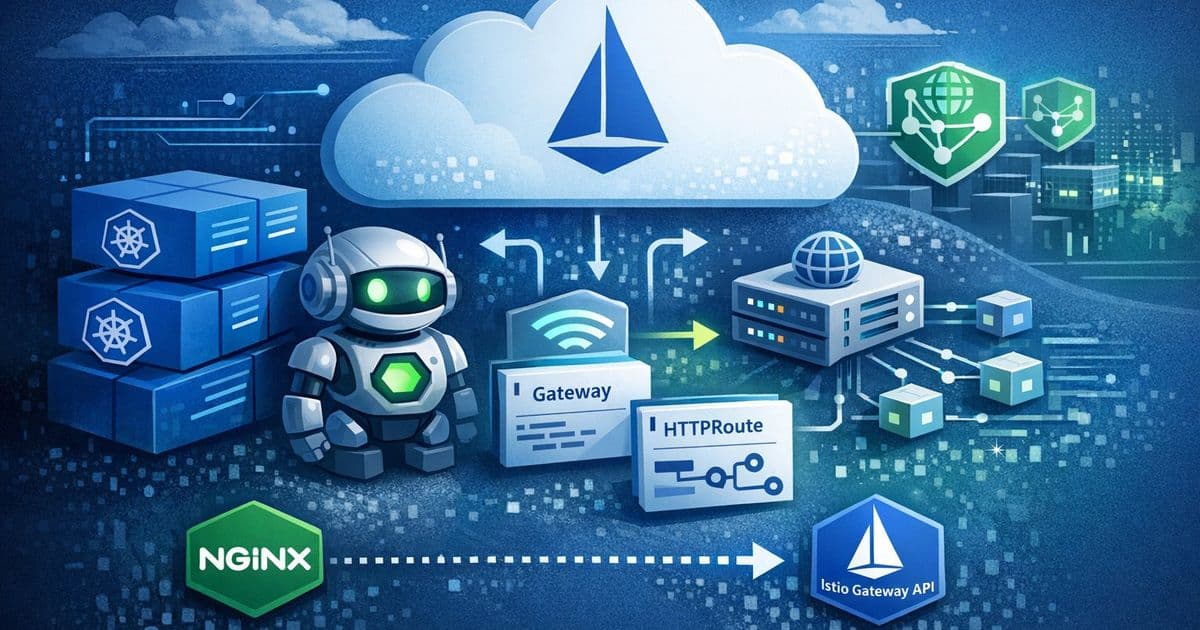
Major cloud providers are converging on standardized service mesh implementations, reshaping the multi-cloud landscape with Gateway API adoption and unified pricing models.
The cloud-native ecosystem is undergoing significant transformation as major providers align their service mesh offerings around standardized APIs and unified operational models. In recent months, AWS, Google Cloud, and Microsoft Azure have all announced updates that signal a fundamental shift in how organizations approach service-to-service communication across multi-cloud environments. This convergence, driven by the Kubernetes Gateway API standard, is creating both opportunities and challenges for enterprises managing complex distributed systems.
What Changed: The Gateway API Revolution
The most significant development is the widespread adoption of the Kubernetes Gateway API as the primary interface for service mesh ingress and egress traffic. While service meshes have existed for years, the fragmented implementation across cloud providers created operational complexity for multi-cloud deployments. AWS App Mesh, Google Cloud's Cloud Service Mesh, and Azure's new Istio-based implementation are all now building their solutions around this standardized API.
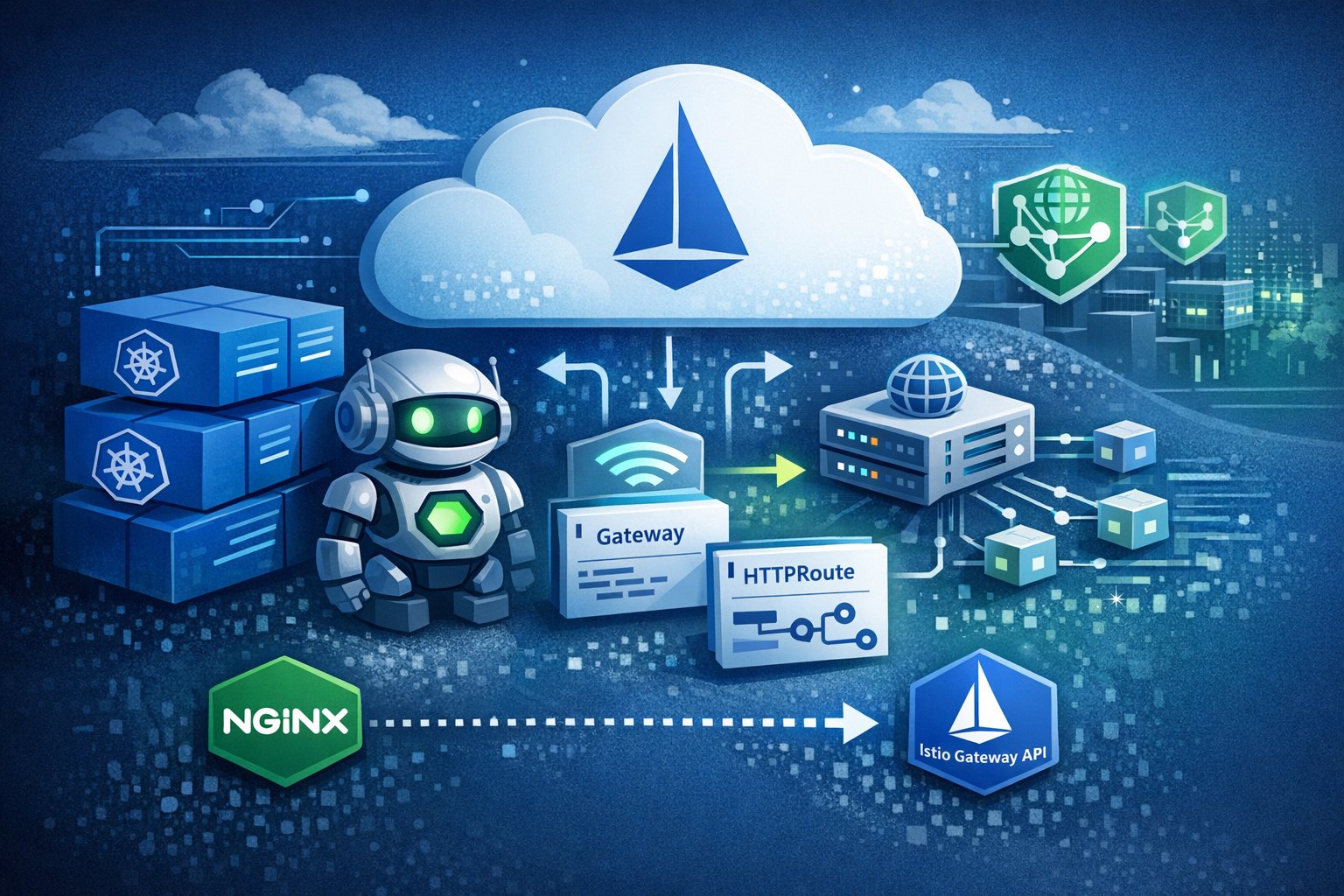
The Gateway API, originally developed by the Kubernetes SIG-NETWORK community, addresses key limitations of the older Ingress API by providing a more expressive and extensible model for traffic management. Unlike Ingress, which combines gateway configuration with routing rules in a single resource, Gateway API separates these concerns into distinct resources:
- GatewayClass defines the type of gateway infrastructure
- Gateway creates the actual gateway with its listeners
- HTTPRoute (or GRPCRoute, TLSRoute) defines routing rules
This separation enables platform teams to manage gateway infrastructure while application teams control routing policies independently—a critical capability for large organizations with multiple development teams.
Provider Comparison: Strategic Approaches to Service Mesh
While all three providers are converging on Gateway API, their implementation strategies and business models differ significantly, creating distinct trade-offs for organizations evaluating multi-cloud service mesh solutions.
AWS App Mesh
AWS App Mesh has undergone substantial evolution with its latest release focusing on Gateway API integration. The service now offers:
- Native Gateway API support through AWS Load Balancer Controller
- Integration with AWS App Mesh control plane for advanced traffic management
- Unified pricing model based on data processed and mesh endpoints
Key differentiator: Deep integration with AWS ecosystem services, including CloudWatch for observability and IAM for access control. However, this tight coupling creates operational complexity for multi-cloud deployments that extend beyond AWS.
Pricing structure: $0.015 per hour per mesh endpoint, plus $0.015 per GB of data processed. For organizations with large-scale deployments, this can become significant, particularly when compared to open-source alternatives.
Google Cloud Cloud Service Mesh
Google's approach leverages its experience with Anthos and Istio to provide a service mesh that emphasizes:
- Gateway API support through GCP's Ingress Gateway
- Automatic sidecar injection and zero-trust security by default
- Integration with Google Cloud's operations suite (formerly Stackdriver)
Key differentiator: Superior out-of-box observability and security features that reduce operational overhead. Google's implementation includes built-in distributed tracing and policy enforcement that requires minimal configuration.
Pricing structure: Included with Google Kubernetes Engine (GKE) Enterprise at no additional cost, making it the most cost-effective option for organizations already invested in Google Cloud. This bundling strategy positions Google as highly competitive for enterprises seeking integrated solutions.
Azure Service Mesh
Microsoft's approach, centered around Istio and Azure Kubernetes Service, offers:
- Gateway API implementation through AKS App Routing add-on
- Integration with Azure Monitor for comprehensive observability
- Hybrid capabilities extending to Azure Arc-enabled infrastructure
Key differentiator: Strong hybrid cloud capabilities and integration with Microsoft's enterprise ecosystem, including Azure Active Directory for identity management and Azure Policy for governance.
Pricing structure: Included with AKS clusters at no additional cost, but requires premium tiers for advanced features like multi-cluster management and enhanced security policies. This model makes Azure competitive for organizations already invested in the Microsoft ecosystem.

Migration Considerations: Strategic Pathways
Organizations evaluating migration to these new service mesh implementations face several key considerations that impact both technical architecture and operational models.
From Legacy Service Mesh Implementations
Many organizations have existing service mesh deployments based on earlier versions of Istio, Linkerd, or proprietary implementations. Migration to Gateway API-based solutions requires:
- API translation: Converting existing VirtualService, DestinationRule, and ServiceEntry resources to Gateway API equivalents
- Control plane adjustment: Adapting to the new resource model and management interfaces
- Policy migration: Translating existing traffic management and security policies to the new framework
The ingress2gateway tool, initially developed for NGINX to Gateway API conversion, has been extended to support service mesh migration, providing automated translation for common patterns while highlighting custom configurations requiring manual attention.
Multi-Cloud Strategy Alignment
For organizations with multi-cloud deployments, the convergence around Gateway API presents both opportunities and challenges:
Opportunities:
- Consistent API surface across providers reduces operational complexity
- Standardized observability models enable unified monitoring approaches
- Portability of routing and security policies across environments
Challenges:
- Provider-specific optimizations and extensions may still require configuration adjustments
- Pricing models differ significantly, impacting total cost of ownership calculations
- Integration with cloud-native services remains provider-specific
Operational Model Transformation
The shift to Gateway API represents more than a technical upgrade—it requires fundamental changes in operational responsibilities:
- Platform teams focus on gateway infrastructure and GatewayClass management
- Application teams gain more control over routing policies through HTTPRoute resources
- Security teams implement policies at the gateway layer rather than within individual services
This separation of concerns enables greater organizational agility but requires clear governance frameworks to prevent configuration conflicts and ensure policy compliance.
Business Impact: Strategic Implications
The convergence of service mesh implementations around Gateway API creates significant business implications that extend beyond technical considerations.
Total Cost of Ownership Analysis
While Gateway API implementations reduce operational complexity, pricing models vary substantially:
- Google Cloud's approach of bundling with GKE Enterprise offers the most predictable costs for organizations already invested in Google Cloud
- AWS's usage-based pricing can become expensive for large-scale deployments but provides flexibility for variable workloads
- Azure's hybrid model creates additional costs for organizations extending beyond Azure, but offers strong value for Microsoft-centric environments
Organizations must evaluate these models against their specific usage patterns and multi-cloud strategies to determine the most cost-effective approach.
Talent and Skill Requirements
The shift to standardized APIs changes talent requirements:
- Reduced need for provider-specific expertise as common API knowledge becomes transferable
- Increased demand for skills in policy-as-code and GitOps workflows for managing Gateway API resources
- Growing importance of understanding network security principles at the gateway layer
This talent transformation creates both challenges and opportunities for organizations, requiring investment in training while potentially reducing dependency on provider-specific expertise.
Future-Proofing Considerations
The convergence around Gateway API positions organizations for future developments in service mesh technology:
- Standardized APIs enable easier adoption of new features and capabilities as they emerge
- Provider-agnostic implementations reduce lock-in risks while maintaining access to cloud-native services
- Community-driven development ensures continued innovation while maintaining backward compatibility
Organizations that adopt Gateway API-based implementations now are better positioned to navigate future changes in the service mesh landscape while maintaining operational stability.
Strategic Recommendations
Based on the current state of service mesh convergence, organizations should consider the following strategic approaches:
For AWS-centric organizations: Evaluate AWS App Mesh Gateway API implementation, but carefully assess total costs against open-source alternatives, particularly for stable workloads where usage-based pricing becomes significant.
For Google Cloud organizations: Leverage Google's bundling strategy to implement Cloud Service Mesh with minimal additional cost, focusing on the superior observability and security features to reduce operational overhead.
For Microsoft-centric organizations: Implement Azure's Istio-based solution, taking advantage of hybrid capabilities while planning for potential additional costs for advanced multi-cluster management.
For true multi-cloud implementations: Prioritize Gateway API compatibility across providers while developing provider-specific optimizations where necessary. Consider open-source Istio as a baseline with cloud provider extensions for specialized services.
For all organizations: Invest in Gateway API expertise and policy-as-code capabilities to maximize the benefits of standardized APIs while maintaining flexibility for provider-specific optimizations.
The convergence of service mesh implementations around Gateway API represents a maturation of the cloud-native ecosystem, offering both opportunities for reduced operational complexity and challenges in navigating provider-specific strategies. Organizations that approach this transition strategically, with clear evaluation of their specific requirements and long-term goals, will be best positioned to leverage these developments while maintaining operational agility and cost efficiency.
Comments
Please log in or register to join the discussion