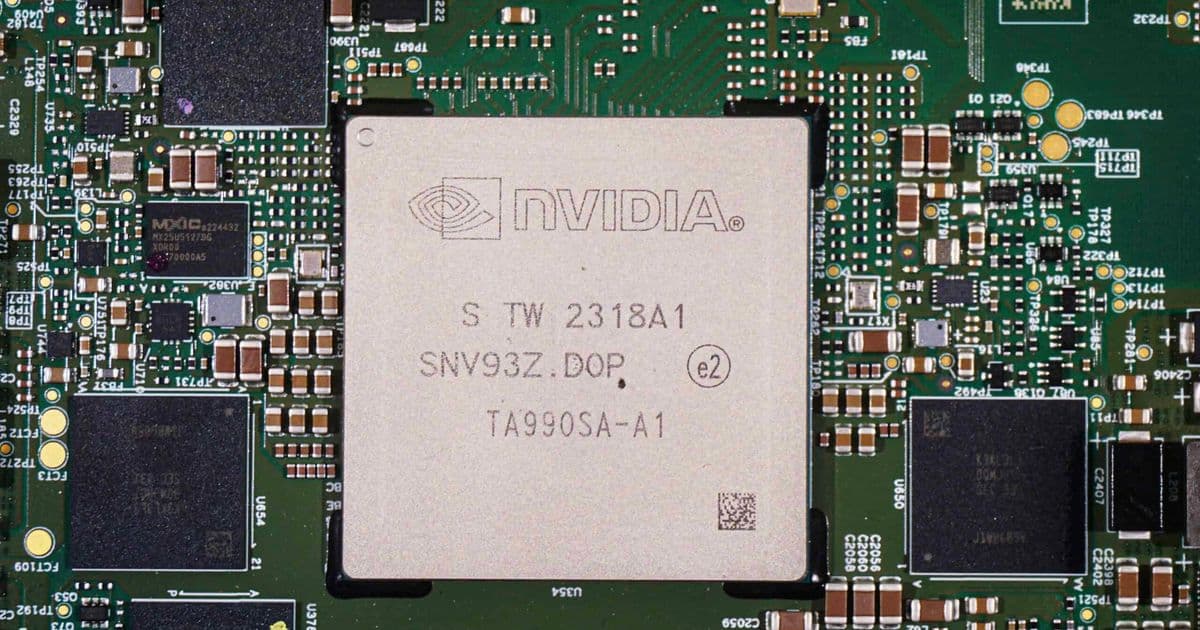
The US Department of Justice has filed a lawsuit alleging a smuggling operation illegally exported or attempted to export at least $160 million worth of advanced Nvidia AI chips to China, raising concerns about export controls and national security.
The US Department of Justice has filed a lawsuit alleging a smuggling ring illegally exported or attempted to export at least $160 million in advanced Nvidia AI chips to China, according to a report by Eliot Chen in The Wire China. The case highlights ongoing tensions around technology exports and national security concerns as the US seeks to restrict China's access to cutting-edge AI hardware.
The Alleged Smuggling Operation
The DOJ's December lawsuit, which has only recently come to light, accuses individuals and entities of circumventing US export controls to ship Nvidia's high-performance AI chips to Chinese customers. These advanced semiconductors are critical for training large language models and other AI applications, making them strategically valuable technology that the US government has sought to keep out of Chinese hands.
The scale of the alleged operation is significant - $160 million worth of chips represents a substantial volume of Nvidia's most advanced hardware. This comes at a time when the US has been tightening restrictions on semiconductor exports to China, viewing them as essential to maintaining technological advantages in AI and related fields.
Context: US-China Tech Competition
This smuggling case occurs against the backdrop of intensifying US-China competition in artificial intelligence. The US has implemented increasingly strict export controls on advanced chips and manufacturing equipment, aiming to slow China's AI development while protecting American technological leadership.
Nvidia, as the dominant supplier of AI training chips, finds itself at the center of this geopolitical struggle. The company has had to navigate complex export regulations while maintaining its business relationships in China, one of its largest markets. The alleged smuggling operation suggests that demand for these restricted chips remains strong in China despite official barriers.
Export Control Challenges
The case underscores the difficulties in enforcing export controls on dual-use technology. AI chips, while having legitimate commercial applications, also have military and intelligence applications that make them sensitive from a national security perspective. Smuggling rings exploit gaps in enforcement, using various methods to disguise shipments or route them through third countries.
For Nvidia, such incidents create reputational and regulatory risks. While the company itself is not accused of wrongdoing in this case, it must demonstrate robust compliance with export controls to avoid scrutiny from regulators and maintain its position as a trusted supplier to both government and commercial customers.
Broader Implications
The alleged smuggling operation has several implications for the tech industry and US-China relations:
Enforcement of export controls: The case demonstrates that despite increased scrutiny, determined actors can still find ways to circumvent restrictions. This may prompt calls for even stricter controls or more aggressive enforcement.
Supply chain security: Companies involved in sensitive technologies may face increased pressure to implement more rigorous supply chain monitoring and customer verification processes.
Geopolitical tensions: Each incident of technology smuggling adds friction to US-China relations, potentially leading to retaliatory measures or further restrictions.
Market dynamics: If Chinese companies cannot access the latest US chips through legitimate channels, it may accelerate domestic semiconductor development efforts or push them toward alternative suppliers.
Industry Response
Nvidia has not publicly commented on the specific allegations in the DOJ lawsuit. The company has previously stated its commitment to complying with all applicable export control laws and regulations. Industry analysts suggest that such incidents may lead to even more stringent verification requirements for customers and potentially impact Nvidia's ability to serve legitimate customers in China.
The case also raises questions about the effectiveness of export controls as a tool for technological containment. While they may slow China's progress, they also create incentives for smuggling, domestic development, and seeking alternative suppliers - potentially accelerating the very technological independence the US seeks to prevent.
Looking Forward
As AI becomes increasingly central to economic and military competition, cases like this are likely to become more common. The US government will likely continue to refine its export control regime, while companies like Nvidia will need to balance compliance requirements with business interests in global markets.
The outcome of this particular case could set precedents for how similar smuggling operations are prosecuted and may influence future export control policies. For now, it serves as a reminder of the complex intersection between technology, commerce, and national security in an era of great power competition.
The alleged $160 million smuggling operation represents just one front in the broader struggle over technological supremacy, but it highlights the challenges both governments and companies face in navigating this new landscape of restricted technologies and strategic competition.
Comments
Please log in or register to join the discussion