A new job listing reveals EA is developing a native ARM64 driver for its Javelin anti-cheat system, signaling a major expansion to Arm-based gaming platforms including Nvidia's upcoming N1/N1X chips and potentially Linux systems.
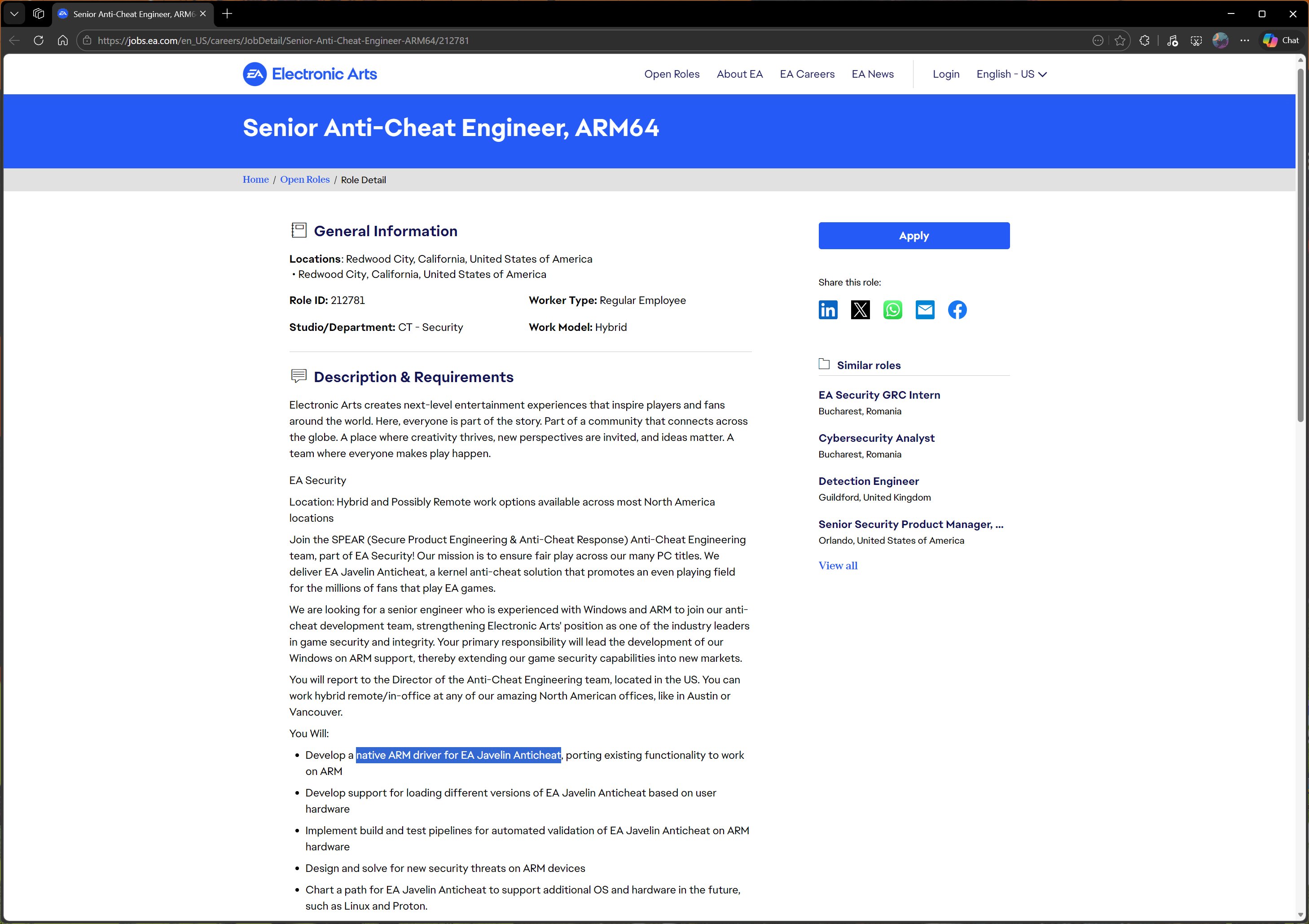
EA's Javelin anti-cheat system, launched last year to power multiplayer gameplay in Battlefield 6, is preparing for a significant expansion beyond traditional x86 Windows platforms. A new job listing for a "Senior Anti-Cheat Engineer, ARM64" reveals the company's plans to develop a native ARM driver for Javelin, marking a pivotal shift in PC gaming architecture support.
The timing of this development aligns perfectly with industry rumors surrounding Nvidia's upcoming N1 and N1X chips, which are expected to launch later this year. These Arm-based processors are rumored to feature a 20-core Arm CPU paired with an RTX 5070-level GPU, potentially bringing Windows-on-Arm to mainstream gaming audiences for the first time.
Why Arm Support Matters for Gaming
Currently, most anti-cheat software is designed exclusively for x86-based Windows machines. This limitation has been a significant barrier for non-x86 platforms, including Apple Silicon Macs, Qualcomm's Snapdragon-powered Windows laptops, and emerging Arm-based gaming devices. The job listing specifically mentions "development of [our] Windows on ARM support," leaving no ambiguity about the target platform.
This move by EA could have far-reaching implications for the gaming industry. As the job description notes, charting a path for Javelin to support additional operating systems like Linux and Proton would open doors for popular titles on platforms like the Steam Deck and Steam Machine. This is particularly noteworthy given that Valve's push for Linux gaming has been hampered by anti-cheat compatibility issues.
The Competitive Landscape
EA's decision to invest in Arm support comes at a time when other major players are also expanding their platform reach. Epic Games recently added support for Easy Anti-Cheat on Arm and Linux devices, though its flagship title Fortnite still doesn't run on these platforms. Microsoft has also released the Xbox app on Arm-based Windows 11 devices within the past month.
However, the scale and timing of EA's initiative suggest something more significant. Apple Silicon, while growing in popularity, doesn't appear to be EA's primary target. Similarly, despite Qualcomm's X-series chips gaining traction, they haven't achieved the market penetration necessary to justify such a substantial investment alone.
Technical Implications
Developing a native ARM64 driver for kernel-level anti-cheat software presents unique challenges. Anti-cheat systems operate at the deepest levels of the operating system, requiring intimate knowledge of hardware interactions and security protocols. The transition from x86 to Arm architecture necessitates significant code rewriting and optimization to maintain the same level of security and performance.
The job listing's mention of Proton support is particularly intriguing. Proton, Valve's compatibility layer that allows Windows games to run on Linux, has been instrumental in expanding gaming options for Linux users. If Javelin gains Proton compatibility, it could effectively bring EA's entire catalog of multiplayer games to Linux platforms, including the Steam Deck.
Market Impact
This development could influence other major game publishers and anti-cheat providers to follow suit. Companies like Riot Games and Epic Games might feel pressure to expand their anti-cheat support to Arm and Linux platforms, creating a more inclusive gaming ecosystem.
The potential arrival of Nvidia's N1/N1X chips represents a convergence of powerful hardware and expanded software support. If these chips deliver on their rumored specifications while benefiting from native anti-cheat support, they could finally make Windows-on-Arm a viable platform for serious PC gaming.
Looking Ahead
EA's investment in Arm support for Javelin anti-cheat signals a broader industry trend toward platform diversity in gaming. As Arm architecture continues to mature and gain performance parity with traditional x86 systems, the barriers that have historically excluded these platforms from mainstream gaming are beginning to fall.
The success of this initiative could determine whether Arm-based gaming becomes a significant force in the PC gaming market or remains a niche segment. With major players like EA, Nvidia, and Microsoft all pushing in this direction, the next year could mark a fundamental shift in how we think about PC gaming hardware and software compatibility.

The gaming community will be watching closely to see how quickly EA can deliver on this Arm support and which titles will be the first to benefit from the expanded compatibility. If successful, this could be remembered as the moment when PC gaming truly broke free from its x86 dependency.
Comments
Please log in or register to join the discussion